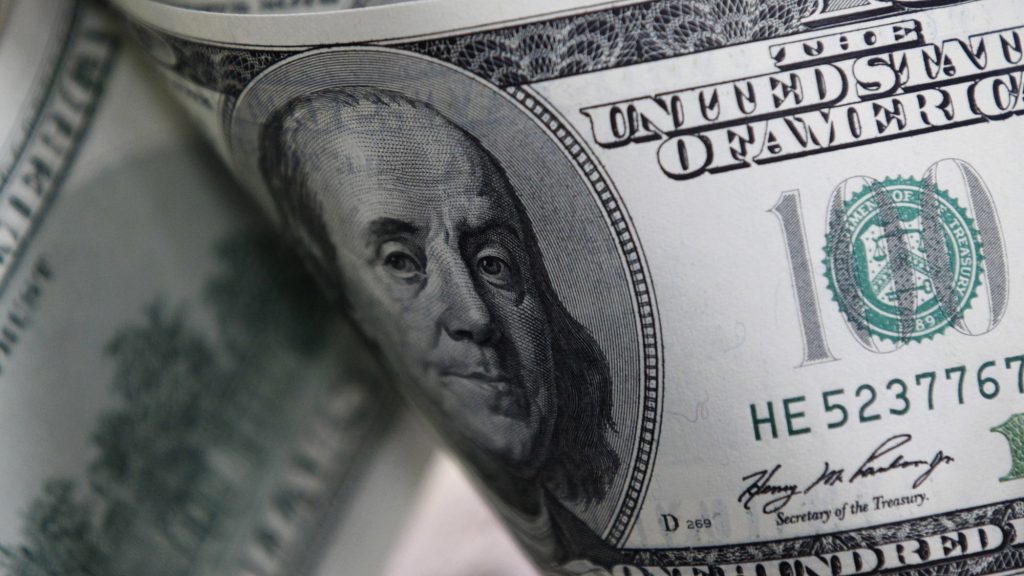
The US dollar extended its gains on Thursday, remaining close to its strongest levels of 2026 as surging oil prices increased concerns about inflation and the possibility of tighter monetary policy from major central banks.
The greenback strengthened for a third consecutive day against several major currencies, including the euro, Japanese yen, British pound, and New Zealand dollar. The move came as a sharp rise in global oil prices weakened investor confidence and pushed traders toward the dollar.
Rising oil prices drive inflation concerns
Economists warn that the recent surge in crude oil prices could significantly increase energy costs and slow global economic growth. The longer the conflict in the Middle East continues, the greater the risk of sustained inflation and financial market volatility.
Carol Kong, an economist and currency strategist at Commonwealth Bank of Australia, noted that currency movements are closely linked to each country’s dependence on imported energy.
According to Kong, markets have increased expectations for policy tightening by the European Central Bank even more than for the Federal Reserve. However, the euro has struggled to benefit because Europe remains more vulnerable to rising energy costs, while the United States is largely energy independent.
Oil market volatility surges amid Middle East tensions
Oil market volatility increased sharply after Iran warned that crude prices could potentially reach $200 per barrel. Tensions escalated as attacks targeted merchant vessels in the region, and shipping traffic through the Strait of Hormuz slowed significantly. At one point, Brent crude surged more than 10%, reaching $101.59 per barrel.
In currency markets, the euro declined 0.2% to $1.1540 during Asian trading, approaching its lowest level since November. The Japanese yen weakened beyond the 159-per-dollar level, briefly touching 159.23 and nearing its weakest level since July 2024.
The Australian dollar fell 0.4% to $0.7122, while the New Zealand dollar dropped 0.3% to $0.5897. Meanwhile, the British pound slipped 0.3% to $1.3374, trading close to its lowest level of the year.
Markets brace for potential central bank tightening
Investor sentiment remained cautious as geopolitical tensions persisted. Donald Trump, President of the United States, said Washington believed it was in a strong position in the conflict with Iran. However, intelligence sources suggested that Iran’s leadership remains stable despite ongoing military pressure from the United States and Israel.
The conflict has already led to attacks on multiple oil tankers and transport facilities across the Middle East, increasing the number of ships affected since the fighting began.
Rodrigo Catril, a currency strategist at National Australia Bank, said energy markets are likely to remain volatile given the strategic importance of the Strait of Hormuz.
He noted that the waterway is not only crucial for oil shipments but also for liquefied natural gas and fertilizer exports. Any disruption to shipping traffic could continue to push energy prices higher.
Brent crude was still trading 7.9% higher at $99.21 during Asian afternoon trading, despite the International Energy Agency announcing a record release of 400 million barrels from strategic oil reserves in an effort to stabilize global supply.
Inflation expectations rise as policy outlook shifts
A key measure of oil market volatility from Cboe Global Markets surged to 121.01, reaching its highest level since the early months of the COVID-19 pandemic in 2020.
Market risk appetite was further weakened after the Trump administration launched a new trade investigation targeting excess industrial capacity among 16 major trading partners. The move followed a ruling by the U.S. Supreme Court that struck down a central element of Trump’s tariff policy.
Analysts at ING Group noted that inflation expectations in the United States are rising, while swap markets in the eurozone indicate that the 10-year swap rate is approaching 3%.
Market pricing now suggests that central banks could tighten monetary policy sooner than previously expected. Traders expect the European Central Bank to begin raising interest rates as early as June, while the Reserve Bank of Australia may implement rate increases at its upcoming meetings.
Meanwhile, CME Group data shows that traders have reduced expectations for near-term interest rate cuts by the Federal Reserve.
The U.S. Dollar Index, which measures the strength of the dollar against a basket of major currencies, was little changed at 99.442, remaining close to its highest level since November.
Against the Chinese yuan, the dollar rose 0.1% to 6.8834 in offshore trading, stabilizing after several sessions of declines.
In the cryptocurrency market, Bitcoin fell 1.7% to $69,457.41, while Ethereum dropped 2.0% to $2,026.88.