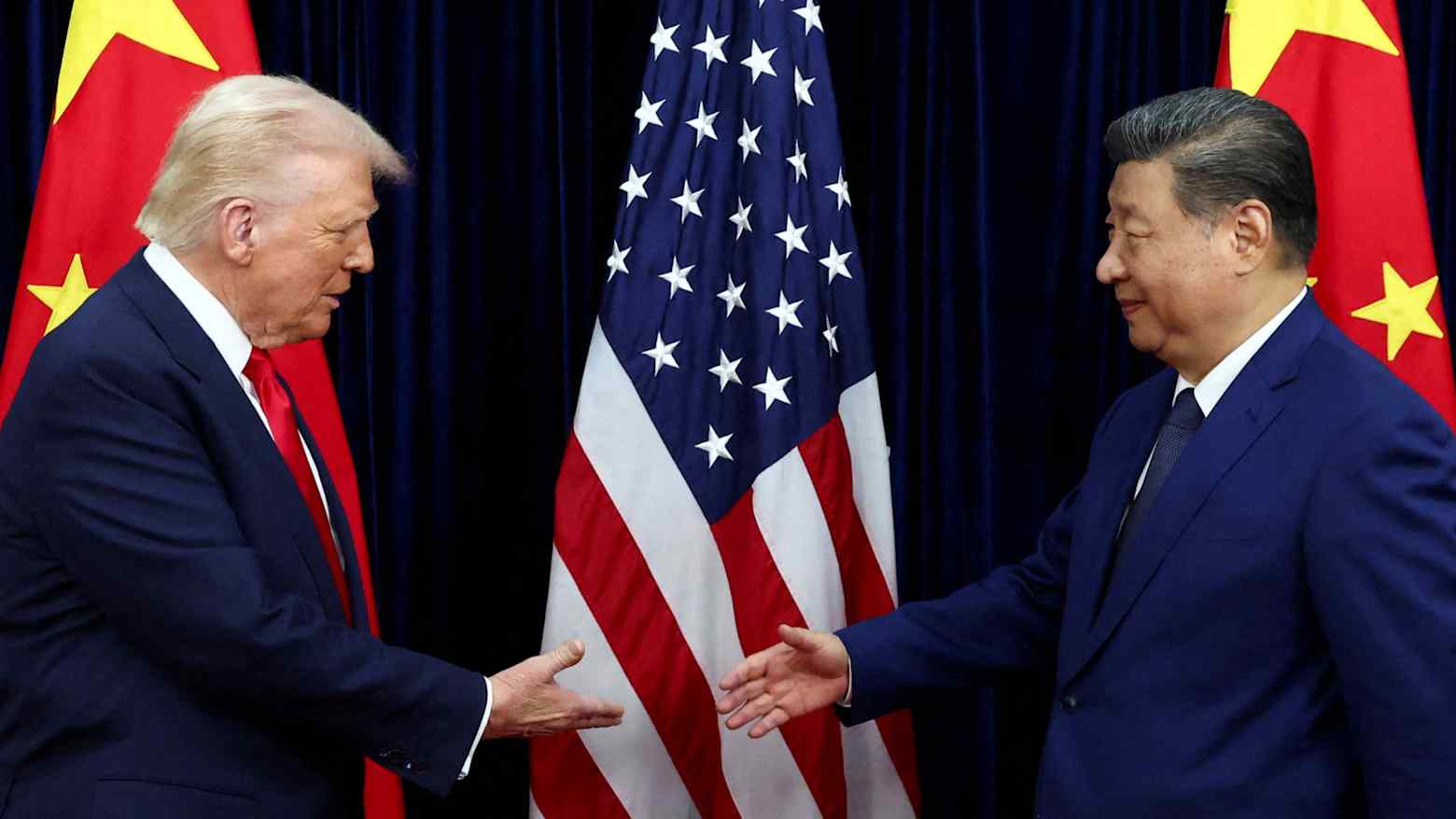
Senior economic officials from the United States and China were expected to conclude negotiations in Paris on Monday, with discussions focusing on potential agreements covering agriculture, critical minerals, and managed trade. According to sources familiar with the talks, these discussions could lay the groundwork for agreements to be considered by U.S. President Donald Trump and Chinese President Xi Jinping during a planned summit in Beijing.
Sources told Reuters that the negotiations, led by U.S. Treasury Secretary Scott Bessent and Chinese Vice Premier He Lifeng, had been described as “remarkably stable.” The discussions are expected to generate potential policy outcomes that could be finalized when Trump travels to China later in March for a meeting with Xi.
However, the final decisions on any agreements will ultimately be made by the two leaders. President Trump indicated in an interview with the Financial Times that the planned summit could potentially be postponed as the United States pressures Beijing to help reopen the Strait of Hormuz, which has been closed by Iran amid ongoing regional tensions.
Trump noted that the visit could be delayed if necessary, highlighting the importance of resolving the situation in the key global energy shipping route.
The U.S. and Chinese delegations held more than six hours of discussions on Sunday at the headquarters of the Organisation for Economic Co-operation and Development (OECD) in Paris. The OECD is an organization primarily composed of developed economies, and China is not a member.
During the negotiations, Chinese officials reportedly signaled openness to increasing purchases of U.S. agricultural products, including poultry, beef, and other crops beyond soybeans. One source also confirmed that China remains committed to buying 25 million metric tons of U.S. soybeans annually over the next three years under the trade truce agreed upon by Trump and Xi in October 2025.
Officials from the U.S. Treasury Department and the Office of the U.S. Trade Representative declined to provide details about the talks. Chinese representatives also left the meeting venue without addressing reporters.
Meanwhile, China’s Ministry of Commerce issued a statement criticizing a U.S. investigation related to forced labor allegations, urging Washington to correct what it described as policy mistakes.
China’s state-run news agency Xinhua suggested that meaningful progress in economic cooperation between the two countries could help restore confidence in the fragile global economy.
The Paris negotiations follow several rounds of meetings last year aimed at easing trade tensions between the two countries. Participants included Bessent, He, U.S. Trade Representative Jamieson Greer, and China’s chief trade negotiator Li Chenggang.
Proposed U.S.–China trade management framework
During the talks, both sides explored the creation of new institutional mechanisms designed to manage trade and investment relations between the world’s two largest economies. These proposals could be presented to Trump and Xi during their upcoming discussions in Beijing.
One proposal involves establishing a U.S.–China Board of Trade, which would identify industries and products where trade could expand without jeopardizing national security or sensitive supply chains.
Another proposed body, the Board of Investment, would focus on resolving specific investment-related disputes rather than setting broad policy frameworks.
Critical minerals and energy trade
U.S. officials also raised concerns about the supply of critical minerals from China, particularly the limited access to yttrium, a material used in jet engine turbines and other aerospace technologies.
Sources indicated that both sides made some progress in addressing difficult issues related to critical mineral supply chains, although specific details were not disclosed.
Before the talks, U.S. Trade Representative Jamieson Greer stated that Washington wants to ensure continued access to rare earth minerals necessary for its manufacturing sector, while also encouraging China to increase imports of American products.
U.S. negotiators also urged China to expand purchases of Boeing aircraft, as well as U.S. coal, oil, and natural gas, which could become part of future trade agreements.
However, analysts caution that major breakthroughs may be unlikely in the near term. With limited time to prepare for the summit and global attention focused on the U.S.-Israel conflict with Iran, significant progress on trade issues may take longer to achieve.
Wendy Cutler, a former U.S. trade negotiator who now leads the Asia Society Policy Institute’s Washington office, suggested that potential agreements may be introduced gradually over time rather than finalized all at once.
She noted that Trump and Xi are expected to meet several times this year, including potential meetings in Washington, at the APEC summit in China in November, and at the G20 summit hosted by the United States in December.