UK Economy Rebounds in Q1, But Outlook Clouded by Trade Uncertainty
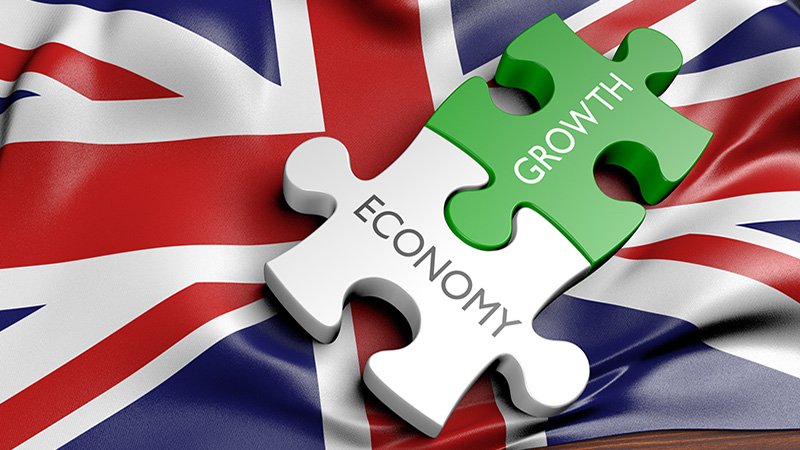
The UK economy returned to growth in the first quarter of 2025, with the final GDP figures released Monday confirming a solid start to the year—though economic headwinds loom on the horizon.
According to the Office for National Statistics (ONS), GDP expanded by 0.7% quarter-on-quarter and 1.3% year-on-year in Q1. This marked a welcome turnaround after the economy stagnated in the second half of 2024.
“The UK economy roared back to life in the first quarter after stagnating through the second half of last year,” analysts at ING commented in a note. They partly attributed the recovery to stronger manufacturing performance—particularly in transport equipment exports to the U.S., which rose 0.8% during the quarter.
However, that momentum faded in April, as new U.S. tariffs under President Donald Trump’s increasingly aggressive trade stance began to bite. Monthly GDP data for April showed a 0.3% contraction, exceeding the 0.1% decline forecast by analysts.
“April saw the largest monthly drop in goods exports to the U.S. on record, with declines across most product categories following the introduction of new tariffs,” said Liz McKeown, director of economic statistics at the ONS.
The OECD also voiced concern in its latest global outlook released June 3, noting that rising trade barriers and policy uncertainty are weighing on global growth prospects. It trimmed its UK growth forecast for 2025 to 1.3% from 1.4% and cut its 2026 projection to 1.0% from 1.2%.
Meanwhile, the Bank of England held interest rates steady at 4.25% earlier this month, despite inflation running at 3.4% in May—well above the 2% target. The BoE expects inflation to peak at 3.7% by September, staying elevated near 3.5% through year-end.
BoE Governor Andrew Bailey highlighted growing slack in the economy, particularly in the labor market, but cautioned that inflationary pressures remain unpredictable. “There are still uncertainties around the balance of supply and demand, and around the persistence of inflation,” he told the British Chambers of Commerce last week.
Despite these challenges, there are signs of improving business sentiment. A Lloyds Bank survey published Monday showed employer confidence at a nine-year high, with the Business Barometer rising to 51%—its strongest reading since November 2015. Economic optimism also continued to climb, with a one-point rise in June following a sharp 16-point jump in May. That optimism rebounded after a drop in April triggered by Trump’s tariff hike, many of which have since been suspended.