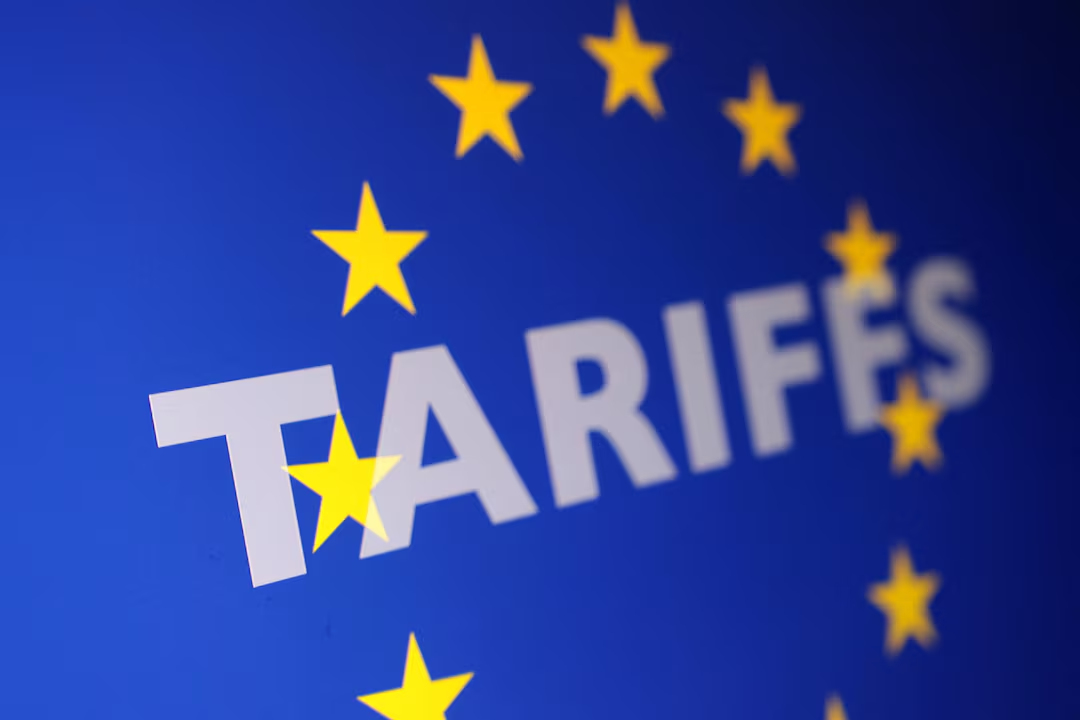
The European Union on Monday criticized the United States for resisting progress on a trade agreement and warned it would impose retaliatory measures if a deal isn’t reached before President Donald Trump’s proposed 30% tariffs take effect on August 1.
While the EU prepared its response, Trump indicated he was still open to negotiations, telling reporters in the Oval Office that EU officials would soon visit Washington for trade discussions.
“They want a different kind of deal, and we’re open to talks — including with Europe. In fact, they’re on their way,” he said.
Trump escalated the trade conflict over the weekend, vowing to apply 30% tariffs on most imports from the EU and Mexico, extending similar threats to Japan, South Korea, and other major economies.
So far, the EU has held back from retaliating to avoid a full-blown trade war, but signs from Monday’s meeting in Brussels suggest the bloc is nearing a decision to strike back. Danish Foreign Minister Lars Lokke Rasmussen called the U.S. tariff threat “absolutely unacceptable.”
EU Trade Commissioner Maros Sefcovic expressed frustration over Washington’s reluctance to compromise, saying there’s still a chance for talks, but warning that “it takes two to clap.” He confirmed that EU member states are aligned on taking countermeasures if no deal is reached.
Italy’s Foreign Minister Antonio Tajani revealed the EU has already drafted a €21 billion ($24.5 billion) tariff package targeting U.S. goods, ready to be imposed if talks collapse.
Meanwhile, Mexican President Claudia Sheinbaum said she remains optimistic about reaching a security-focused deal before the deadline. The White House clarified that the new 30% tariffs would not apply to goods covered by the USMCA, which makes up most of U.S.-Mexico trade.
Sheinbaum also stressed that U.S. military personnel would not be allowed to operate in Mexican territory, addressing concerns raised by Trump’s earlier comments.
Market Reactions and Industry Concerns
White House economic adviser Kevin Hassett confirmed that trade negotiations are underway with the EU, Mexico, and Canada, which faces a 35% tariff starting in August.
The EU’s largest economy, Germany, voiced strong opposition. Chancellor Friedrich Merz warned the tariffs would “strike at the heart of the German export sector.”
Volker Treier, head of Germany’s Chamber of Commerce, said the standoff poses a serious threat to German businesses and called for “tough negotiations to prevent a collapse in transatlantic trade.”
European industries have begun preparing for a worst-case scenario. Italian winemakers in Tuscany’s Chianti region are urging the EU to expand into alternative export markets such as Asia, South America, and Africa to cushion potential losses.
Since returning to office earlier this year, Trump has leaned heavily on tariffs to stimulate U.S. industry, encourage domestic investment, and boost manufacturing. His “Liberation Day” tariff plan in April introduced a baseline 10% duty on all imports, with higher rates for specific products or nations, sparking fears of global supply chain disruptions.
While the initial shock rattled markets, a series of delays and temporary suspensions—including a 90-day pause on most tariffs—has made investors more accustomed to Trump’s unpredictable trade approach.
On Monday, European stocks declined, with autos and alcohol sectors hit hardest, while U.S. indexes remained relatively stable.
Global Scramble for Trade Deals
The looming August 1 deadline has spurred governments to accelerate trade talks.
In South Korea, Trade Minister Yeo Han-koo said a preliminary deal with the U.S. might be possible within the deadline. He suggested Seoul may consider greater U.S. access to its agriculture markets to avoid harsh tariffs.
Yeo, who recently met with top U.S. officials, emphasized that South Korea wants to avoid “unfair” tariffs that could damage both its economy and its strategic alliance with the U.S.
He told reporters that while 20 days is not enough for a detailed agreement, both sides could reach a broad understanding and continue refining it afterward.
South Korea is racing to finalize a deal in hopes of avoiding a 25% tariff—the same level the U.S. is threatening against Japan’s exports.