U.S. Military Action in Iran Seen as Increasingly Likely, Raymond James Says
The United States is “likely at this stage” to carry out a military operation in Iran, according to analysts at Raymond James. However, the scale and objectives of any potential action remain uncertain.
In a note to clients, analysts including Ellen Ehrnrooth and Ed Mills said the Trump administration may favor a targeted strike. Still, they cautioned that current conditions leave open the possibility of broader military engagement.
Rising Military Presence and Diplomatic Deadlock
A rapid buildup of U.S. military assets in the Middle East has intensified speculation about possible strikes. At the same time, negotiations between Washington and Tehran appear to have stalled following recent talks between representatives.
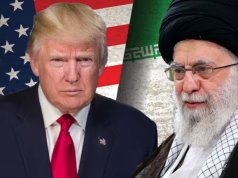
The United States has demanded that Iran halt its nuclear program, limit its ballistic missile development, and reduce support for regional armed groups. Iran has rejected these conditions and maintains that it has never pursued nuclear weapons.
U.S. President Donald Trump stated that a decision on next steps could come within 10 days, emphasizing that he intends to secure an agreement “one way or the other.”
Iranian officials have responded with strong warnings. Supreme Leader Ali Khamenei has suggested that any U.S. attack would be met with severe retaliation.
Markets Focus on Oil Supply Risks
Raymond James noted that while constraints remain, the scale of the U.S. military buildup signals a genuine willingness to act.
For financial markets, the prospect of U.S. strikes on Iran raises concerns about potential disruptions to Middle East oil supplies. Iran is a major oil producer and plays a key role in the Strait of Hormuz, a critical chokepoint through which roughly 20% of global oil shipments pass.
Analysts warn that any escalation could push oil prices higher, increasing inflationary pressure across global economies. According to Capital Economics, sustained energy price spikes could delay anticipated interest rate cuts by central banks.
Brent crude prices were slightly lower in European trading on Friday but remain close to their highest levels since early August.
Elevated Uncertainty Could Test Markets
While markets have shown resilience to geopolitical tensions in recent years, Raymond James cautioned that the risk of a wider regional conflict could challenge that trend.
Heightened uncertainty surrounding U.S.–Iran relations may increase volatility across equities, bonds, currencies, and commodity markets in the weeks ahead.