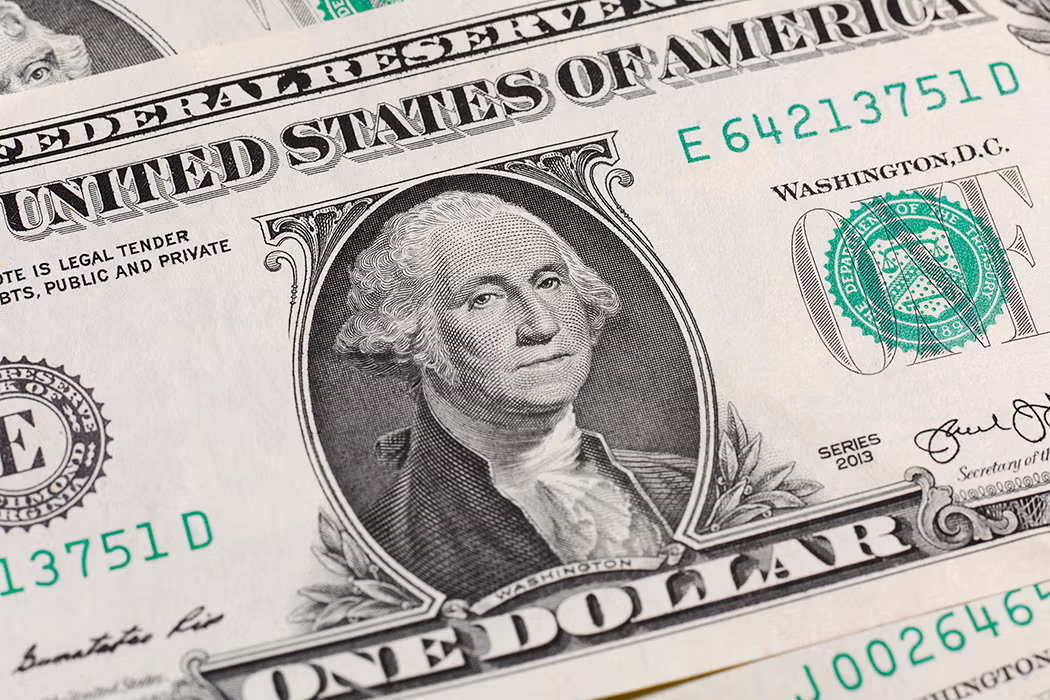
The U.S. dollar edged higher on Wednesday, rebounding from three-week lows against the euro and the Swiss franc as investors reacted to remarks by U.S. President Donald Trump at the World Economic Forum. Earlier tariff threats had triggered a broad selloff in U.S. assets, weighing on the greenback.
The dollar firmed modestly after Trump ruled out the use of military force in Greenland, while emphasizing that he wanted immediate negotiations over a potential deal to acquire the Arctic island. His comments helped calm some market nerves, although uncertainty around trade policy remains elevated.
The euro slipped 0.17% to $1.17, after climbing more than 1% over the previous two sessions. On Tuesday, the single currency touched $1.1770, its strongest level since December 30.
The Swiss franc, a traditional safe haven, weakened 0.47% to 0.7934 per dollar, giving back part of the roughly 1.5% gain it recorded between Monday and Tuesday.
According to Adam Button, chief currency analyst at investingLive, markets are far from seeing the end of the current tensions, but avoiding military escalation is crucial. He noted that any use of force would cause a deep and lasting rift between the United States and Europe, adding that Trump did not appear to be in Davos to issue hard ultimatums.
Political tensions in Europe also stayed in focus. French President Emmanuel Macron urged the European Union to consider activating its Anti-Coercion Instrument—often dubbed the “trade bazooka”—which could restrict U.S. access to public contracts or limit trade in services such as technology platforms. Macron said it was “crazy” that relations had deteriorated to this point.
Meanwhile, Denmark-based pension fund AkademikerPension announced plans to sell roughly $100 million in U.S. Treasuries by the end of the month, adding to speculation that foreign investors may further reduce exposure to U.S. assets.
NATO Secretary General Mark Rutte said he was working quietly to ease tensions between the United States and its European allies.
In the Nordic region, the Swedish krona strengthened to a fresh four-year high against the dollar at 10.099, as investors favored countries with relatively low debt levels.
Yen under pressure as intervention fears resurface
The dollar was little changed against the Japanese yen, which has faced renewed selling pressure after Japanese Prime Minister Sanae Takaichi called snap elections for February 8 and pledged looser fiscal policies. The yen traded slightly weaker at 158.255 per dollar.
Japanese government bonds (JGBs), which were hit hard earlier in the week, staged a partial rebound on Wednesday. Still, volatility remains elevated.
Vincent Chung, co-portfolio manager at T. Rowe Price, said the lack of long-term strategic buyers has made the bond market more sensitive to price swings, a trend he expects to persist through 2026.
Chris Turner, global head of markets at ING, warned that another sharp selloff in JGBs could push the dollar-yen pair toward intervention territory around 159–160. However, he added that if the yen’s weakness is driven by domestic policy decisions, the effectiveness of any intervention could be limited.