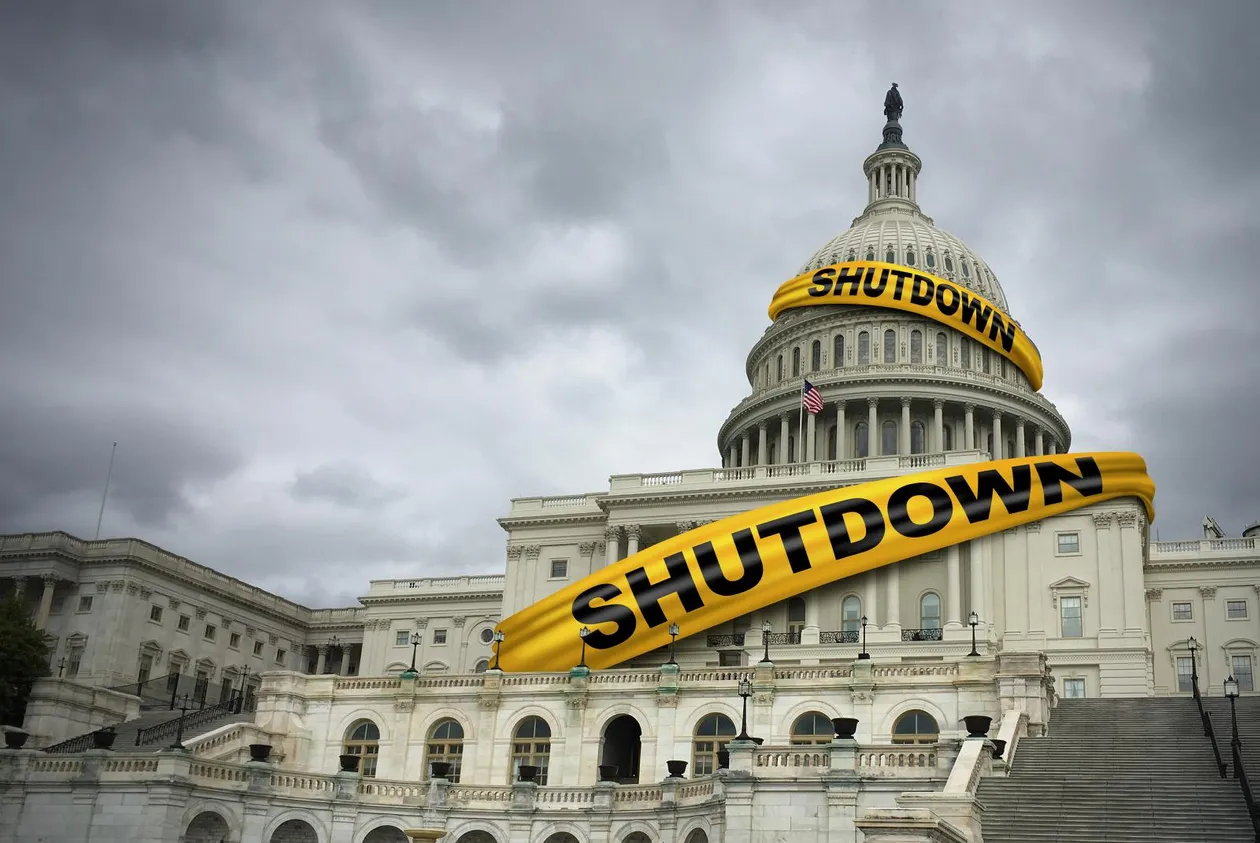
U.S. Data Blackout Clouds Global Outlook, Raises Policy Risks
The U.S. government shutdown, which has halted the release of key economic data, is now clouding visibility for global policymakers. Central banks and governments in Japan, Europe, and beyond rely on U.S. indicators to shape their own decisions on currencies, inflation, and trade performance.
Global Policymakers Flying Blind
What happens in the United States rarely stays confined to its borders. Officials worldwide warn that the data blackout could complicate policy planning and increase the risk of errors — especially as nations adapt to President Donald Trump’s trade agenda.
“This is a serious issue. We hope it’s resolved soon,” said Bank of Japan Governor Kazuo Ueda on October 3, noting how the lack of U.S. data makes it harder to decide when to resume interest rate hikes.
Another Japanese policymaker was blunter, saying, “It’s a joke. Chair Jerome Powell says the Fed is data-dependent, but there’s no data to depend on.”
Concerns Over the Dollar and Fed Independence
At the Bank of England, policymaker Catherine Mann said that while the U.S. data disruptions don’t directly drive BOE policy, they do affect broader global dynamics. She compared the potential erosion of confidence in U.S. institutions to “termites” slowly weakening the dollar’s global dominance — not an immediate crisis, but a long-term concern.
Mann also cautioned that political pressure on institutions like the Federal Reserve could eventually undermine public trust in economic governance.
IMF and World Bank Meetings Turn Focus to U.S. Stability
Finance ministers and central bankers gathered in Washington this week for IMF and World Bank meetings, where the U.S. shutdown became a central topic. Amid global challenges — from European conflicts to Middle East tensions and climate change — many participants expressed concern over America’s governance reliability.
The IMF’s World Economic Outlook warned that political interference in data collection could erode confidence in official statistics and complicate policymaking. “If data quality, reliability, and timeliness are compromised,” the IMF said, “the likelihood of policy mistakes increases.”
Private Sector Data Fills the Gaps — For Now
Although the Federal Reserve remains operational and continues gathering private survey data, experts warn that these are only temporary substitutes.
According to Adam Posen, president of the Peterson Institute for International Economics, “The shutdown feeds skepticism about U.S. governance and reliability. That uncertainty ultimately influences reserve management, currency stability, and market volatility.”
IMF Sees Modest Global Recovery — for Now
The IMF slightly raised its global growth forecast for 2025 to 3.2%, recovering from an earlier downgrade to 2.8%. But with the U.S. economy accounting for about one-quarter of global output, the absence of reliable data could soon make it harder to assess real conditions.
As Robert Kahn of the Eurasia Group warned, “Policymakers still have micro data and anecdotal insights, but the longer this lasts, the risk of error rises as uncertainty compounds.”