Turkey’s Economy Back on Positive Track, Says Finance Minister
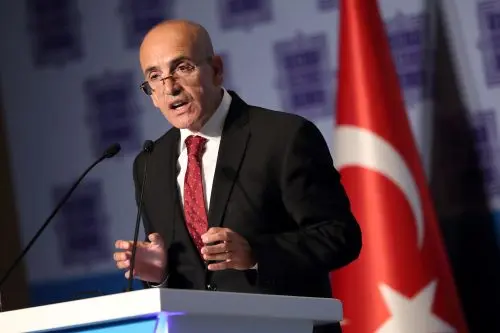
Turkey’s economy has entered a “positive cycle” following market volatility in March, according to Finance Minister Mehmet Simsek. Speaking on Kanal 7 on Sunday, Simsek highlighted that all key financial indicators — including gross foreign exchange reserves and the BIST100 stock index — have returned to their levels from mid-March.
Market Recovery After March Turbulence
The recovery comes after political and financial unrest sparked by the detention of Istanbul Mayor Ekrem Imamoglu on March 19. As President Erdogan’s main political rival, Imamoglu’s arrest triggered sharp market reactions. In response, the central bank executed an emergency interest rate hike to stabilize the lira and support reserves.
Interest Rate Cut Signals Easing Cycle
This week, the Central Bank of Turkey resumed its easing cycle, cutting the benchmark interest rate by a surprising 300 basis points to 43%. This move signals renewed confidence in the market and a return to accommodative monetary policy.
Moody’s Upgrades Turkey’s Credit Rating
In a further sign of economic improvement, Moody’s upgraded Turkey’s credit rating to Ba3 from B1. The rating agency cited increased credibility in monetary policy, falling inflation, and reduced economic imbalances as key reasons.
Inflation Eases, Outlook Improves
Simsek noted that the government expects inflation to end the year below 29%, aligning with the central bank’s forecast range of 19% to 29%. In June, consumer price inflation slowed to 35%, continuing its sharp decline from a peak of nearly 75% in May 2024.
Growth Slower, but Stable
While economic growth has been below expectations in recent months, the government still projects 4.0% GDP growth for 2025, based on its three-year economic plan. However, a recent Reuters poll of 34 economists predicts 2.8% growth this year, slightly lower than the 3.2% achieved in 2024. Simsek acknowledged a “high probability” of minor deviations from budget revenue targets.