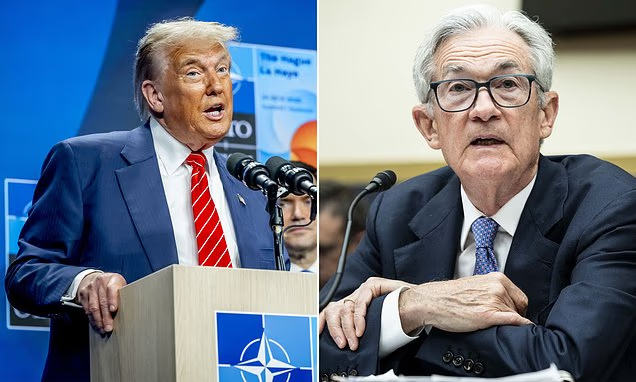
U.S. President Donald Trump is reportedly considering speeding up the announcement of a successor to Federal Reserve Chair Jerome Powell, according to a Wall Street Journal report published Wednesday. The move comes amid mounting frustration within the Trump administration over the Fed’s reluctance to deliver swift interest rate cuts.
Sources cited by the Journal said Trump is weighing the possibility of naming Powell’s replacement as early as September or October. However, the president’s persistent dissatisfaction with Powell’s cautious approach could lead to an even earlier announcement—possibly during the summer.
Among the leading candidates being considered are former Fed Governor Kevin Warsh and National Economic Council Director Kevin Hassett. Others reportedly in the running include Treasury Secretary Scott Bessent, former World Bank President David Malpass, and current Fed Governor Christopher Waller.
Despite sustained pressure from Trump—including repeated social media attacks demanding immediate rate cuts—Powell has remained steadfast, indicating his intention to serve out his term, which expires in May 2026.
A significantly early nomination of Powell’s successor would break with the typical practice of naming a Fed Chair just a few months before a term ends. Analysts believe the move could be aimed at diminishing Powell’s credibility and influence over financial markets.
Trump hinted at such a move on Wednesday, again voicing criticism of Powell—whom he appointed during his first term—as he signaled a decision could be coming soon.
Powell, meanwhile, maintained his cautious stance during recent congressional testimony, reiterating that the economic outlook remains uncertain due to Trump’s own trade tariffs, which he said pose inflationary risks and constrain the Fed’s ability to adjust interest rates.
Commenting on the implications, Thierry Wizman, Global FX & Rates Strategist at Macquarie Group, warned that Trump’s approach risks damaging perceptions of central bank independence.
“Trump’s effort to ‘shadow’ the Fed by preemptively naming a successor to Chair Jay Powell undermines confidence in the integrity and autonomy of U.S. monetary policy—and by extension, in the U.S. dollar as the world’s reserve currency,” Wizman said. “That narrative is starting to show in market sentiment, and is contributing to the dollar’s current sell-off.”