
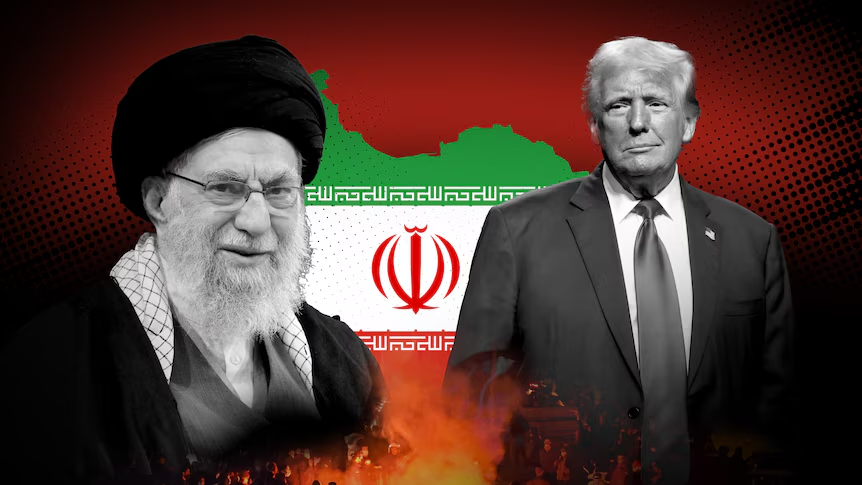
President Donald Trump warned on Thursday that Iran must reach a deal over its nuclear program within 10 to 15 days or face “really bad things.” His remarks were followed by a strong response from Tehran, which threatened to retaliate against U.S. military bases in the region if attacked.
The warning comes amid a significant U.S. military buildup in the Middle East, raising fears of a broader regional conflict. Despite escalating tensions, Trump said negotiations aimed at resolving the nuclear dispute were progressing, but stressed that Iran must agree to a “meaningful” deal.
Speaking during a meeting of his Board of Peace in Washington, Trump reiterated that failure to reach an agreement would lead to serious consequences. Referring to U.S. airstrikes carried out in June, he said Iran’s nuclear capabilities had been severely damaged, adding that further action remained possible. Later, aboard Air Force One, he clarified that 10 to 15 days would be the maximum timeframe for Iran to respond.
In a letter addressed to U.N. Secretary-General António Guterres, Iran stated that it did not seek war but would respond “decisively and proportionately” to any military aggression. Tehran warned that U.S. bases and assets in the region would become legitimate targets if conflict erupted, holding Washington responsible for any escalation.
Trump’s renewed pressure on Iran has added to volatility in global energy markets, with oil prices rising on fears of supply disruptions. At the same time, a Russian naval vessel joined planned Iranian drills in the Gulf of Oman, a key shipping route for global oil supplies.
Diplomatic efforts remain ongoing. Iranian and U.S. negotiators met earlier this week, with Iranian Foreign Minister Abbas Araqchi saying the two sides agreed on “guiding principles.” However, the White House indicated that significant differences still remain. A senior U.S. official said Iran is expected to submit a written proposal addressing American concerns.
The United States is demanding that Iran fully halt uranium enrichment, abandon long-range ballistic missile development, and stop supporting armed groups across the Middle East. Washington and Israel have long accused Tehran of pursuing nuclear weapons capability, an allegation Iran denies, insisting its program is solely for peaceful energy purposes.
Meanwhile, Russia has warned against further escalation and called for restraint, as U.S. aircraft carriers, warships, and fighter jets continue deploying to the region. Satellite imagery has shown ongoing activity at Iranian nuclear and missile sites, as well as increased military preparations at U.S. bases.
European governments have also reacted to the heightened tensions. Poland urged its citizens to leave Iran immediately, citing the risk of sudden deterioration in security conditions.
With a short deadline now set and military forces positioned across the region, markets and policymakers are closely watching whether diplomacy can prevent a potential confrontation.