President Donald Trump said on Tuesday that he will announce his pick to replace Jerome Powell as Federal Reserve Chair early next year. His comments extend a months-long selection process, even though he recently stated he already knows who he will choose to lead the world’s most influential central bank.
During a cabinet meeting, Trump noted that Treasury Secretary Scott Bessent, who has directed the search, does not want the position himself. The president did not reveal who his preferred candidate is.
On Sunday, Trump told reporters that he has decided on Powell’s successor. Powell’s term ends in May. Trump would not say whether his choice is Kevin Hassett, his top economic adviser and the current favorite in online betting markets.
Hassett, 63, served as chair of the White House Council of Economic Advisers during Trump’s first term. He has remained a loyal supporter through frequent television appearances on CNBC, Fox News and other networks. In these interviews, he has backed Trump’s tariff policies and his push for lower interest rates.
Trump, who follows TV news closely, sees Hassett regularly. Hassett also works from the West Wing, giving him direct access to the president. He has helped shape Trump’s thinking on trade, economic issues, and monetary policy.
Candidates Who Support Lower Rates
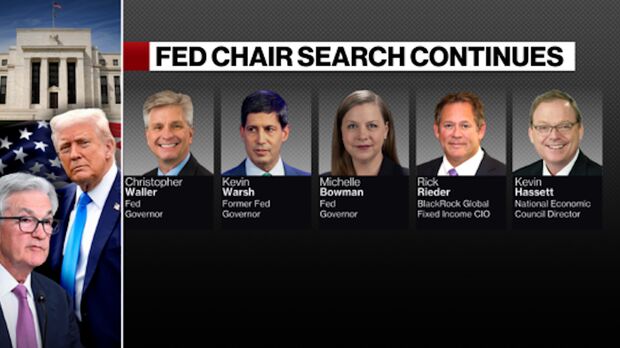
Other contenders to replace Powell include current Fed Governors Michelle Bowman and Christopher Waller, former Fed Governor Kevin Warsh, and BlackRock executive Rick Rieder. Bessent has already completed two rounds of interviews with each candidate and plans to present a short list of finalists to Trump and senior White House officials this month.
Trump has made it clear that he wants a chair who supports lower interest rates. Hassett and the other candidates have voiced similar views. However, this preference may face resistance from an economy that is still strong and keeping many Fed officials cautious about easing policy too quickly.
As the decision nears, economists and markets are focused on how Trump’s pick will shape monetary policy. The next chair will enter office as the economy gains momentum but continues to struggle with job creation and elevated inflation.
James Egelhof, chief U.S. economist at BNP Paribas, said during a call on the bank’s 2026 outlook that economic conditions will ultimately drive policy, regardless of who leads the Fed. The bank expects resilient growth and persistent inflation to limit rate cuts next year. After the anticipated move during the December 9–10 Fed meeting, Egelhof projects only one additional cut in 2026. He expects Trump’s new Fed chair to keep rates steady as inflation hovers near 3%.
The Federal Reserve’s long-term inflation target remains 2%.