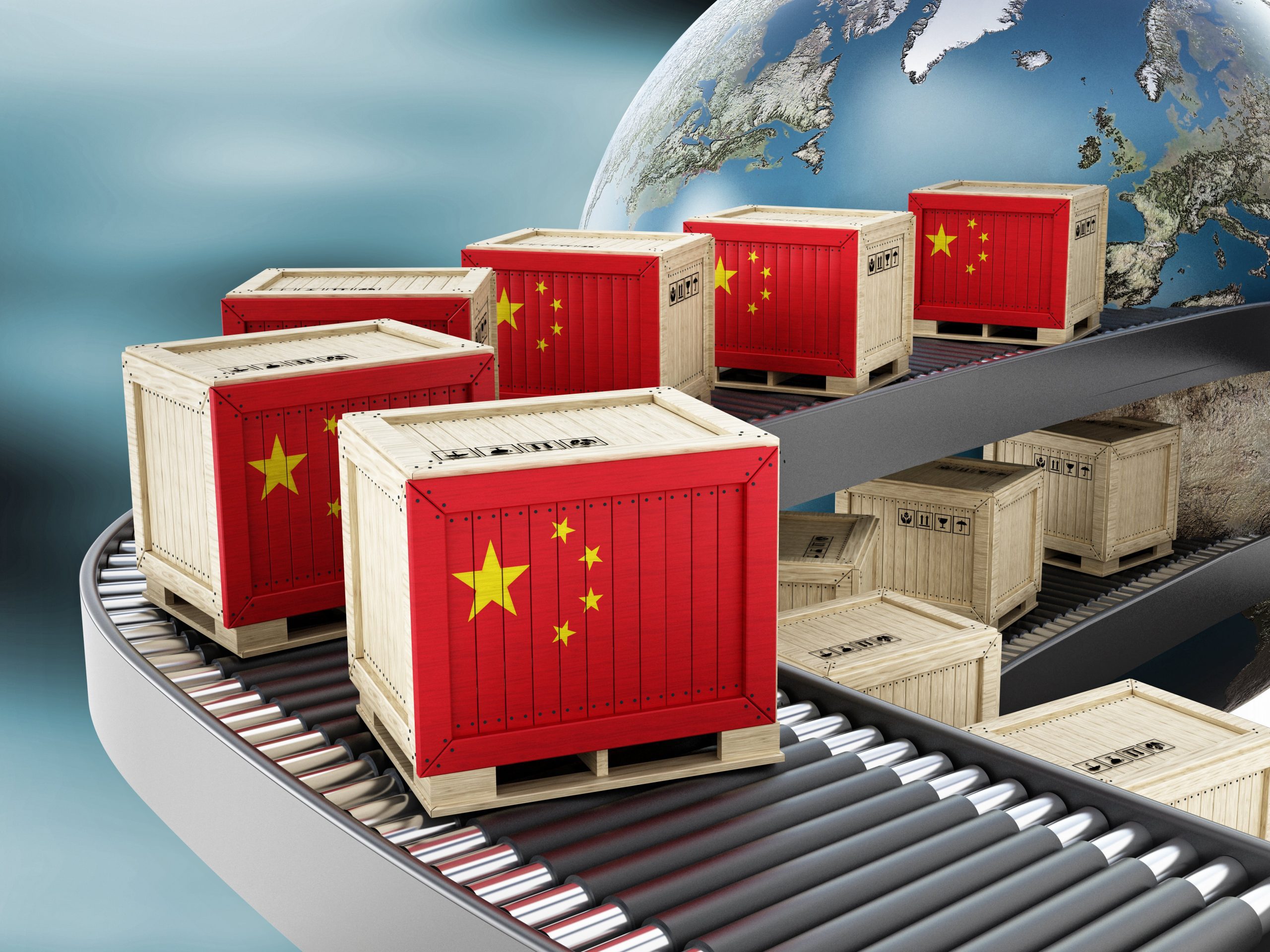
China closed 2025 with a record trade surplus of nearly $1.2 trillion, driven largely by strong export growth to markets outside the United States, as Chinese manufacturers expanded their global footprint to offset sustained pressure from the administration of Donald Trump.
Government efforts to encourage exporters to reduce dependence on the U.S. — by redirecting trade toward Southeast Asia, Africa, and Latin America — proved effective. This strategy helped shield the economy from U.S. tariffs and intensifying trade, technology, and geopolitical tensions following Trump’s return to the White House last year.
“China’s economy remains exceptionally competitive,” said Fred Neumann, chief Asia economist at HSBC. He noted that while productivity gains and higher technological sophistication have played a role, weak domestic demand and excess industrial capacity have also contributed to China’s export strength.
As 2026 approaches, Beijing faces growing challenges. These include mounting concerns from global policymakers over China’s trade practices, industrial overcapacity, and the world’s increasing reliance on Chinese-made goods. A key question is how long the world’s second-largest economy can offset a prolonged property downturn and sluggish domestic consumption by exporting increasingly low-cost products abroad.
Customs data released on Wednesday showed China’s full-year trade surplus reached $1.189 trillion, a level comparable to the annual output of major economies such as Saudi Arabia. The surplus surpassed the $1 trillion mark for the first time in November.
“With a more diversified set of trading partners, China’s ability to absorb external shocks has improved significantly,” said Wang Jun, a vice minister at China’s customs administration, during a press briefing.
Exports from China rose 6.6% year-on-year in December, accelerating from November’s 5.9% increase and comfortably beating market expectations. Imports also surprised to the upside, climbing 5.7%, compared with a 1.9% rise the previous month.
“Strong export performance continues to offset weak domestic demand,” said Zhiwei Zhang, chief economist at Pinpoint Asset Management. He added that stable U.S.-China relations and buoyant equity markets suggest Beijing is unlikely to adjust its macroeconomic policy stance in the near term.
Exports expand as China gains global market share
China’s yuan remained largely unchanged following the data, while equities rallied. The Shanghai Composite and CSI 300 indices both climbed more than 1% in morning trading.
Monthly trade surpluses exceeded $100 billion on seven occasions in 2025, compared with just once in 2024. A weaker yuan helped underpin export competitiveness, highlighting that Trump-era measures have had limited impact on China’s broader global trade — even as shipments to the United States declined.
Exports to the U.S. fell 20% last year, while imports from the U.S. dropped 14.6%. However, Chinese exporters made significant gains elsewhere. Shipments to Africa surged 25.8%, exports to ASEAN countries rose 13.4%, and deliveries to the European Union increased 8.4%.
Rare-earth exports climbed to their highest level since at least 2014, even as Beijing restricted shipments of certain medium and heavy elements starting in April. Analysts viewed the move as a demonstration of China’s leverage amid negotiations involving soybeans, potential aircraft purchases, and discussions surrounding TikTok’s U.S. operations.
China also imported a record volume of soybeans in 2025, supported by rising shipments from South America. Purchases from the United States remained subdued for much of the year as trade tensions persisted.
Trump factor remains a key risk
Economists expect China to continue expanding its global market share in 2026, aided by overseas production hubs that allow Chinese firms to bypass tariffs in the U.S. and Europe, as well as robust demand for lower-end chips and electronics.
At the same time, Beijing has shown signs it may rein in some industrial support measures to ease international concerns. Last week, authorities scrapped export tax rebates for the solar sector, a long-standing point of contention with European partners.
Trade risks linked to Trump’s policies remain elevated. The U.S. Supreme Court could rule on the legality of his tariff measures as early as Wednesday. Trump also reiterated this week that China could open its markets further to American goods, after warning of new 25% tariffs on countries trading with Iran — a move that risks reigniting tensions with Beijing, Tehran’s largest trading partner.
“Trump’s renewed tariff threats highlight the ongoing risk of escalating trade frictions between the U.S. and China,” said Zichun Huang, China economist at Capital Economics.