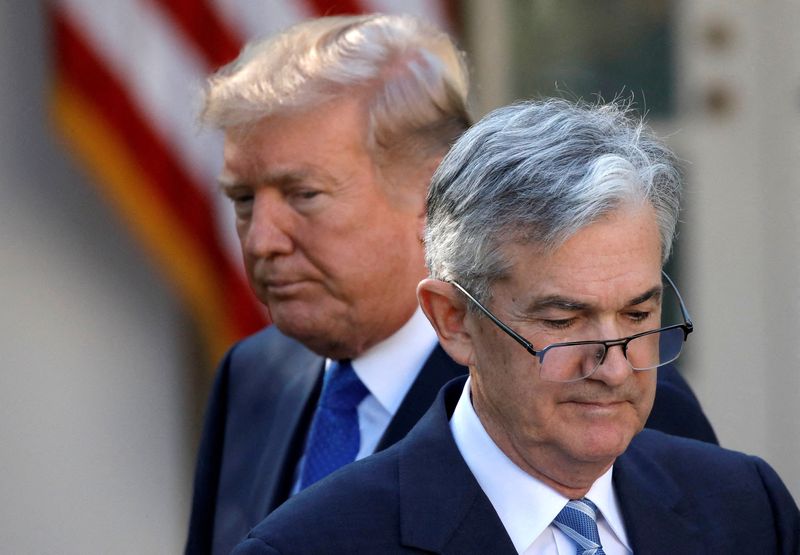
Trump Suggests He Might Reconsider Firing Fed Chair Powell
U.S. President Donald Trump once again raised the possibility of dismissing Federal Reserve Chair Jerome Powell, whom he has frequently criticized for not cutting interest rates.
In a post on Truth Social Friday, Trump wrote:
“I don’t know why the Board doesn’t override [Powell]… Maybe, just maybe, I’ll have to change my mind about firing him? But regardless, his term ends shortly.”
Trump acknowledged that his harsh rhetoric might be complicating Powell’s ability to lower rates, saying:
“I fully understand that my strong criticism of him makes it more difficult for him to do what he should be doing, lowering Rates, but I’ve tried it all different ways.”
While Fed chairs are traditionally shielded from removal except in cases of legal misconduct, Trump has repeatedly tested that boundary, threatening to fire Powell on several occasions—only to later backtrack.
“I’m not going to fire him,” Trump said at the White House on June 12.
The Federal Reserve kept interest rates steady this week in the 4.25%–4.50% range, while projecting slower economic growth, higher unemployment, and elevated inflation by year’s end.
Fed Governor Chris Waller, a potential Trump nominee to replace Powell, suggested Friday that rate cuts could begin as early as July, citing easing inflation and labor market softness. Still, Waller joined a unanimous vote on Wednesday to hold rates unchanged, showing no internal push to override Powell’s leadership—a move that would be highly unusual.
Although Trump campaigned on lowering inflation, his administration’s tariff hikes have contributed to higher consumer prices, according to Powell and many economists.
Powell’s current term runs through May 2026, but Trump is widely expected to nominate a successor well before then.
A recent Supreme Court decision in May reinforced the Fed’s independence, describing it as a “uniquely structured, quasi-private entity,” easing concerns over whether a sitting president could legally remove the Fed chair.