Trump Seeks to Ban Chinese Airlines from Flying Over Russia
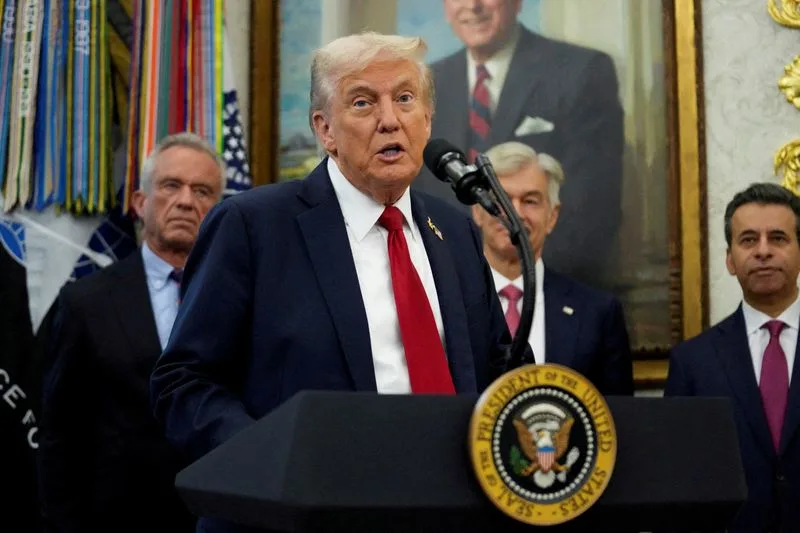
The Trump administration has proposed a new rule that would ban Chinese airlines from using Russian airspace on routes to and from the United States.
Officials say that flying over Russia gives Chinese carriers an unfair edge, as the shorter routes save time, reduce fuel costs, and hurt American airline competitiveness.
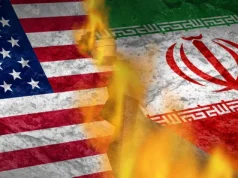
The proposal marks another step in the ongoing US-China trade war, which has recently intensified. It came just hours after Beijing tightened export controls on rare earth minerals, materials that are critical for several U.S. industries.
U.S. Airlines Call for Fair Competition
U.S. airlines have long criticized China’s ability to use Russian airspace while American and European carriers are banned.
In 2022, Russia blocked U.S. and other foreign airlines from flying through its territory after Washington barred Russian flights over the U.S. following the Ukraine invasion.
However, Chinese airlines were not included in those restrictions.
This allowed carriers such as Air China, China Eastern, Xiamen Airlines, and China Southern to operate faster and cheaper flights, gaining market share on key international routes.
The U.S. Department of Transportation (DOT) stated that this imbalance is “unfair and has resulted in substantial competitive harm to U.S. airlines.”
The proposed ban would apply to Chinese passenger flights but not to cargo-only routes, according to the DOT.
Market Reaction and Airline Impact
The decision could affect several major Chinese carriers operating between China and the United States.
Although Cathay Pacific, based in Hong Kong, also flies over Russia on its New York–Hong Kong route, it was not named in the proposed order.
When the announcement was made, Chinese airline stocks fell modestly on Friday.
By midday, Air China was down 1.3%, China Southern 1.8%, and China Eastern 0.3%.
All three state-owned carriers have struggled to recover from the COVID-19 pandemic, posting five straight years of financial losses.
Trade and Aviation Tensions Rising
The proposal comes amid growing trade tensions between Washington and Beijing.
The issue adds to a long list of disputes — from semiconductor exports and rare earths to aviation and technology deals.
Meanwhile, Boeing is in negotiations to sell up to 500 jets to China, a move that could reshape the world’s second-largest aviation market.
Orders have been delayed for years due to the ongoing trade friction between the two countries.
Trump–Xi Meeting Expected
President Donald Trump and President Xi Jinping are expected to meet in South Korea at the end of October to discuss several key trade and aviation disputes.
Chinese airlines have two days to respond to the new proposal, and the final order could take effect by November.
Earlier, in May 2023, the U.S. approved a limited increase in Chinese airline flights after they agreed not to fly over Russia on new routes.
Before the pandemic, each side operated over 150 weekly passenger flights, but that number was drastically reduced after COVID-19 and trade restrictions began.
Some U.S. airlines have warned that avoiding Russian airspace makes direct East Coast flights to China less profitable.
Longer routes mean more fuel, fewer seats sold, and reduced cargo capacity — adding financial strain to carriers already facing intense international competition.