Trump Praises Japan’s Role in Iran Crisis
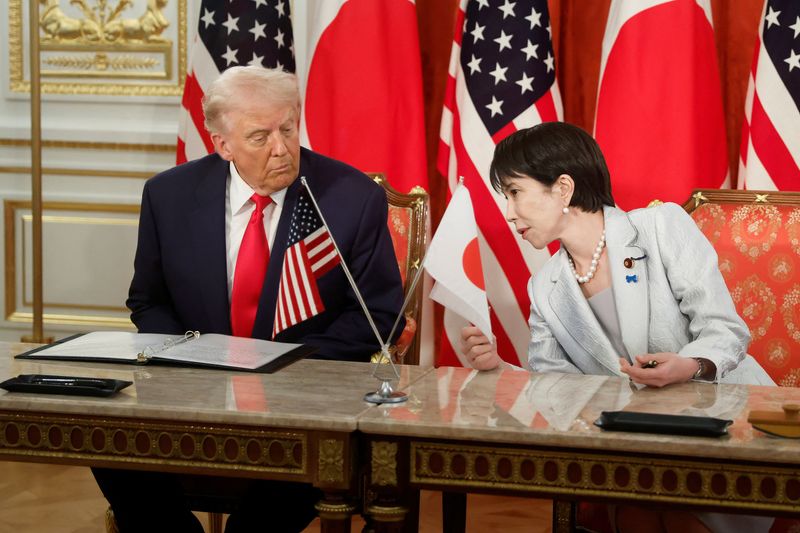
U.S. President Donald Trump welcomed Japan’s Prime Minister Sanae Takaichi to the White House on Thursday, praising Tokyo for its growing role in addressing tensions with Iran. He stated that Japan was “really stepping up,” contrasting its approach with that of NATO allies.
Despite previously criticizing allies for limited support in the U.S.-Israeli campaign, Trump emphasized that additional international involvement—particularly in securing key shipping routes—remains valuable.
Focus on Strait of Hormuz Security
A key issue discussed was the Strait of Hormuz, a critical global energy route that has been largely disrupted by Iran during the conflict. The U.S. is seeking support to ensure safe navigation for oil tankers and to clear potential maritime threats such as mines.
Ahead of the meeting, Japan joined European nations in a joint statement committing to stabilizing global energy markets and supporting efforts to maintain safe passage through the Strait.
Strengthening U.S.-Japan Relations
Trump highlighted the long-standing partnership between the United States and Japan, calling their relationship strong across multiple areas. He also congratulated Takaichi on her recent election victory, describing it as historic.
While Trump reiterated that the U.S. does not depend on foreign assistance, he stressed that it is appropriate for allies to contribute, especially given longstanding U.S. military support for Japan.
Japan Proposes Steps to Stabilize Energy Markets
Prime Minister Takaichi presented specific proposals aimed at calming global energy markets. She strongly condemned Iran’s actions in the Strait of Hormuz and reiterated that Iran must not be allowed to develop nuclear weapons.
She also warned that continued instability in the Middle East could have significant negative consequences for the global economy.
Japan Maintains Diplomatic Channels with Iran
Unlike the United States, Japan maintains diplomatic relations with Iran. Takaichi confirmed that Tokyo has been engaging with Tehran, potentially positioning Japan as a mediator in efforts to de-escalate the conflict.
However, previous attempts by Japan to facilitate dialogue with Iran have faced challenges.
Japan’s Dependence on Middle East Oil
Japan remains heavily reliant on crude oil imports from the Gulf region, making stability in the Middle East a critical concern for its energy security.
U.S. officials have suggested that Japan could play a larger role, including deploying advanced naval capabilities to secure shipping routes or releasing additional oil from its strategic reserves to ease market pressures.
Domestic Constraints Limit Japan’s Response
While Japan is considering its options, domestic political constraints remain a key factor. The country’s pacifist constitution limits military involvement abroad, and public support for participation in the conflict remains low.
Takaichi has stated that any action would be carefully evaluated within these constitutional boundaries.
Broader Talks on Energy, Trade, and Security
Discussions between Trump and Takaichi extended beyond Iran, covering trade, energy cooperation, and economic security. Key topics included critical minerals and supply chain resilience.
Japan is also expected to increase investments in the United States, potentially committing tens of billions of dollars to energy and infrastructure projects.
Rising Regional and Global Security Concerns
Japanese officials are also focused on broader geopolitical risks, including China’s growing assertiveness in the region and tensions surrounding Taiwan.
In addition, Japan is considering participation in advanced defense initiatives, including missile defense systems aimed at strengthening long-term security.