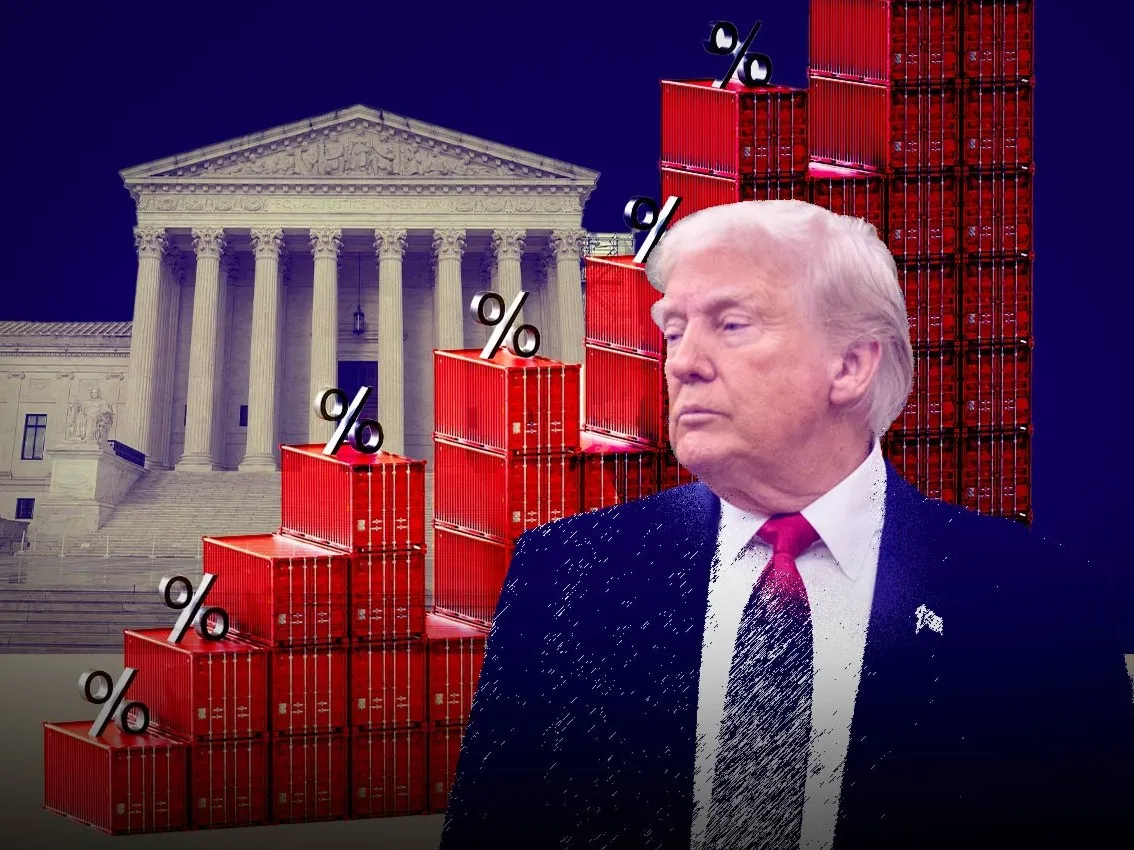
New global trade tariffs introduced by U.S. President Donald Trump officially took effect at midnight on Tuesday at a 10% rate, following a Supreme Court decision that invalidated much of his previous tariff framework.
The updated 10% tariff was confirmed through a notice issued by U.S. Customs and Border Protection. The rate is lower than the 15% tariff level President Trump referenced after last week’s court ruling.
Tariff Rate Adjustments After Supreme Court Ruling
Initially, President Trump announced a universal 10% tariff in response to the Supreme Court decision. He later indicated the levy would increase to 15%. However, the current implementation remains at 10%, although media reports suggest the White House is working toward raising the rate to the president’s preferred 15% level.
The new tariffs are being imposed under Section 122 of the Trade Act of 1974. The Supreme Court previously ruled that President Trump exceeded his authority by using the International Emergency Economic Powers Act to justify earlier tariff measures.
According to U.S. Customs, the 10% duty applies to all goods imported into the United States unless explicitly exempted. The measure will remain in force for 150 days, until July 24, 2026. To extend the tariffs beyond that date, the administration would need approval from Congress.
In a separate statement, customs officials confirmed that the suspension of the de minimis exemption for low-value imports remains in effect.
Global Reaction and Legal Challenges
Following the Supreme Court ruling, several countries have reportedly sought clarification and potential renegotiation of trade agreements signed with the United States over the past year. The decision has introduced uncertainty over the status of those deals.
The ruling also leaves unresolved the issue of tariff revenue already collected. Estimates suggest the government has received more than $160 billion under the now-invalidated tariff regime.
On Monday evening, FedEx Corporation filed a lawsuit against the U.S. government, seeking a full refund of duties paid under the overturned tariffs. Other companies are also considering legal action in response to the policy changes.