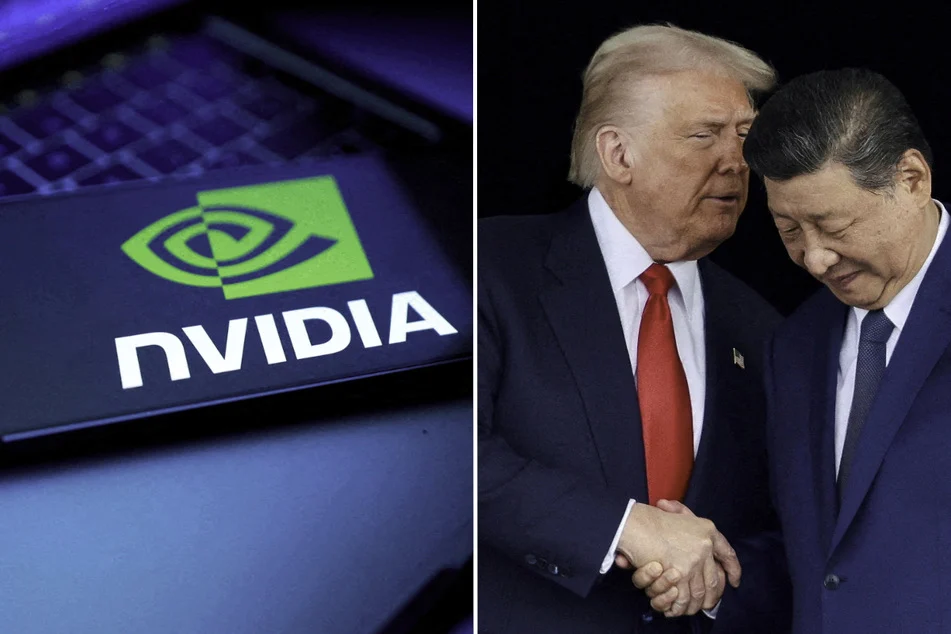
Hardline China critics in Washington sharply criticized the Trump administration’s decision to allow Nvidia to export its second-most-advanced AI chip to China. They warned that Beijing could use the technology to accelerate its military development.
President Donald Trump announced on Monday that Nvidia’s H200 chips would be approved for sale to China. He added that the U.S. would impose a 25% fee on these exports and that AMD and Intel would also receive authorization to sell similar chips.
Brad Carson, former Under Secretary of the Army, said the decision “puts our competitive edge up for sale,” adding that the world may regret the move if China strengthens its military using U.S. chip technology.
The policy shift marks the most dramatic step in Trump’s new push to ease restrictions on sales of advanced U.S. AI technology to China. The change comes as he aims to expand overseas markets for American companies while confronting Beijing’s export controls on rare earth minerals, which are essential for producing a wide range of technologies.
It also represents a significant reversal from Trump’s first term, when he restricted China’s access to U.S. tech over concerns about intellectual property theft and the use of commercial technology for military advancement — charges Beijing denies.
The current administration, led by White House AI adviser David Sacks, argues that allowing AI chip sales to China will discourage local rivals like Huawei from accelerating their efforts to match the advanced designs of Nvidia and AMD. Sacks warned earlier this year that widespread adoption of Huawei AI chips in five years would signal a strategic U.S. failure.
However, many national-security experts strongly disagree. Stewart Baker, a former Homeland Security and NSA official, said the belief that the U.S. can keep China dependent on American chips by selling them the H200 is “a delusion.” He argued that China will continue pushing to develop its own domestic chip industry with the goal of surpassing U.S. firms.
Saif Khan, former director of Technology and National Security at the White House National Security Council, echoed these concerns. He warned that allowing H200 exports could erode America’s AI advantage and accelerate China’s military modernization.
Some experts offered a more moderate view. James Mulvenon, a noted China military analyst, said the long-term impact may be limited because China has no intention of relying on Nvidia or any Western technology. He believes any gains from these sales will be temporary.