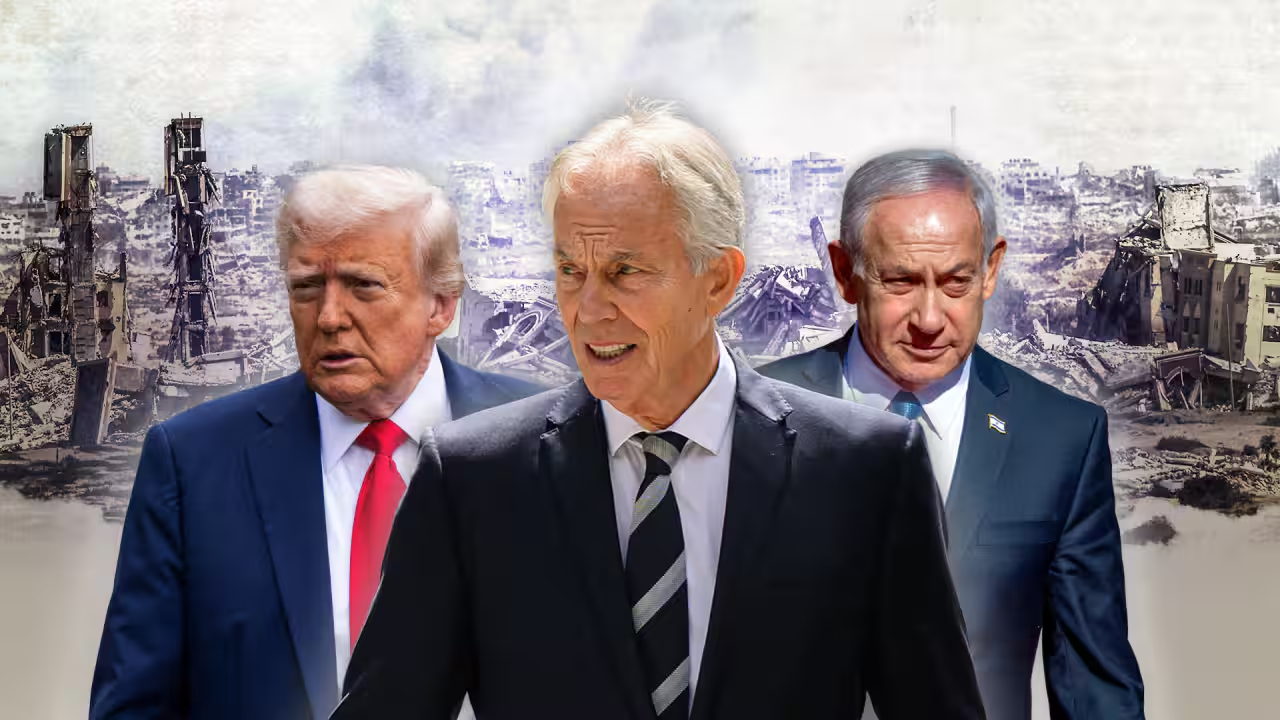
Tony Blair’s potential return to Middle East diplomacy sparks criticism and doubt
When Tony Blair first took on the role of Middle East envoy in 2007, the White House warned that the former British prime minister was not a “superman.” His mission to broker peace between Israel and the Palestinians achieved little, and peace talks collapsed by 2014.
Now, Blair is once again linked to the region. He has been named in U.S. President Donald Trump’s 20-point Gaza peace proposal, which would form a “Board of Peace” of international overseers. Trump praised Blair as a “very good man” and claimed he had requested to join the initiative. Blair’s office described the proposal as “bold and intelligent,” but declined further comment.
Mixed reactions to Blair’s possible role
Blair’s inclusion drew sharp criticism from Palestinians and members of his own Labour Party. Many view his reputation as damaged by his support for the U.S.-led invasion of Iraq in 2003 and his perceived closeness to Israel. Hamas rejected his involvement outright, calling it “foreign guardianship” over the Palestinian people.
Commentators in Ramallah also condemned Blair, saying his reputation among Palestinians was “black.” Diplomats in the region described his potential role as “too toxic” to be effective.
Still, some former diplomats and allies argue Blair is trusted by Washington, Israel, and Gulf states—making him a rare figure who could unite opposing sides. Supporters also point to his success in helping deliver the Northern Ireland peace agreement after decades of violence.
Criticism over Iraq and ties to Israel
Blair remains widely criticized for supporting George W. Bush in Iraq, which many Arabs regard as a war crime. Critics accuse him of bias towards Israel, while defenders say he simply recognized that any peace solution must be acceptable to Israel’s elected leaders.
Tom Kelly, Blair’s former spokesman, said Blair has the ability to understand different perspectives and “paint a picture of a better future.” Miran Hassan, director of the Labour Middle East Council, echoed this, noting Blair’s skill in bridging diplomatic relations at senior levels.
But opposition within Britain’s Labour Party remains strong. Labour MP Kim Johnson called his potential role “outrageous and disgusting,” arguing that Blair is the wrong person for a peace mission.
Blair’s post-premiership career
Since stepping down as prime minister in 2007, Blair has run the Tony Blair Institute, which advises governments worldwide and has backing from Oracle founder Larry Ellison. He has also served as a senior adviser to JPMorgan, sitting on the bank’s international council.
Despite his experience, Blair’s possible return to Middle East diplomacy is once again dividing opinion—reopening old wounds and raising new doubts.