The global robotaxi market is nearing a critical inflection point, with major players such as Tesla and Waymo expected to expand commercial operations in 2026, according to New Street Research.
The brokerage firm believes Tesla is best positioned to lead this transition. Analyst Peter Vogel reiterated a Buy rating on the stock and set a $600 price target, suggesting roughly 40% upside from current levels.
Vogel argues that Tesla holds three key structural advantages over competitors: the lowest unit costs, a highly flexible supply model, and a vast existing vehicle fleet. These factors, he says, give Tesla a durable edge as the robotaxi market scales.
According to the analyst, Tesla’s vision-only software approach, vertical integration, and lower vehicle costs result in a structurally lower cost per mile than rivals like Waymo. Over time, Tesla’s total operating cost could decline to around $0.50 per mile, which Vogel estimates is roughly 40% below Waymo’s long-term cost potential.
Another major advantage is Tesla’s ability to scale supply without significant upfront capital investment. Vogel noted that Tesla can tap into customer-owned vehicles to meet peak demand, increasing fleet utilization while avoiding diminishing returns on capital. In markets such as San Francisco, he estimates Tesla would need about seven times less capital than Waymo to meet current ride-hailing demand by relying partly on privately owned vehicles instead of a fully company-owned fleet.
Tesla’s data advantage also stands out. The company already has more than three million Full Self-Driving (FSD)-enabled vehicles generating real-world data across billions of miles, far surpassing competitors that operate within tightly controlled, geofenced areas.
Reaching unsupervised FSD would validate Tesla’s ability to scale its technology rapidly and across diverse locations, enabling faster multi-city rollouts than peers. Vogel described Tesla as effectively using millions of vehicles as real-world test platforms, collecting data from more than six billion miles driven across a wide range of roads and conditions. By comparison, Waymo has logged roughly 100 million cumulative miles, about 60 times fewer, largely within limited operating zones.
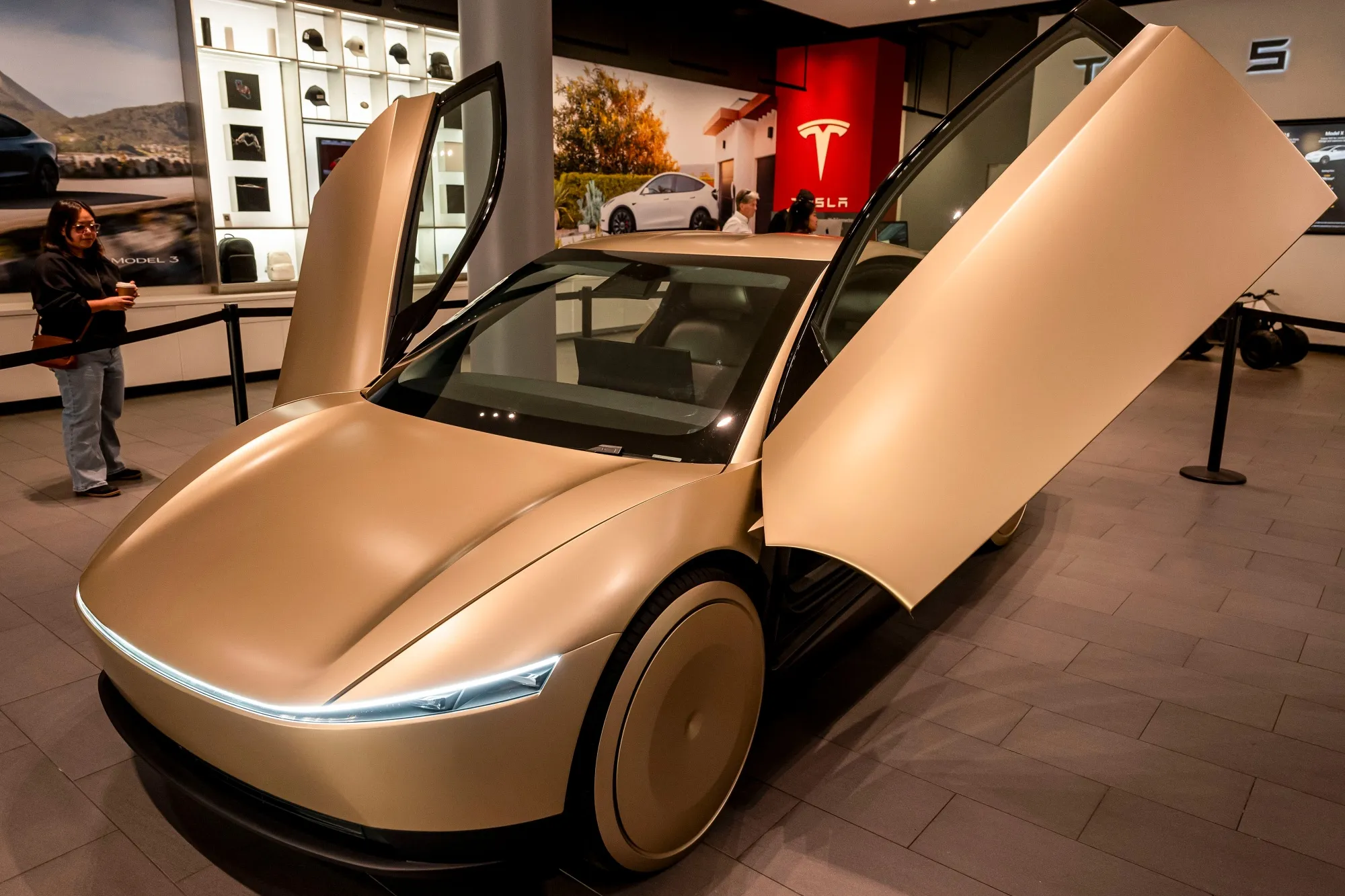
Looking ahead, Vogel highlighted several potential catalysts for Tesla in 2026, including the removal of safety drivers, progress toward fully unsupervised FSD, and the start of Cybercab production from the second quarter.
Over the longer term, the analyst estimates robotaxi services could generate more than $40 billion in annual revenue and around $15 billion in EBIT by 2030, capturing roughly half of the global robotaxi market.