
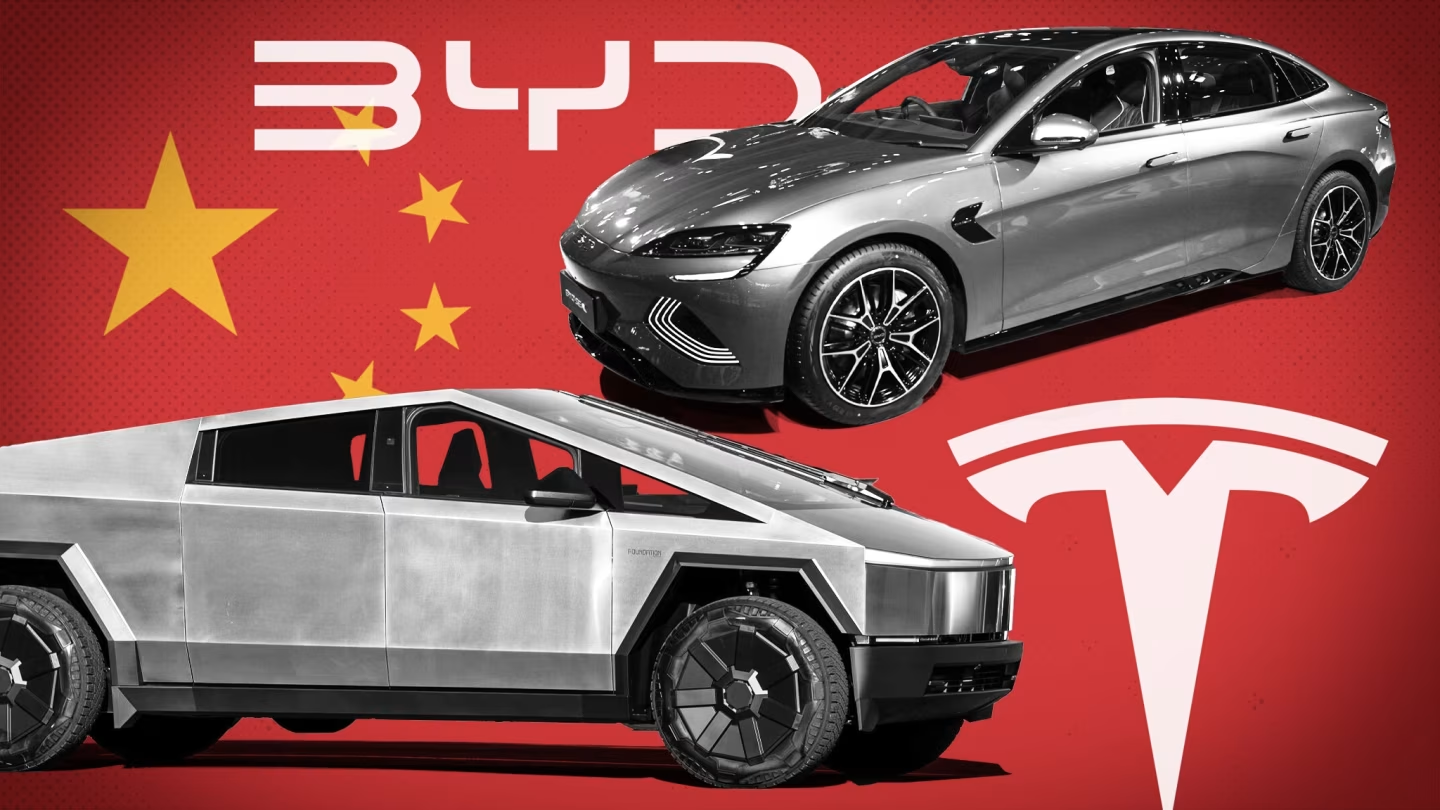
Tesla recorded a decline in European sales in November, according to data released Tuesday, while Chinese rival BYD posted strong year-on-year growth and continued to expand its regional market share.
Sales of Tesla vehicles across the European Union, the European Free Trade Association, and the UK fell 11.8% from a year earlier to 22,801 units in November, figures from the European Automobile Manufacturers’ Association showed.
Tesla’s market share in the region slipped to 2.1%, down from 2.5% a year ago. However, this marked an improvement from October, when its share had dropped sharply to just 0.6%.
By contrast, BYD reported a sharp acceleration in sales. The Chinese automaker saw November deliveries surge 221.8% year over year to 21,133 units. Its market share climbed to 2%, up from 0.6% a year earlier and higher than the 1.6% recorded in October.
The diverging performance came as overall new vehicle registrations in Europe increased 2.4% year on year to 1.08 million units. Growth was driven largely by rising demand for battery electric and hybrid vehicles, with hybrids holding the largest share of the market at 34.6%.
Although Tesla’s sales decline moderated in November compared with previous months, the figures still point to an ongoing downturn for the EV maker. Tesla continues to face intensifying competition from both European manufacturers and fast-expanding Chinese brands.
The company has also struggled to rebuild its brand image following political actions by CEO Elon Musk earlier this year, which alienated some consumers in key European markets.
BYD has emerged as a major challenger to Tesla in both Europe and China, strengthening its product lineup across the region in 2025. The automaker has gained traction despite facing elevated European import duties on Chinese-made vehicles.
Expanding internationally has become a strategic priority for BYD, particularly as growth in its domestic Chinese market begins to slow. The company also benefits from a broader lineup that includes hybrid vehicles, a segment that has grown increasingly popular among cost-sensitive buyers unwilling to pay premium prices for fully electric cars.