Technical Analysis vs Fundamental Analysis
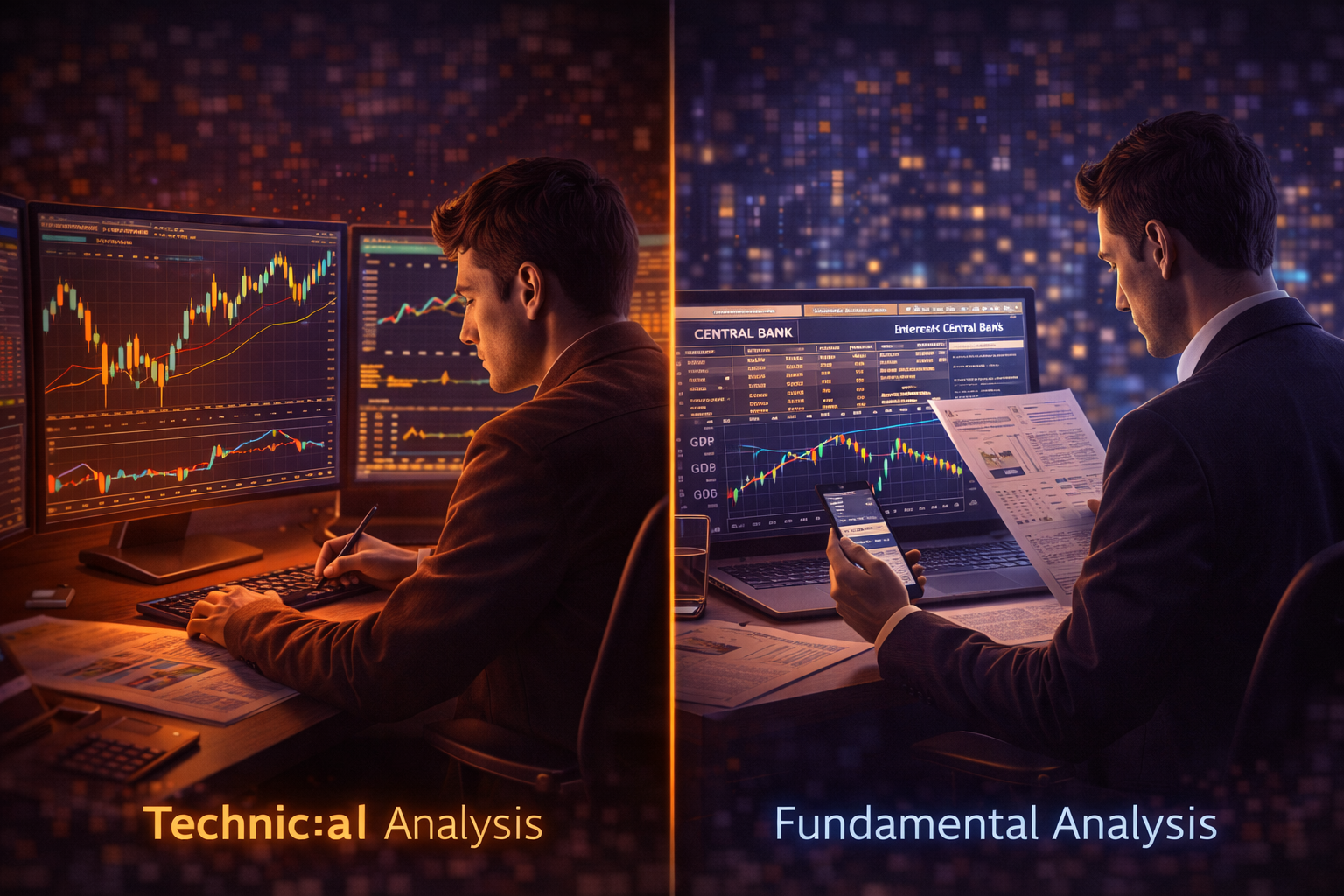
Technical analysis and fundamental analysis are the two main approaches used to analyze financial markets.
Technical analysis focuses on price charts and patterns.
Fundamental analysis focuses on economic data, news, and financial performance.
Both aim to predict market movements, but they use completely different methods.
Understanding the difference is essential for every trader and investor.
What Is Technical Analysis?
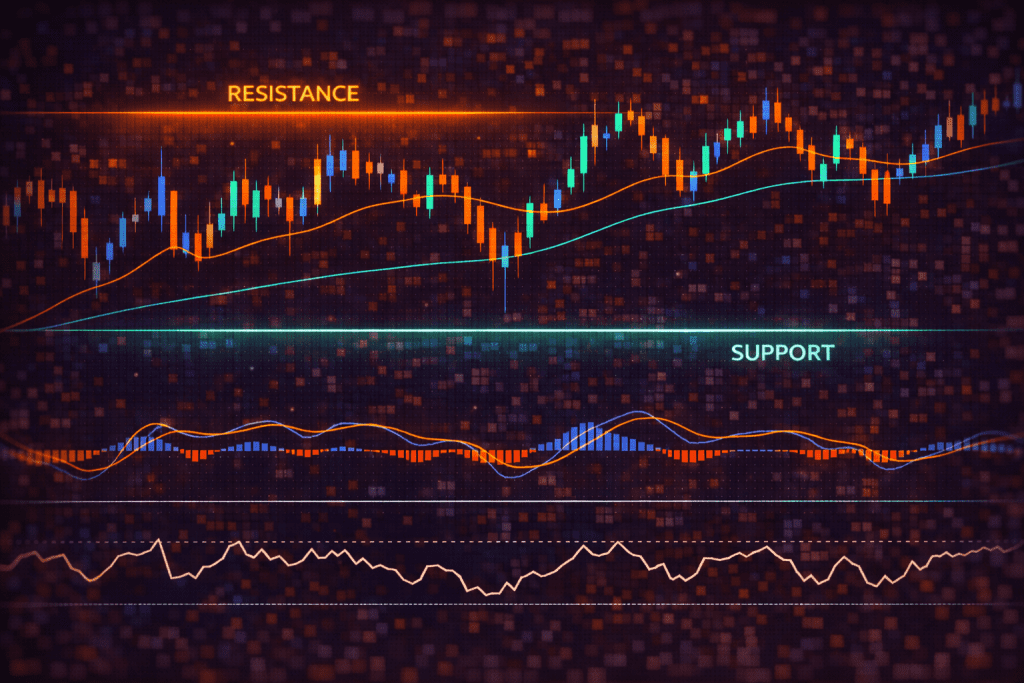
Technical analysis is the study of price action.
Traders use charts, indicators, and patterns to identify opportunities.
They analyze trends, momentum, and historical price behavior.
The core idea is that all information is already reflected in the price.
Technical traders focus on timing entries and exits.
This approach is widely used in short-term trading.
What Is Fundamental Analysis?
Fundamental analysis focuses on the underlying value of an asset.
It includes economic indicators, interest rates, company earnings, and global events.
For stocks, it involves analyzing financial statements.
For forex, it includes macroeconomic data such as inflation and central bank policies.
For commodities, supply and demand play a major role.
Fundamental analysis is often used for long-term investing.

Strengths and Weaknesses
Technical analysis provides clear entry and exit points.
It is fast and adaptable to different timeframes.
However, it can produce false signals in volatile markets.
Fundamental analysis provides deeper understanding of market direction.
It helps identify long-term trends.
However, it is slower and less precise for timing trades.
Each method has its advantages and limitations.
When to Use Each Approach
Technical analysis is best for short-term trading.
It works well in liquid and trending markets.
Fundamental analysis is better for long-term decisions.
It helps investors understand the bigger picture.
Many professionals combine both approaches.
They use fundamentals to identify direction and technicals to time entries.

Which One Is Better?
There is no single “best” approach.
The choice depends on your goals and trading style.
Day traders often rely on technical analysis.
Long-term investors often prefer fundamental analysis.
However, combining both can provide a powerful edge.
Common Beginner Mistakes
Many beginners choose one approach and ignore the other.
Some rely only on indicators without understanding market context.
Others focus only on news without proper timing.
This leads to poor decision-making.
A balanced approach often produces better results.
Final Thoughts
Technical and fundamental analysis are not competitors.
They are complementary tools.
Understanding both gives you a complete view of the market.
Traders who learn to combine them gain a significant advantage.
Mastering both approaches is a key step toward consistent success in trading and investing.