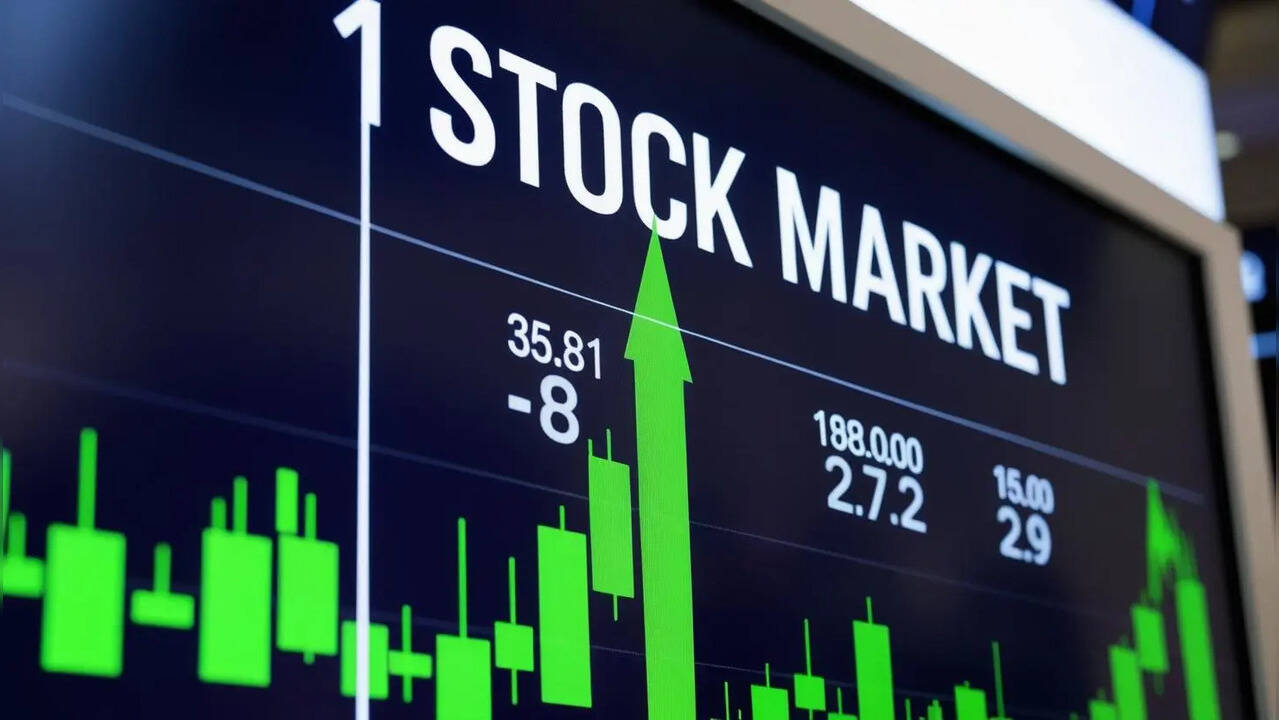
Global equity markets moved lower on Monday, while the U.S. dollar weakened against traditional safe-haven currencies, after Donald Trump threatened fresh tariffs on European imports. The comments raised investor concerns about escalating trade tensions linked to countries opposing his proposed takeover of Greenland.
At the same time, gold and silver surged to new record highs, as investors sought safety. Oil prices edged lower, reflecting worries that a potential trade conflict between the United States and Europe could slow global economic growth and reduce energy demand.
U.S. cash equity markets were closed for Martin Luther King Jr. Day, but futures pointed to losses. Both S&P 500 and Nasdaq futures fell more than 1.2%, signaling a weaker open later in the week.
European markets also came under pressure. The STOXX 600 dropped 1.2%, while major indexes in Frankfurt, Paris, and London declined between 0.4% and 1.7%. In Asia, Japan’s Nikkei slipped 0.7%, while MSCI’s broad Asia-Pacific index excluding Japan was largely unchanged.
Trump said the U.S. would impose an additional 10% tariff from February 1 on goods imported from several European countries, including Denmark, France, Germany, and the United Kingdom. He warned the levies could rise to 25% by June 1 if no agreement over Greenland is reached.
European Union officials sharply criticized the tariff threats, with France proposing a range of possible countermeasures. Although the EU and Britain signed trade agreements with the U.S. last year, officials said the new threats undermine existing deals.
“There is a clear market response to the renewed tariff rhetoric,” said George Lagarias, chief economist at Forvis Mazars. He added that tariff threats are increasingly being used as a negotiating tool, even when agreements are already in place.
EU retaliation options include reinstating tariffs on 93 billion euros worth of U.S. goods and activating its Anti-Coercion Instrument, which could target U.S. services or investment flows.
The dispute is also expected to overshadow discussions at the World Economic Forum, where global leaders are gathering this week, including a large U.S. delegation led by Trump.
Dollar Loses Safe-Haven Appeal
In currency markets, the euro rebounded from a seven-week low, rising 0.4% to $1.1641. Analysts said the market reaction reflects geopolitical risk rather than tariffs alone.
Normally, heightened geopolitical uncertainty supports the dollar. However, traders noted that the current risk originates from the U.S. itself, prompting some investors to diversify away from dollar-denominated assets.
Sterling recovered to $1.3422 after earlier losses, while safe-haven currencies strengthened. The dollar fell 0.7% against the Swiss franc and 0.2% versus the Japanese yen.
Markets paid little attention to Japanese Prime Minister Sanae Takaichi’s decision to dissolve parliament ahead of a snap election scheduled for February 8. Attention remains focused on the Bank of Japan, which is widely expected to keep its policy rate unchanged at 0.75% when it meets on Friday.
The U.S. dollar index, which tracks the currency against six major peers, edged lower. The U.S. Treasury cash market was closed, though 30-year bond futures declined.
Precious Metals and China Data
Gold reaffirmed its role as a safe haven, climbing to $4,689 per ounce, while silver surged to $94.08.
In China, blue-chip stocks were little changed after data showed economic growth slowed to 4.5% in the fourth quarter, still beating forecasts. Industrial output exceeded expectations on strong exports, but weak retail sales highlighted ongoing softness in domestic demand.
Oil prices were mostly steady as unrest in Iran eased. Markets continued to monitor demand risks tied to a potential escalation of trade tensions. Brent crude slipped 0.1% to $64.04 a barrel, while U.S. crude held at $59.41.