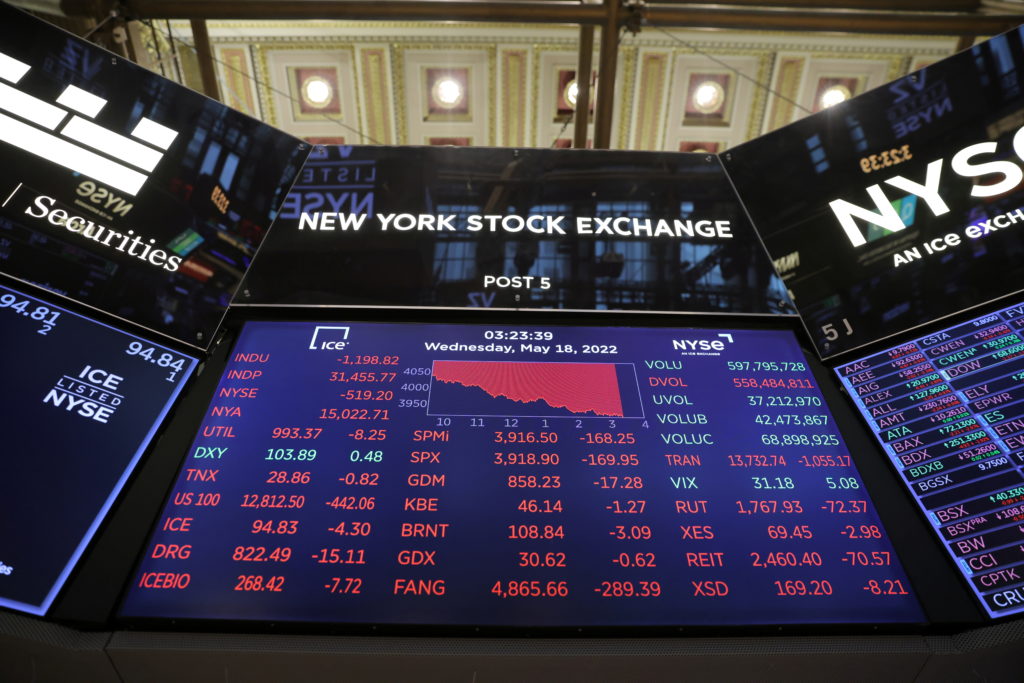
U.S. stock markets moved slightly higher on Tuesday following a volatile period of trading, supported mainly by gains in technology and growth stocks. However, investors remain cautious as uncertainty continues surrounding the ongoing conflict involving Iran, despite comments from President Donald Trump suggesting that the war could end soon.
By 11:22 ET (15:22 GMT), the S&P 500 had risen 0.4% to 6,824.93, while the NASDAQ Composite gained 0.6% to 22,840.11. The Dow Jones Industrial Average also advanced 0.5% to 47,977.60.
The major U.S. indices experienced a highly volatile session on Monday. Markets initially fell sharply before staging a strong rebound and finishing the day with solid gains, reflecting how quickly sentiment has been shifting amid geopolitical developments.
Trump signals possible end to Iran conflict
Speaking from his golf club in Florida on Monday, President Donald Trump said he expects the military operation involving Iran to end “very soon.” At the same time, he warned that the United States could escalate its response if Iran attempts to block oil shipments through the Strait of Hormuz, a critical global energy route through which about 20% of the world’s crude oil supply passes.
Trump also said his administration had considered taking control of the strategic waterway. Disruptions in the region have already unsettled global financial markets and raised concerns about rising inflation.
However, Trump also suggested that the United States could escalate its actions further if necessary. He warned of severe consequences if Iran’s leadership refuses to comply with U.S. demands.
Meanwhile, Iranian officials have stated that not “one liter of oil” would be allowed to pass through the Strait of Hormuz if attacks by the United States and Israel continue. Iran’s foreign minister has also dismissed the possibility of immediate ceasefire negotiations with Washington.
Israeli Prime Minister Benjamin Netanyahu added that Israel’s military campaign is “not done yet,” signaling that the offensive could continue as Israel seeks to weaken Iran’s ruling leadership.
On Tuesday, Iran reportedly launched new strikes against targets in Persian Gulf countries, while Israeli forces carried out additional attacks in Lebanon against positions linked to the Iran-backed Hezbollah group.
Markets react sharply to geopolitical developments
Financial markets experienced dramatic swings earlier in the week as investors reacted to the escalating Middle East tensions.
Wall Street initially declined sharply on Monday amid concerns that the appointment of Mojtaba Khamenei as Iran’s new Supreme Leader could reinforce Tehran’s hardline policies and prolong the conflict.
At the same time, oil prices surged toward $120 per barrel, approaching their highest levels since 2022. The rally was driven by fears that the conflict could disrupt oil flows through the Strait of Hormuz, one of the most important energy transit routes in the world.
Bond yields also rose sharply as investors worried that higher oil prices could lead to a surge in global inflation, potentially forcing central banks to maintain higher interest rates for longer.
Analysts at BCA Research noted that markets initially panicked due to the risk of a prolonged closure of the Strait of Hormuz.
However, sentiment improved later after Trump told CBS News that the war was “very complete, pretty much.” Following those remarks, U.S. stocks recovered, oil prices retreated, and bond yields declined.
By Tuesday, Brent crude futures had fallen 11.6% to $87.50 per barrel, while U.S. West Texas Intermediate (WTI) crude dropped 11.8% to $83.60 per barrel.
Energy ministers from the Group of Seven (G7) economies are also expected to hold discussions on Tuesday. Earlier this week, G7 finance ministers debated the possibility of releasing emergency oil reserves to stabilize global energy markets.
Oracle earnings in focus
In corporate news, Oracle will release its latest earnings results after the closing bell on Wall Street.
Once considered a smaller player in the cloud computing market, Oracle has significantly increased its influence through a partnership with OpenAI, allowing the company to supply large-scale computing infrastructure needed to train artificial intelligence models.
However, investors remain concerned about how Oracle plans to finance the massive expansion of its data center infrastructure. The company previously announced plans to spend $50 billion in capital expenditures during its current fiscal year, significantly higher than its earlier estimate of $35 billion.
Oracle shares previously surged to around $328 in September, but were trading near $151.20 on Monday, representing a decline of more than 22% so far this year.
Analysts at Vital Knowledge noted that market sentiment toward Oracle remains cautious. They added that while the Iran conflict currently dominates market headlines, developments in artificial intelligence continue to be one of the most powerful forces influencing the direction of the S&P 500.