Stocks Decline as Trump Casts Doubt on Iran Deal
U.S. stocks moved lower on Thursday after President Donald Trump expressed uncertainty over whether the United States is willing or able to reach a peace agreement with Iran. At the same time, oil prices climbed as the conflict in the Middle East continued to escalate.
Markets remain highly volatile, with a back-and-forth pattern emerging as investors react to conflicting headlines surrounding the war.
Major Indexes Turn Lower
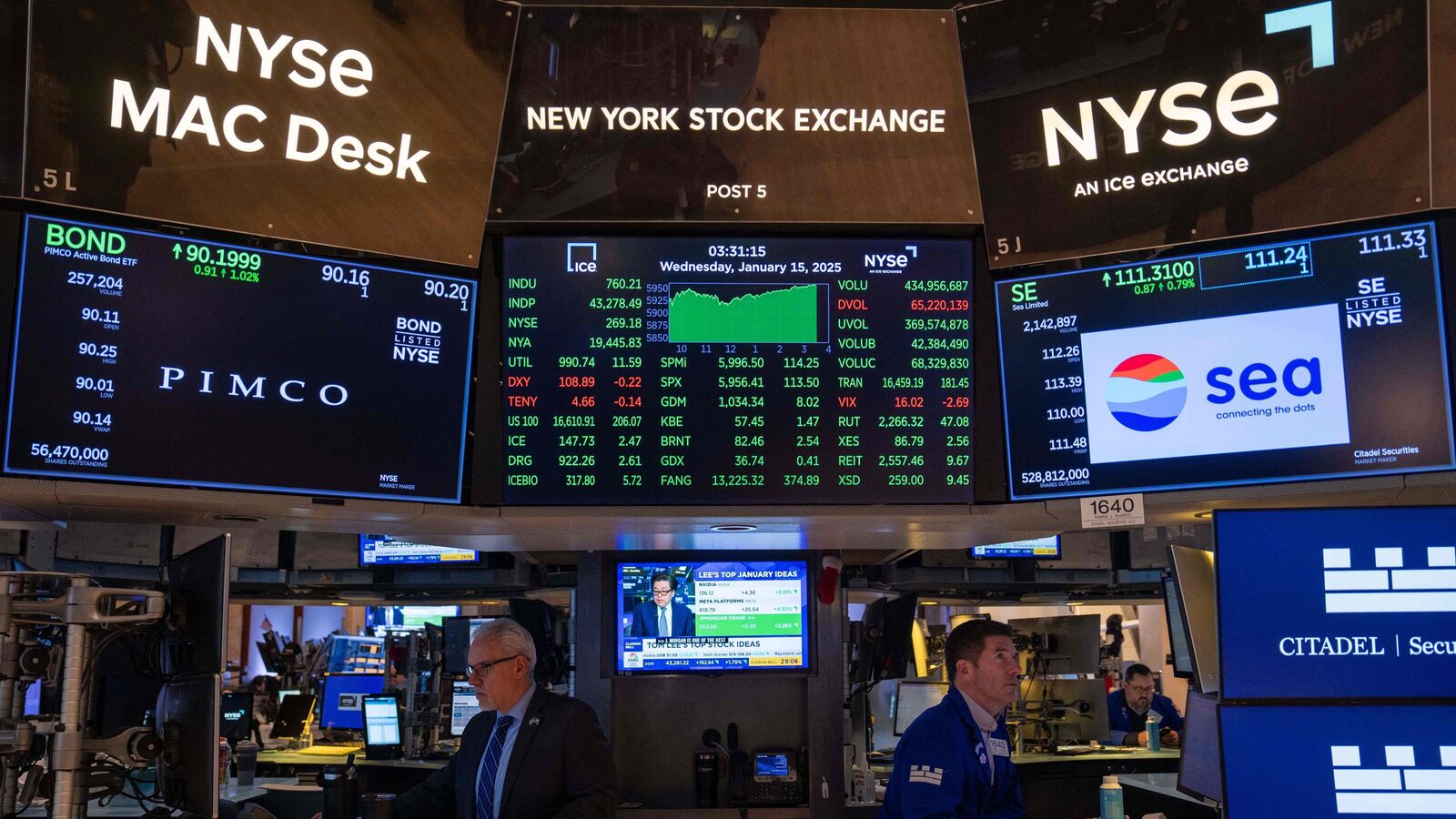
By late morning trading, all major U.S. indexes were in negative territory. The S&P 500 dropped 0.7% to 6,547.16, the Nasdaq Composite declined 1% to 21,712.66, and the Dow Jones Industrial Average slipped 0.2% to 46,355.30.
Trump Comments Add to Market Uncertainty
Markets had rallied in the previous session on hopes of potential negotiations between the U.S. and Iran. Reports suggested Tehran might be open to talks, while U.S. Vice President JD Vance was reportedly considering travel to facilitate discussions.
However, Trump’s latest remarks dampened optimism. He stated that Iranian negotiators were acting “very different” and “strange,” adding that Iran was “begging” for a deal. Despite this, he questioned whether an agreement would be reached or even pursued.
These comments highlight the ongoing disconnect between both sides, as demands for ending the conflict remain far apart. Meanwhile, the Pentagon is reportedly increasing its military presence in the region.
Oil Prices Rise Above $100
Amid the uncertainty, oil prices surged above the $100 per barrel mark once again. Brent crude rose nearly 5% to around $107.20, while U.S. West Texas Intermediate (WTI) crude gained 3.6% to $93.59.
Rising energy prices have intensified concerns about a potential inflation spike, which could prompt central banks to consider further interest rate hikes.
Inflation Risks and Global Outlook
The Organization for Economic Co-operation and Development (OECD) has warned that prolonged energy disruptions could accelerate inflation and slow global economic growth. Elevated oil prices remain a key risk factor for financial markets.
Iran Proposal Under Review
Iran is reportedly reviewing a 15-point ceasefire proposal from the United States and has submitted an official response. However, the White House has warned of further military action if Tehran does not engage constructively.
While Trump has signaled a desire to resolve the conflict quickly, uncertainty remains over whether both sides can reach a compromise.
Analysts note that markets have become increasingly skeptical of positive developments, given Iran’s previous rejection of U.S. proposals.
Strait of Hormuz Disruption Keeps Pressure on Oil
A major concern for global energy markets is the continued disruption in the Strait of Hormuz, a key shipping route responsible for roughly 20% of global oil and gas flows. Ongoing threats have effectively limited tanker traffic for weeks.
Although oil prices have eased slightly from recent highs near $120 per barrel, they remain significantly elevated compared to pre-conflict levels.
Military Developments Escalate Tensions
Israeli Defense Minister Israel Katz confirmed that Alireza Tangsiri, a senior commander in Iran’s Revolutionary Guard navy, was killed in recent strikes. He was reportedly linked to operations affecting shipping routes in the Strait of Hormuz.
Tech Stocks Under Pressure, Salesforce Gains
In corporate news, memory-related technology stocks continued to decline following reports that new advancements in data compression could reduce demand for memory in artificial intelligence applications.
Shares of Micron, Western Digital, Seagate, and SanDisk fell between 3% and 6%.
Meanwhile, Salesforce gained 2.6% after the U.S. Department of Labor announced it had upgraded its National Contact Center using Salesforce technology, including the launch of an AI-powered assistant to support workers and retirees.