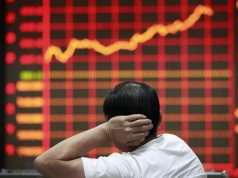

U.S. Stock Futures Jump as Markets React to Iran Developments
U.S. stock index futures moved sharply higher on Monday evening, reversing earlier losses after a report from the Wall Street Journal indicated that President Donald Trump is considering ending the war in Iran without reopening the Strait of Hormuz.
The rebound came after a largely negative trading session on Wall Street. Markets had been pressured as Trump continued issuing warnings toward Iran regarding a ceasefire and the reopening of the Hormuz passage, while technology stocks remained under sustained selling pressure.
Futures Performance: S&P 500, Nasdaq, and Dow Rise
Stock futures showed solid gains late in the session. S&P 500 Futures climbed 0.9% to 6,446.75 points, while Nasdaq 100 Futures advanced 1% to 23,364.0 points. Dow Jones Futures also rose 1% to reach 45,902.0 points.
Trump Signals Possible End to Iran Conflict
According to the Wall Street Journal, Trump has told aides he is open to ending the conflict in Iran even if the Strait of Hormuz remains closed. The report cited administration officials familiar with internal discussions.
Trump and his team reportedly assessed that reopening the strait could extend the conflict beyond the originally planned four-to-six week timeline. Instead, the strategy appears to focus on achieving key military objectives, including weakening Iran’s naval capabilities and missile systems, before gradually reducing hostilities.
Diplomatic Pressure to Reopen Strait of Hormuz
Following a potential military drawdown, Washington is expected to shift toward diplomatic efforts. The U.S. may pressure Tehran to reopen the Strait of Hormuz while encouraging European and Gulf allies to take a leading role in restoring access to the vital shipping route.
A reduction in U.S. military involvement could also support broader de-escalation, especially as Iran has repeatedly demanded a halt in hostilities before engaging in direct negotiations.
Strait of Hormuz Remains Critical to Global Energy
The Strait of Hormuz remains a central factor in the conflict, as it facilitates nearly 20% of global oil supply. Over the past month, energy prices have surged amid disruptions caused by Iran’s effective blockade of the passage.
Wall Street Struggles Amid Geopolitical Tensions
Despite the late rebound in futures, Wall Street closed mostly lower on Monday as geopolitical uncertainty weighed on investor sentiment. Concerns intensified after renewed threats from Trump toward Tehran.
Technology stocks continued to decline, driven by growing concerns over artificial intelligence trends and weaker-than-expected demand in the semiconductor sector.
Middle East Conflict Escalates Further
Tensions in the Middle East showed little sign of easing. Iran launched attacks on targets in Israel and other Gulf nations, while Yemen’s Houthi forces also carried out strikes against Israel over the weekend, raising fears of a broader regional conflict.
Iran has largely dismissed calls for a ceasefire, labeling U.S. proposals as unrealistic and maintaining a firm stance in ongoing tensions.
Oil Prices Remain Elevated Despite Slight Pullback
Oil prices continued their upward trend due to ongoing geopolitical risks, although gains were partially reduced following the Wall Street Journal report suggesting a potential de-escalation.
In Monday’s regular session, the S&P 500 declined 0.4% to 6,343.72 points, while the Nasdaq Composite dropped 0.7% to 20,794.64 points. The Dow Jones Industrial Average was the exception, edging up 0.1% to 45,216.14 points.