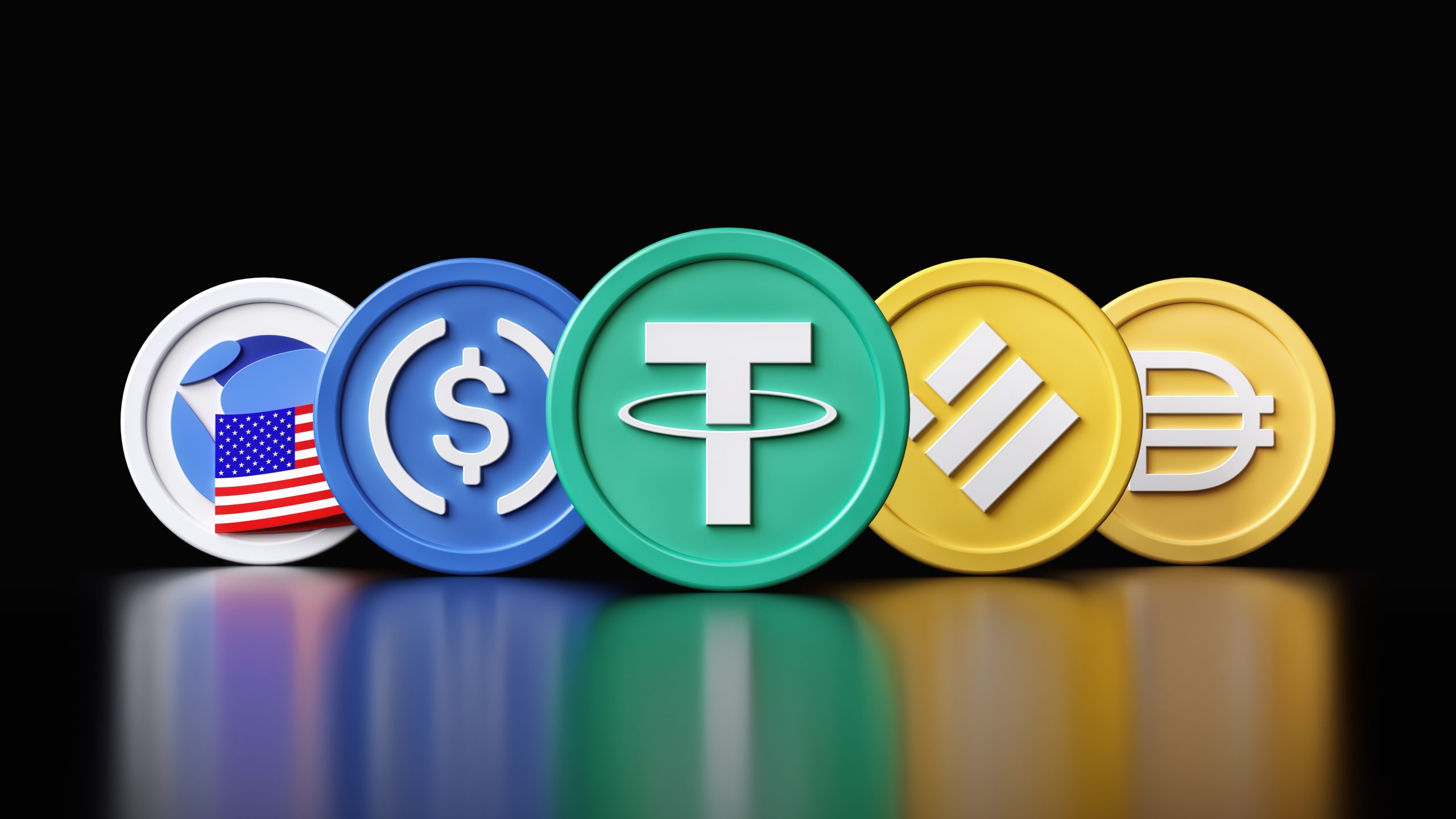
Rising adoption of stablecoins by major financial institutions and countries facing economic instability could push global stablecoin payment flows close to $56 trillion by 2030, according to new analysis from Bloomberg Intelligence.
Bloomberg estimates that stablecoin payment volumes could reach $56.6 trillion by the end of the decade, positioning stablecoins as one of the most influential payment mechanisms in global finance. Data shows that flows totaled $2.9 trillion in 2025, implying annual growth of roughly 80% through 2030 if current trends persist.
This rapid expansion is being fueled by increasing institutional adoption and wider use of stablecoins in economies struggling with inflation, currency volatility, and fragile financial systems.
USDT Leads Centralized Use, USDC Dominates DeFi
Bloomberg’s analysis shows that Tether’s USDT remains the most widely used stablecoin for everyday payments, corporate transactions, and as a store of value. In contrast, Circle’s USDC has emerged as the preferred option within decentralized finance ecosystems.
Stablecoin flows jumped 81% year-on-year in 2025, although the share of transactions occurring on decentralized platforms declined. Bloomberg cited data from crypto analytics firm Artemis showing that growth was increasingly driven by real-world payment use rather than DeFi activity.
Artemis co-founder Anthony Yim attributed the shift to expanding use of U.S. dollar–pegged stablecoins in emerging markets navigating an increasingly unstable geopolitical environment.
Transaction Volumes Surge Despite Market Share Shift
Despite USDT’s dominance in overall usage, USDC recorded higher transaction volume in 2025, reaching $18.3 trillion compared with USDT’s $13.3 trillion. Together, the two stablecoins accounted for more than 95% of the record $33 trillion in total stablecoin transaction volume last year, representing a 72% increase from the previous year.
From a valuation standpoint, USDT continues to lead the market, with a market capitalization of $186.9 billion, far exceeding USDC’s $74.9 billion.
Overall, the stablecoin market is currently valued at approximately $312 billion. The U.S. Treasury has projected that the sector could expand to $2 trillion by 2028.
Nation-States and Institutions Accelerate Adoption
Adoption at both the government and institutional level is gaining momentum. Since U.S. President Donald Trump signed the GENIUS Act into law in July, countries such as Canada and the United Kingdom have renewed efforts to roll out stablecoin regulatory frameworks by 2026 or shortly thereafter.
Institutional participation is also increasing. Remittance giant Western Union plans to launch a stablecoin settlement system on the Solana blockchain in the first half of 2026. Meanwhile, MoneyGram and Zelle are developing stablecoin-based solutions to speed up cross-border payments.