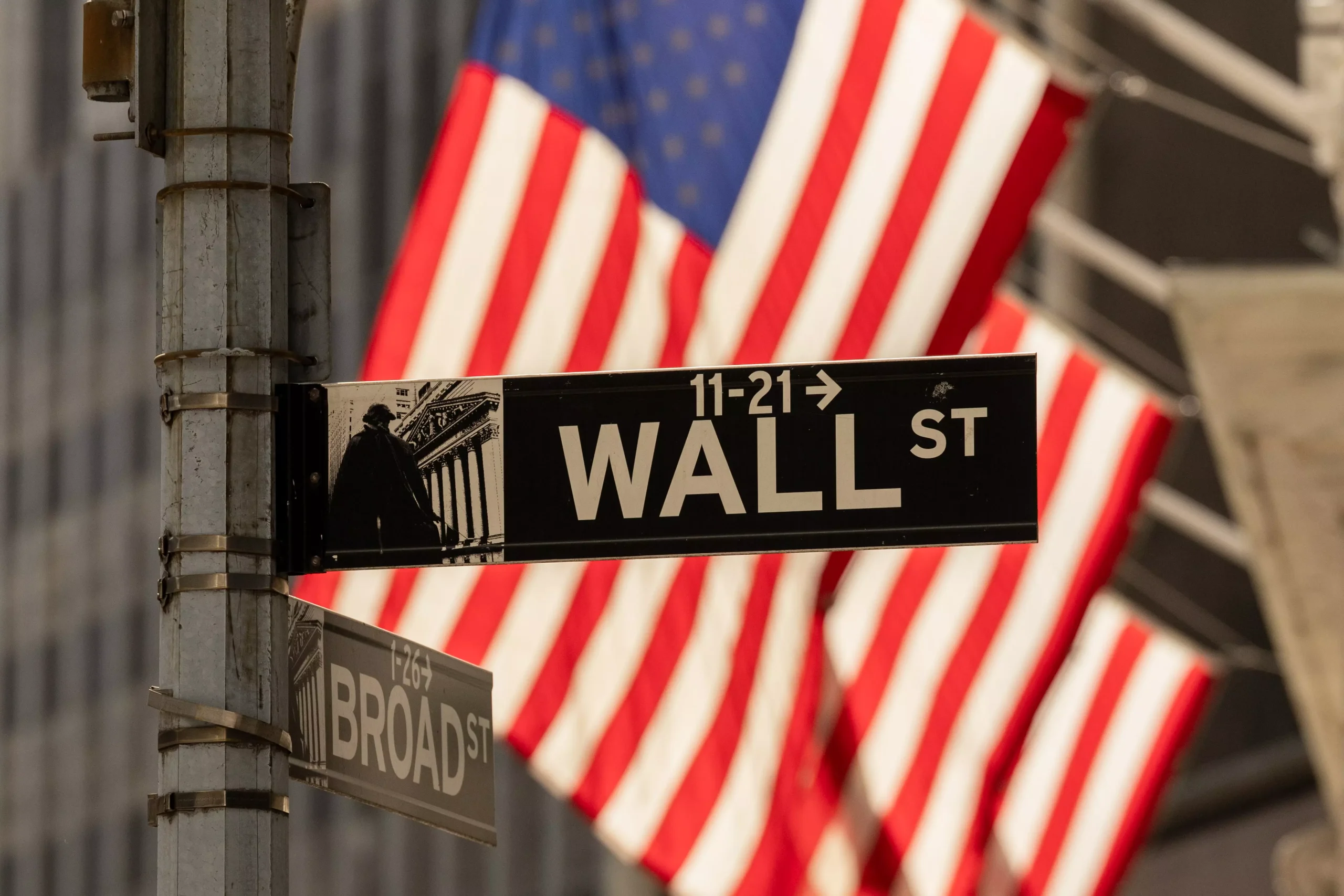
U.S. stocks slid sharply on Tuesday, with the S&P 500 and the Nasdaq Composite falling to their lowest levels in a month as investors returned from the long U.S. holiday weekend and reacted to renewed tariff threats from President Donald Trump against Europe. Fresh volatility across global markets reinforced a broad risk-off mood.
The selloff also pushed the Dow Jones Industrial Average to its weakest intraday level since January 5. As equities retreated worldwide, gold surged to new record highs, while U.S. Treasuries came under renewed selling pressure.
Both the S&P 500 and the Nasdaq Composite dropped below their 50-day moving averages, a closely watched technical level that often signals weakening momentum.
Tariff threats revive market anxiety
Over the weekend, Trump said an additional 10% import tariff would be imposed from February 1 on goods from Denmark, Norway, Sweden, France, Germany, the Netherlands, Finland, and the United Kingdom—countries that already face U.S. trade duties.
In a post on Truth Social, Trump added that tariffs would rise to 25% from June 1 and remain in place until an agreement is reached allowing the United States to purchase Greenland. Leaders in Greenland, an autonomous Danish territory, and Denmark have repeatedly stated that the island is not for sale.
The reintroduction of tariff risks reminded markets of April’s so-called “Liberation Day,” when Trump’s sweeping trade measures drove the S&P 500 close to bear-market territory.
Charlie Ripley, senior investment strategist at Allianz Investment Management, said the current episode resembles a more contained version of that earlier shock. He noted that because the focus is largely on Europe rather than global trade, the market reaction has been less severe. Still, ongoing uncertainty is fostering a risk-averse environment that is weighing on equities.
Reflecting the jump in market anxiety, the CBOE Volatility Index climbed to a two-month high of 20.71.
By 1:57 p.m. ET, the Dow was down 800.63 points, or 1.62%, at 48,558.7. The S&P 500 fell 1.8% to 6,814.87, while the Nasdaq Composite slid 2.03% to 23,037.06.
Busy week for data and earnings
Despite the pressure from geopolitical headlines, the underlying U.S. economic backdrop remains relatively strong. That resilience, combined with solid corporate earnings, previously helped Wall Street rebound from April’s turmoil to fresh record highs.
Ripley said geopolitical risks should not be dismissed, but emphasized that the U.S. economy is entering this period from a position of strength.
Investors are now turning their attention to a packed week of economic data, including an update to third-quarter U.S. GDP, January PMI figures, and the Personal Consumption Expenditures report—the Federal Reserve’s preferred inflation measure.
Earnings season is also accelerating, with major companies such as Intel and Netflix set to report results. Netflix shares edged 0.3% higher after the company shifted to an all-cash bid for studio and streaming assets from Warner Bros Discovery, without raising its $82.7 billion offer.
Netflix was the only stock in the FAANG group—Meta, Apple, Amazon, Netflix, and Google—to trade higher on the day.
Elsewhere, industrial heavyweight 3M slumped 8.1% after forecasting annual adjusted profit slightly below expectations, while Fastenal fell 2.9% after missing fourth-quarter revenue estimates. Data from LSEG showed that nearly 85% of S&P 500 companies reporting so far have exceeded analyst forecasts.
Markets also remained uneasy after Treasury Secretary Scott Bessent said Trump could decide on the next Federal Reserve chair as soon as next week, following recent tensions between the administration and current Chair Jerome Powell.
In addition, investors are closely watching speeches from global leaders at the World Economic Forum in Switzerland.
Among individual stocks, RAPT Therapeutics surged nearly 64% after GSK agreed to acquire the firm in a $2.2 billion deal.