Oil Prices Rise $1 on Geopolitical Tensions, but Oversupply Limits Gains
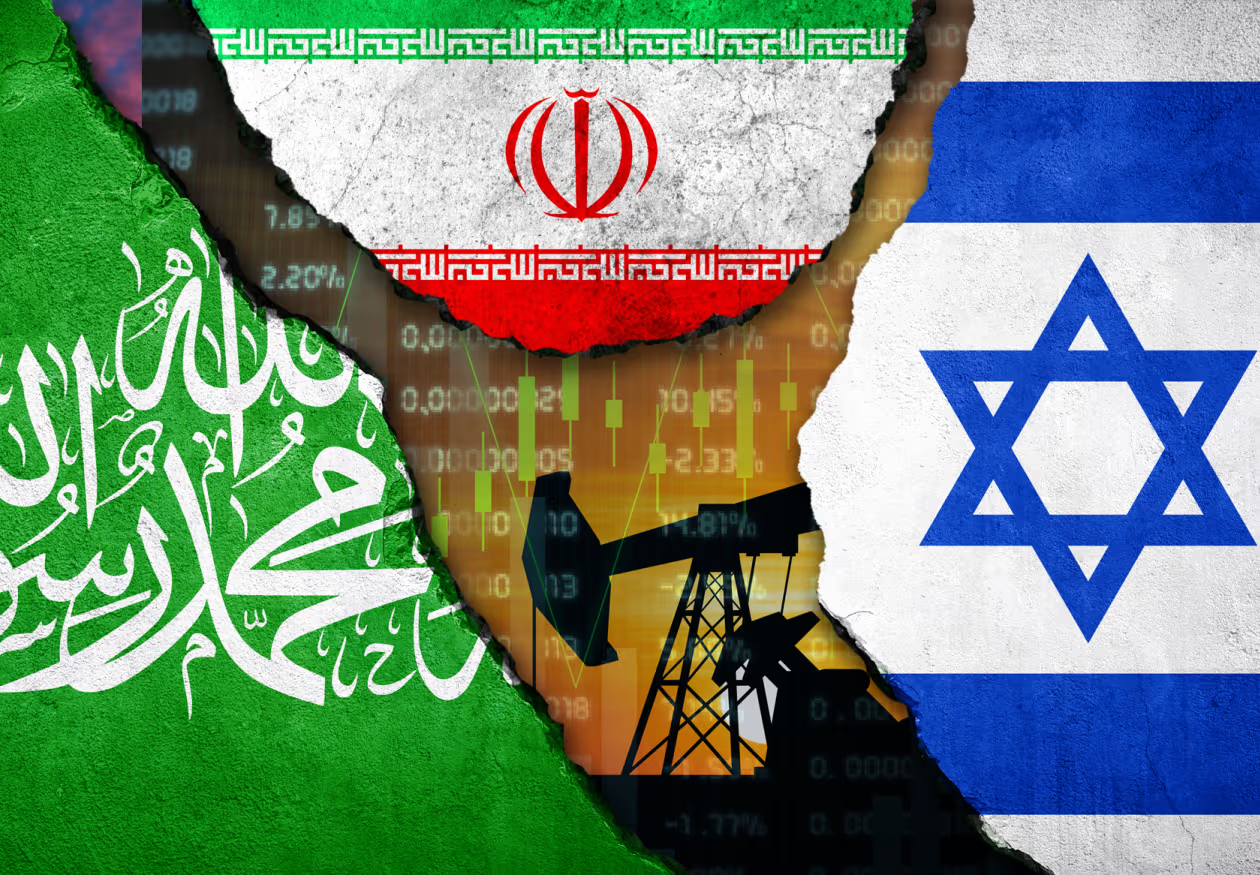
Oil prices climbed on Wednesday after a series of geopolitical developments, including Israeli strikes on Hamas leadership in Qatar, Poland’s interception of drones in its airspace, and new U.S. pressure for sanctions on Russian oil buyers. However, fears of excess crude supply kept the rally in check.
Market Snapshot
At 11:28 a.m. ET (1528 GMT), Brent crude futures rose 99 cents, or 1.87%, to $67.37 a barrel. U.S. West Texas Intermediate (WTI) crude futures gained 98 cents, or 1.5%, to $63.60.
Both benchmarks jumped nearly 2% following Israel’s announcement of the attack but later retraced much of those gains. Prices had also closed 0.6% higher in the previous session.
Rising Geopolitical Risks
Tensions escalated after Poland shot down drones during a Russian assault in western Ukraine — the first time a NATO country fired in the conflict. Still, analysts noted there was no immediate threat to oil supply.
SEB analysts said, “The dark cloud of surplus ahead is hanging over the market. Geopolitical risk premiums in oil rarely last unless actual supply disruption occurs.”
Meanwhile, U.S. President Donald Trump urged the European Union to impose 100% tariffs on China and India, two of Russia’s biggest oil buyers, to increase pressure on Moscow. EU leaders, meeting in Washington, discussed a faster phase-out of Russian fossil fuels.
Supply Outlook Weighs on Prices
Despite geopolitical risks, supply data painted a bearish outlook. U.S. crude inventories rose by 3.9 million barrels in the week ending Sept. 5, according to the Energy Information Administration (EIA). Analysts had expected a draw of 1 million barrels.
Gasoline stocks increased by 1.5 million barrels versus forecasts for a 200,000-barrel draw. Distillate inventories — including diesel and heating oil — surged by 4.7 million barrels, far above expectations.
John Kilduff of Again Capital called it “a very bearish report,” adding that weak gasoline demand after the U.S. summer driving season could signal a slowing economy both domestically and globally.
The EIA also warned that global oil prices will remain under pressure in the coming months as OPEC+ ramps up output, adding to already high inventories.