
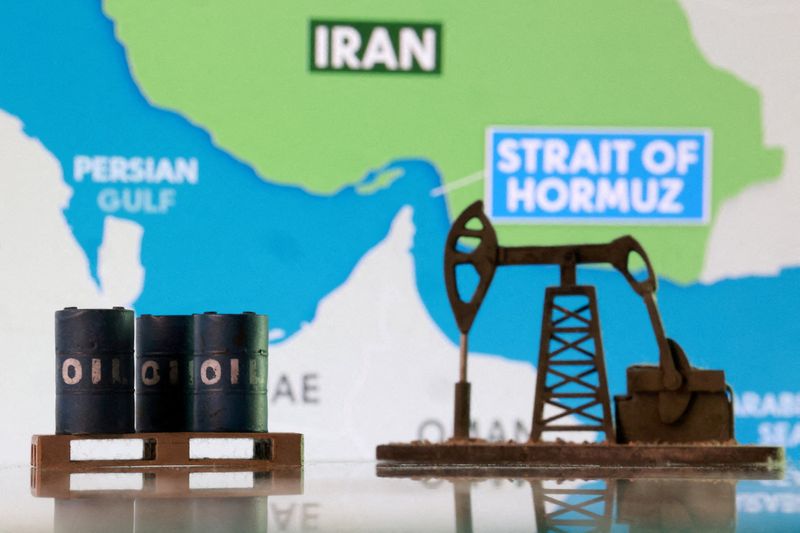
Brent crude rose by more than $3 on Tuesday, extending its rally for a third consecutive session. The ongoing escalation between the United States, Israel and Iran has intensified concerns about potential supply disruptions from the Middle East. In particular, threats to shipping through the Strait of Hormuz have heightened fears across global energy markets.
Brent futures climbed to $80.89 per barrel by 07:45 GMT, gaining $3.15 or 4.1%. During Monday’s session, prices surged to $82.37, the highest level since January 2025, before easing slightly to close 6.7% higher.
U.S. West Texas Intermediate (WTI) crude also advanced, rising $2.55 or 3.6% to $73.78 per barrel. In the previous session, WTI touched its strongest level since June 2025 before retreating to finish with a 6.3% gain.
Market analysts point to the lack of a rapid de-escalation as a key driver of oil’s upside momentum. With the Strait of Hormuz effectively shut and Iran signaling a willingness to target regional energy infrastructure, risks to supply remain elevated. The longer the conflict continues, the greater the potential impact on global oil flows.
The air campaign between the U.S. and Israel against Iran expanded on Monday, with Israel striking Lebanon and Iran retaliating with attacks on energy infrastructure in Gulf states and on tankers moving through the Strait of Hormuz.
Shipping activity in the region has been heavily disrupted. Tankers and container vessels are avoiding the strategic waterway after insurers withdrew coverage, pushing global oil and gas freight rates sharply higher. Iranian media reported that a senior Revolutionary Guards official declared the Strait closed and warned that any vessel attempting to pass could face military action.
Roughly 20% of global oil and gas supplies transit through the Strait of Hormuz, making it one of the world’s most critical energy chokepoints.
Analysts warn that while concerns over shipping flows are significant, an even greater threat would be direct attacks on additional energy infrastructure in the region. Such strikes could trigger prolonged supply outages and sustain higher oil prices.
Israeli Prime Minister Benjamin Netanyahu said the war could take “some time” but would not last years. Even so, markets remain focused on the near-term consequences of the escalating Middle East conflict.
Investment firm Bernstein has revised its 2026 Brent forecast to $80 per barrel, up from $65. However, in a worst-case scenario involving prolonged hostilities, it sees prices potentially surging to between $120 and $150 per barrel.
Refined fuel markets are also reacting strongly. The Middle East plays a central role in global fuel supply, and processing facilities face rising risks. Saudi Arabia temporarily shut its largest domestic oil refinery following a drone strike, adding to supply concerns.
In the United States, ultra-low-sulfur diesel futures jumped 8.3% to $3.1404 per gallon after reaching a two-year high. Gasoline futures rose 3.8% to $2.4620 per gallon, building on gains from the previous session.
European gasoil futures climbed 9.2% to $967.75 per metric ton, after surging 18% a day earlier, reflecting tightening supply expectations across energy markets.