Oil Price Shock Could Shift Fed Toward Hawkish Policy
A sustained or moderate rise in energy prices could push the Federal Reserve toward a more hawkish monetary policy stance, potentially increasing the likelihood of interest rate hikes, according to analysts at BofA Securities.
Oil Prices Enter “Hawkish” Range
In a recent note, strategists led by Aditya Bhave highlighted that oil prices have climbed into a range that could concern policymakers. The increase follows geopolitical tensions linked to the conflict involving Iran, which began in late February.
Oil Prices Ease but Remain Elevated
Despite recent declines driven by hopes for de-escalation in the Middle East, oil prices remain relatively high. U.S. West Texas Intermediate (WTI) crude fell 4.1% to $88.57 per barrel, while Brent crude dropped 4.1% to $100.23 per barrel.
Key Threshold for Rate Hikes
According to BofA, interest rate increases by the Federal Reserve become more likely if WTI crude averages between $80 and $100 per barrel this year. Before the escalation in tensions, oil prices were closer to $65 per barrel.
Strait of Hormuz Disruptions Fuel Inflation Concerns
The surge in energy prices has been largely driven by disruptions around the Strait of Hormuz, a critical global supply route through which roughly 20% of the world’s oil flows.
Higher oil prices have already started to push up gasoline costs in the U.S., raising concerns about broader inflationary pressures in the months ahead.
Rising Costs Impact Businesses
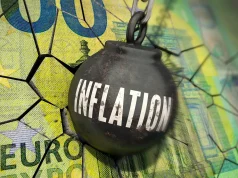
Data from S&P Global shows that more U.S. businesses are beginning to feel the impact of rising input costs, further supporting the case for inflation risks tied to energy markets.
Multiple Scenarios for Fed Policy
BofA analysts emphasized that the Federal Reserve faces a range of possible outcomes depending on how the oil shock evolves.
If elevated oil prices persist at moderate levels, the Fed may adopt a more hawkish stance due to concerns about sustained inflation. However, rate hikes are not the base-case scenario but remain a potential risk.
Temporary Shock Could Lead to Dovish Shift
On the other hand, if the oil shock proves temporary but severe, inflation may initially spike before easing as consumer spending slows.
In such a scenario, falling demand and potential declines in equity markets could weigh on employment, prompting the Fed to shift toward a more dovish policy stance to support economic growth.