Japan’s Nikkei fell on Friday, erasing its gains for the week despite a generally positive session across Asia. Investors remained cautious as they waited for key U.S. inflation data that could influence a divided Federal Reserve.
European markets were expected to open flat. Both EURO STOXX 50 futures and FTSE futures moved very little, while Nasdaq futures gained 0.4% and S&P 500 futures rose 0.2%.
In Asia, the Nikkei 225 dropped 1.3% after weaker household spending data highlighted the strain of persistent inflation. Expectations for a possible rate hike later this month also increased. As a result, the index was on track to finish the week nearly unchanged.
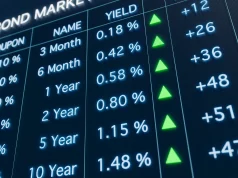
Japan’s 10-year government bond yield briefly reached 1.94%, the highest level since mid-2007, before easing slightly to 1.93%. The yield was heading for a weekly increase of 12.5 basis points, marking the steepest five-day climb since March. Even so, recent strong bond auctions suggested cheaper prices were attracting buyers.
“Moves of this size would have unsettled markets in the past. Instead, demand has strengthened,” said Nigel Green, CEO of deVere Group.
According to Green, capital flows are shifting and long-held assumptions are being challenged. Portfolios built around the expectation of a permanently weak yen now face a very different environment.
Markets are now pricing in a 75% chance of a quarter-point rate hike from the Bank of Japan this month. Earlier in the week, Governor Kazuo Ueda said the central bank would consider the “pros and cons” of raising rates. Reuters sources also indicated that the Japanese government is prepared to tolerate a December hike.
The yen strengthened as the dollar slipped 0.3% to 154.61, pulling back from its 10-month high of 157.9.
Meanwhile, the MSCI index of Asia-Pacific shares outside Japan rose 0.4% and was on track for a 1% weekly gain. Most regions posted small increases, while South Korea outperformed with a 1.4% rise.
US Inflation in Focus
In currency markets, the dollar remained under pressure. After stabilizing overnight, it slipped again on Friday. The dollar index fell 0.1% to 99 and was down 0.5% for the week. Traders have been betting heavily that the Federal Reserve will cut interest rates by a quarter point next Wednesday.
Although markets are pricing in a 90% chance of a rate cut, the decision could be the most divisive in years. Up to five of the twelve voting members have publicly said they oppose further reductions.
Later today, investors will receive the U.S. personal consumption expenditures (PCE) price index, the Fed’s preferred inflation measure. The report covers September, and forecasts point to a 0.2% rise in core PCE, keeping the annual rate steady at 2.9%.
The U.S. non-farm payrolls report will not be released on Friday. However, Thursday’s data showed jobless claims dropped sharply. This eased concerns about a sudden weakening in the labour market, though the decline may be partly due to the Thanksgiving holiday.
According to ANZ analysts, tariffs have slowed recent inflation progress. Still, they believe the broader disinflation trend remains intact. They pointed to a softer labour market, moderating wage growth, and stable long-term inflation expectations as key reasons supporting a potential rate cut next week.
U.S. Treasury yields edged slightly lower on Friday after rising the previous day. The two-year yield dipped 1 basis point to 3.5206%, while the 10-year yield slipped to 4.098% after both climbed 5 basis points on Thursday.
Oil prices also eased. U.S. crude slipped 0.3% to $59.46 per barrel but remained up 1.5% for the week. Brent crude was on track to end the week 0.2% lower at $63.12.
Spot gold rose 0.2% to $4,216 per ounce but was still down 0.3% for the week.