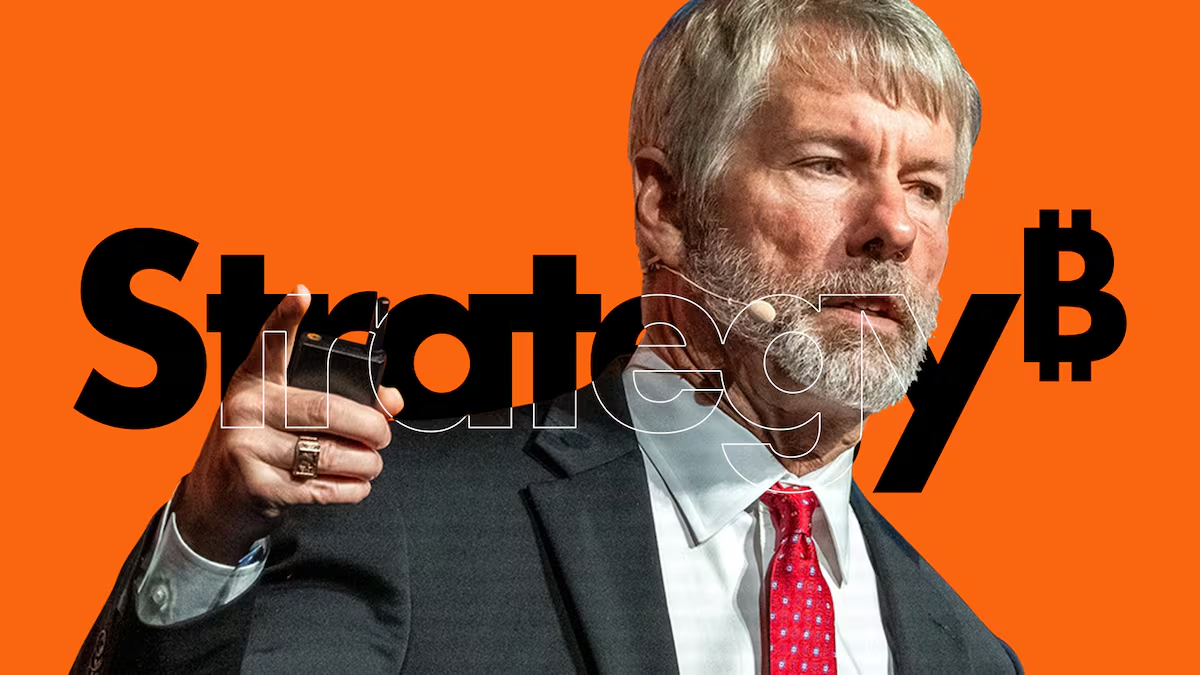
Michael Saylor believes Bitcoin would already be trading above $150,000 if it weren’t for short-term speculators selling at every price spike. In a May 9 interview on the Coin Stories podcast with Natalie Brunell, the MicroStrategy executive chairman argued that many current sellers—including governments, legal administrators, and bankruptcy agents—are offloading Bitcoin simply to access liquidity, not because they believe in the asset.
“We’re in the middle of a transition,” Saylor explained, blaming these opportunistic sellers for holding Bitcoin temporarily, then cashing out quickly when prices rise. In his view, they lack the long-term conviction needed to support a sustained rally.
Still, he’s optimistic: new waves of long-term investors—such as those entering through spot ETFs and corporate treasuries—are beginning to take their place. According to Saylor, before Bitcoin can truly break through to new highs, a full turnover in ownership must happen. “Every crisis recruits a new class of Bitcoin believers,” he noted.
Saylor Warns: Companies Without Bitcoin Are Vulnerable
Saylor also warned that public companies without Bitcoin on their balance sheets are essentially “sitting ducks.” He pointed out that only about 100 of the 12,000 publicly traded U.S. firms actually drive trading volume, while the rest are largely ignored by the market.
If you’re not Apple, Amazon, or Google, he said, you’re invisible. But Bitcoin offers a path forward for these overlooked businesses. Traditional strategies like dividends and buybacks, in his view, are weakening companies. “They’re bleeding capital,” Saylor said. He argued that instead of spending excess cash on buybacks, companies should buy Bitcoin to strengthen their financial position. “You can digitally reengineer your balance sheet,” he added.
He framed Bitcoin as the reserve asset of the 21st century—taking the role gold played in the 1800s and U.S. Treasuries in the 1900s. Bitcoin, he said, has no tariffs, no logistical complications, no tax burdens, and no maintenance costs. “Its value rises with global instability,” Saylor stated.
Saylor Says Bitcoin Is the Only Asset Worth Using Leverage For
Saylor also shared investment advice for individuals seeking serious returns: “If you want to 10x your wealth, buy Bitcoin. Want 100x? Use leverage. Want 1000x? Use someone else’s leverage.” However, he urged caution, suggesting most people should simply keep their day jobs and use long-term, fixed-rate mortgage debt—what he called the “cheapest permanent capital”—to buy Bitcoin instead of luxury items.
He warned that not buying Bitcoin now could be a massive opportunity cost. “Every Bitcoin you don’t buy today could cost you $13 million by 2045,” he claimed. In his estimation, even a $100 million Ferrari might cost six Bitcoin in the future—so better to buy the Bitcoin now.
Saylor likened Bitcoin to “the sucralose of finance”—a kind of universal enhancer that can make any portfolio perform better. He praised its role as the highest-performing asset globally and emphasized its usefulness in portfolios containing equities, bonds, insurance, and fixed income. “Bitcoin can amplify the return of any financial strategy,” he said.
On Government and Institutional Adoption
Saylor admitted he wasn’t shocked that the U.S. government hasn’t bought Bitcoin outright—but he was surprised by how quickly Washington’s tone has shifted. With Donald Trump back in the White House, Saylor claimed, nearly every cabinet member now supports Bitcoin, and the formation of a strategic Bitcoin reserve caught him off guard.
While he didn’t expect the Treasury to refer to Bitcoin as “digital gold” or the President to declare, “Never sell your Bitcoin,” Saylor believes the real momentum will come from smaller firms, not federal institutions. “They have the most to gain, the least to lose, and can act faster,” he said.
He also addressed Bitcoin’s volatility, saying its always-on, global nature is what makes it more reactive than other assets. “It’s the only thing you can short 50x on a Saturday morning,” he quipped. That makes it the first to drop during panic—but also the fastest to recover and eventually decouple from the rest of the market.