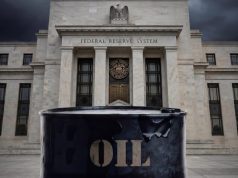

U.S. stock futures edged slightly higher on Friday after softer inflation data boosted hopes for easier monetary policy from the Federal Reserve in the year ahead. However, gains were capped by weakness in Nike shares following disappointing sales in China. Elsewhere, the European Union approved fresh financial support for Ukraine, while the Bank of Japan delivered a widely expected interest rate hike.
U.S. futures edge higher despite Nike pressure
U.S. equity futures traded modestly higher, extending Thursday’s rebound after a weaker-than-expected inflation reading lifted expectations for future Fed rate cuts. Nike’s post-earnings slump, however, limited overall momentum.
As of 03:30 ET (08:30 GMT), S&P 500 futures were up 0.3%, Nasdaq 100 futures gained 0.4%, and Dow Jones futures rose 0.1%.
Wall Street’s main indices closed higher on Thursday, snapping four straight sessions of losses after the latest consumer inflation data eased concerns over persistent price pressures. Despite the rebound, major benchmarks remained on track for weekly declines, with the S&P 500 and Dow Jones Industrial Average down about 0.8% and 1%, respectively, while the Nasdaq Composite was also lower by roughly 0.8% for the week.
Investors are now awaiting fresh economic signals, including the University of Michigan consumer sentiment survey and November existing home sales data, for clues on the Federal Reserve’s policy outlook.
Nike remained in focus after its shares dropped sharply in premarket trading. The sportswear group reported another decline in revenue from its Greater China segment during the fiscal second quarter, marking the sixth consecutive quarterly drop in the region. Chief Executive Elliott Hill said the company needs to reset its strategy in China, which accounts for about 15% of total revenue.
EU agrees new financial support for Ukraine
European Union leaders approved a €90 billion ($105 billion) aid package to support Ukraine’s defence over the next two years. The bloc agreed to fund the package through joint borrowing backed by the EU budget, rather than using frozen Russian assets.
The decision followed extensive debate over whether to deploy around €210 billion in immobilized Russian assets, most of which are held in Belgium. Ultimately, leaders opted for borrowing as a more immediate solution.
EU Council President Antonio Costa said Ukraine would only repay the loan once Russia pays reparations, adding that the EU’s political and financial support for Kyiv would remain firm. Ukrainian President Volodymyr Zelenskyy welcomed the decision, emphasizing the importance of keeping Russian assets frozen while ensuring Ukraine has financial security in the coming years.
Bank of Japan raises rates again
The Bank of Japan raised interest rates earlier in the session, delivering its second hike of the year and signaling openness to further tightening if economic conditions continue to improve.
The central bank lifted its short-term policy rate to 0.75% from 0.5%, the highest level since 1995. The BOJ cited expectations of steady wage growth, improving corporate profits, and a tight labor market as factors likely to support moderate inflation in the years ahead.
Despite the hike, policymakers stressed that real interest rates remain significantly negative and that overall financial conditions are still accommodative. The BOJ said it stands ready to raise rates further and reduce monetary support if the economy evolves in line with its forecasts.
Trump outlines renewed push to return to the moon
U.S. President Donald Trump signed an executive order aimed at returning Americans to the moon by 2028 and establishing a permanent lunar outpost by 2030. The order prioritizes NASA’s Artemis program and calls for a broader space security strategy involving federal agencies, including the Pentagon.
Trump said the initiative is intended to advance U.S. security interests and lay the groundwork for a new era in space exploration. Similar ambitions were outlined during his first term, although previous timelines were delayed.
Oil prices head for another weekly loss
Crude prices were set for a second consecutive weekly decline as expectations of a global supply surplus and rising optimism over a potential Russia-Ukraine peace deal outweighed concerns over Venezuelan supply disruptions.
Brent crude slipped 0.1% to $59.74 per barrel, while U.S. West Texas Intermediate fell 0.1% to $55.95 per barrel. Both benchmarks were down more than 2% for the week.
Oil markets have been pressured by forecasts that supply will continue to outpace demand into 2026, driven by rising output from non-OPEC producers and slower consumption growth in major economies. U.S. crude is down more than 21% this year, its worst performance since 2018, while Brent has fallen around 20%, marking its weakest year since 2020.
President Trump recently announced a blockade targeting Venezuelan oil tankers under U.S. sanctions, though enforcement details remain unclear. He also said talks aimed at ending the war in Ukraine are “getting close to something,” ahead of meetings with Russian officials this weekend.