
Fed Holds Rates Steady, Dials Back Cut Expectations Amid Trump Pressure
The Federal Reserve refrained from hinting at imminent interest rate cuts during its latest policy meeting, despite mounting political pressure from President Donald Trump. This cautious stance led investors to lower their expectations for a rate cut at the next meeting.
On Wednesday, the Federal Open Market Committee kept rates unchanged, with no clear indication of when cuts might begin. Two dissenting votes came from Fed governors appointed by Trump, who argued that policy was too restrictive.
The Fed’s benchmark interest rate remains at 4.25%–4.50%, unchanged since the last rate cut in December. The central bank had previously hiked rates from March 2022 to July 2023 to battle inflation.
Markets reacted swiftly: Treasury yields and the U.S. dollar rose, while stocks edged lower. “The Fed has effectively delayed the likelihood of a rate cut,” said Carson Group strategist Sonu Varghese, noting that the central bank will wait for more economic data before acting.
Futures traders now see only a 46% chance of a rate cut by September, down from 65% a day earlier, and expectations for two cuts by year-end have faded.
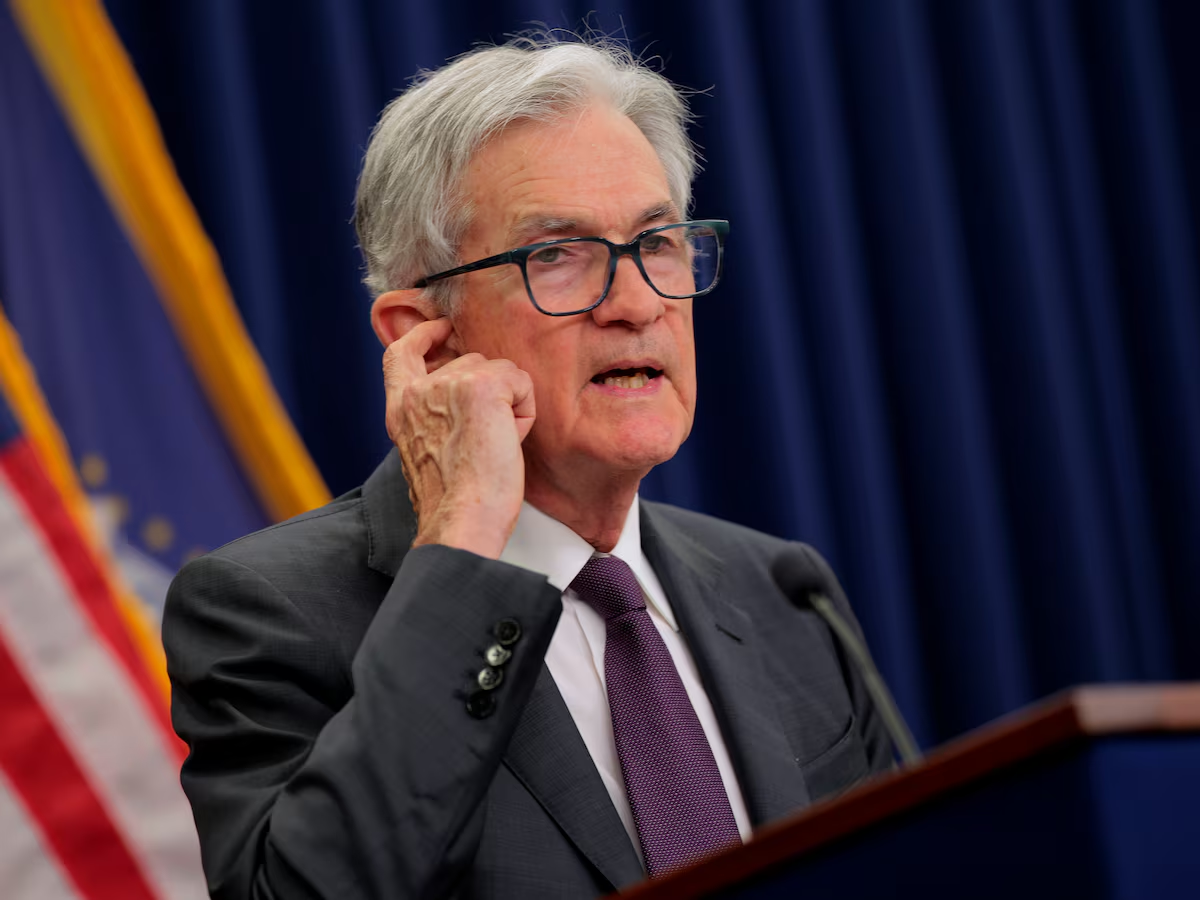
Fed Chair Jerome Powell was noncommittal during his press conference, stating, “We’ve made no decisions about September.” He emphasized that more data would shape the path forward, particularly between now and the Fed’s mid-September meeting.
Some market participants had hoped for a soft signal toward a September cut, but Powell provided none. “He didn’t guide markets that way at all,” said David Seif, chief economist at Nomura.
Bond yields edged higher after Powell emphasized the economy’s resilience, with 10-year and 2-year Treasury yields rising by two basis points. TCW’s Jamie Patton noted that investors may have overestimated the chances of an early rate cut, which intensified the bond market’s reaction.
President Trump has repeatedly criticized Powell for not cutting rates fast enough. Despite the pressure, Powell’s cautious tone indicates the Fed will rely on upcoming inflation and jobs data before adjusting policy, potentially weighing on small-cap stocks in the short term.
The Russell 2000 index, which had outperformed the S&P 500 earlier in the day, closed down 0.47%, compared to a 0.12% dip in the S&P 500.
For the U.S. dollar, Powell’s hawkish tone provided a boost. The dollar index rose 1%, hitting a two-month high, although it remains down 8% for the year. BofA strategists noted that while medium-term dollar weakness is likely, short-term risks are now more balanced.
Stronger U.S. rates continue to support the dollar’s appeal relative to other major currencies. “The Fed’s patience and the strength of the U.S. economy are putting dollar depreciation on hold,” said Vishal Khanduja of Morgan Stanley Investment Management.
Still, Khanduja cautioned against overreacting to the Fed’s message. “Their stance hasn’t changed,” he said, adding that he expects 3–5 rate cuts in 2026, with the next two inflation reports being crucial.