JPMorgan Lowers S&P 500 Target on Rising Risks
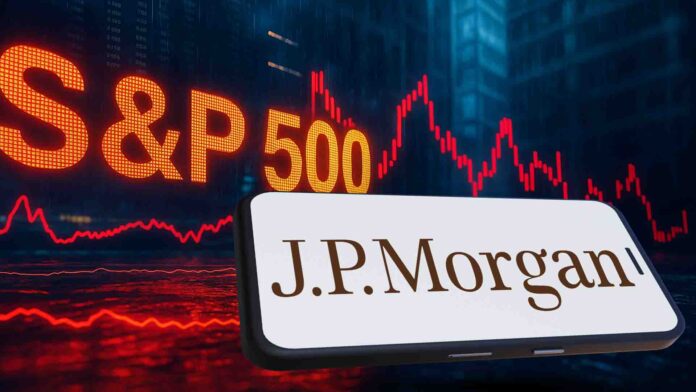
JPMorgan has reduced its year-end 2026 target for the S&P 500 to 7,200 from 7,500, citing growing risks linked to the Middle East conflict, surging oil prices, and increasing investor complacency.
The bank warned that markets may be underestimating the broader economic impact of these developments.
Market Resilience Masks Underlying Risks
Despite oil prices rising by more than 40%, the S&P 500 has shown relative resilience, declining by only around 3%. This stability has been supported by safe-haven flows into U.S. assets.
However, JPMorgan highlighted that investors are primarily hedging their positions rather than reducing overall risk exposure, with leverage levels remaining near historic highs.
Overconfidence in Quick Conflict Resolution
According to the bank, markets are placing too much confidence in a swift resolution to the conflict and a reopening of key energy routes such as the Strait of Hormuz.
JPMorgan described this as a “high-risk assumption,” noting that historically, sharp increases in oil prices tend to negatively impact equity markets after a certain threshold.
Oil Supply Disruptions Pose Major Threat
The bank pointed to significant supply disruptions, with oil production outages reaching approximately 8 million barrels per day—an all-time high. This figure could rise to as much as 12 million barrels per day, representing around 11% of global supply.
Such disruptions could have far-reaching consequences for global markets if they persist.
Demand Shock Could Hit Global Growth
JPMorgan emphasized that the primary risk is not just inflation, but the potential for a demand shock. Prolonged high energy prices could reduce consumer spending and corporate revenues, leading to weaker economic growth.
This scenario could force adjustments in GDP forecasts and earnings expectations across sectors.
Earnings Outlook at Risk
If oil prices remain around $110 per barrel, the bank estimates that S&P 500 earnings forecasts could decline by 2% to 5%.
This would add further pressure to an already fragile market environment.
Additional Headwinds Weigh on Markets
Beyond energy-related risks, JPMorgan noted several other challenges, including stress in private credit markets, waning enthusiasm around artificial intelligence investments, and reduced consumer affordability.
The bank also warned that if the S&P 500 falls below its 200-day moving average, downside risks could increase significantly, with limited support levels between 6,000 and 6,200.
Preferred Sectors in a Volatile Market
In the current environment, JPMorgan favors defensive and high-quality investment strategies. The bank highlighted sectors such as defense, energy, utilities, materials, cybersecurity, and large-scale technology companies as more resilient options.