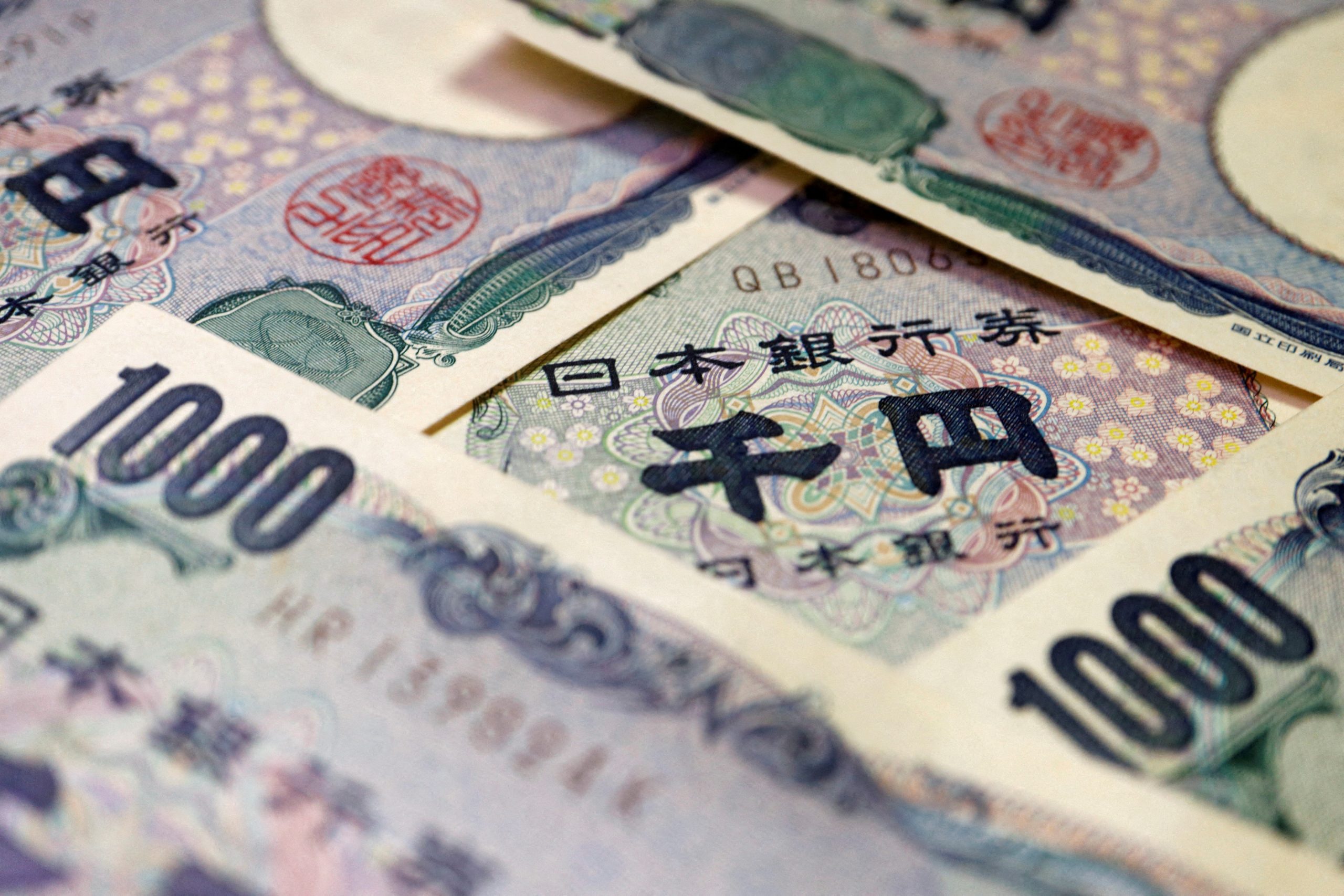
The Japanese yen hovered near record lows against the euro and the Swiss franc on Monday, as the absence of hawkish signals from the Bank of Japan encouraged traders to keep selling the currency. This came despite stronger warnings from Japanese officials about the risk of market intervention.
The yen also remained close to an 11-month low versus the U.S. dollar and was just short of a 17-month trough against the Australian dollar.
Speaking early in Tokyo, Japan’s top currency diplomat Atsushi Mimura and government spokesperson Minoru Kihara said they were concerned about “one-sided and sharp” currency moves. Both officials warned that authorities were ready to take “appropriate action,” language widely seen as a signal that intervention remains an option.
Last week, the central bank raised its policy rate by 25 basis points to 0.75%, the highest level in roughly three decades. While the accompanying statement suggested a willingness to continue tightening, Kazuo Ueda struck a cautious tone during his press conference, offering little clarity on the pace of future rate hikes.
That lack of fresh hawkish guidance weighed heavily on the yen. The currency fell 1.3% against the euro, 1.4% versus the U.S. dollar, and 1.5% against the Australian dollar. At the same time, Japanese government bonds sold off sharply, pushing the 10-year yield above the 2% level for the first time since 1999.
Ueda is scheduled to speak at Japan’s Keidanren on Christmas Day, giving markets another opportunity to assess any potential policy signals.
Analysts said the BOJ’s cautious communication disappointed investors. Tony Sycamore of IG noted that while the BOJ acknowledged real yields remain “significantly low,” the governor’s comments reiterated a data-dependent approach and failed to provide clearer guidance, triggering renewed yen selling.
Sycamore added that a decisive move above 158 yen per dollar could open the path toward this year’s high near 158.87.
On Monday, the U.S. dollar slipped 0.3% to 157.37 yen, though it stayed close to last month’s peak of 157.90. The euro eased 0.1% to 184.42 yen, just below Friday’s record high of 184.75, while trading at $1.1720 against the dollar.
The Swiss franc strengthened 0.4% to 197.91 yen, after briefly touching a record 198.22 yen earlier in the session. The Australian dollar rose 0.6% to 104.16 yen, its strongest level against the yen since July last year.
Analysts at Commonwealth Bank of Australia said the Aussie-yen pair continues to draw support from solid global risk sentiment and widening interest rate differentials between Australian and Japanese government bonds. They forecast the exchange rate could climb toward 109 yen per Australian dollar by March.