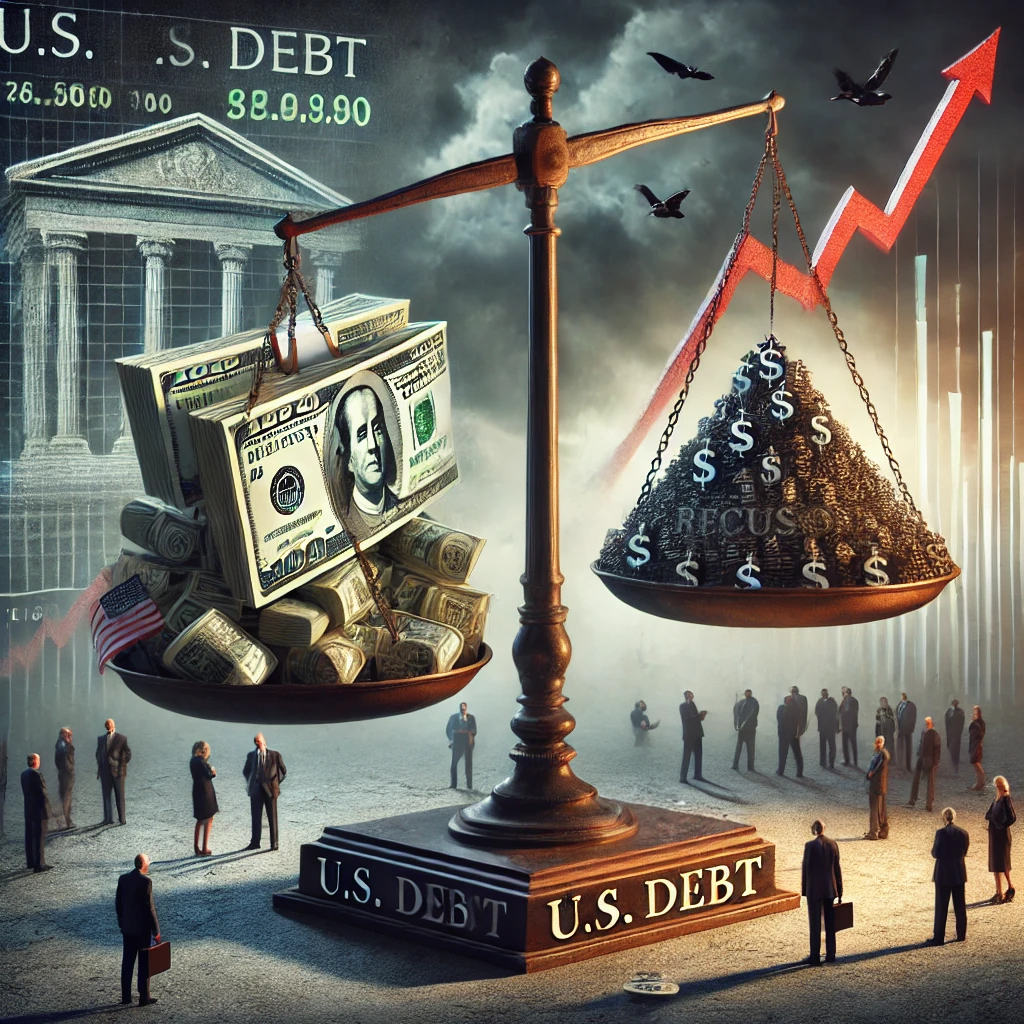
Is the U.S. Government Considering a Recession to Manage Its Debt?
Key Takeaways:
- The U.S. government faces a significant challenge in 2025, needing to refinance $9.2 trillion in debt amid rising interest rates.
- A recession could lead to lower borrowing costs by prompting interest rate cuts, easing the financial strain.
- While President Donald Trump supports tariffs and trade policies, the potential role of a recession remains largely unaddressed.


The U.S. Debt Crisis: A Growing Concern
As 2025 progresses, the U.S. government is under increasing pressure due to its enormous debt obligations. This year alone, $9.2 trillion in government debt will mature or require refinancing, raising concerns about possible solutions to manage the situation. Some financial analysts suggest that an economic downturn could be a viable way to reduce interest rates and mitigate the burden.
The National Debt and Rising Interest Rates
The U.S. national debt has surged to $36 trillion, making its servicing increasingly expensive. The average interest rate on Treasury debt has climbed to 3.2%, the highest in 15 years, exacerbating the situation. Additionally, rising Federal Reserve interest rates could push this figure even higher.
With around 70% of maturing debt needing to be refinanced between January and June, experts, including those from The Kobeissi Letter, argue that lowering interest rates could significantly ease the government’s financial burden and lessen the impact on taxpayers. 
Could a Recession Help Reduce Interest Rates?
While recessions typically bring economic hardship, some experts believe they could indirectly help the government manage its debt. Historically, economic downturns have led to interest rate cuts as the Federal Reserve takes action to stimulate growth. Lower rates make borrowing more affordable, reducing the cost of debt refinancing. 
Analysts point to a recent decline in 10-year Treasury yields—down 60 basis points in two months—as an early signal of a potential slowdown. Rising expectations of economic decline and discussions of potential rate cuts indicate a more accommodative stance from the Fed.
President Trump has advocated for lower interest rates and oil prices to combat inflation, but experts argue that a recession could naturally achieve both by reducing overall demand.
Will the Government Use a Recession as a Tool?
While some policymakers, including President Trump, favor trade policies and tariffs as economic solutions, their effectiveness remains debated. Previous tariffs imposed on Mexico and Canada have reportedly slowed economic growth, raising concerns about their long-term impact.
Commerce Secretary Howard Lutnick insists that a recession is unlikely and asserts that tariffs could strengthen the economy. However, recent GDP forecasts suggest an increased risk of economic decline, with Goldman Sachs estimating a 20% probability.
The Bottom Line
A recession is far from an ideal solution, as it would impose significant hardships on the American public. However, some experts argue that it may be a lesser evil compared to the burden of escalating national debt.
If the economy slows down, the Federal Reserve could be forced to cut interest rates, helping to reduce the cost of debt servicing. However, uncertainty remains over whether the current administration will adopt policies that might push the economy into a downturn.