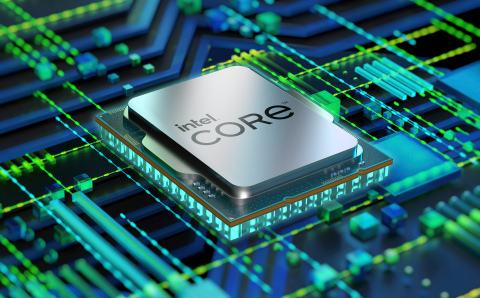
Intel introduced Panther Lake, its latest AI-focused laptop processor, on Monday at the CES trade show in Las Vegas. The launch is a key milestone for the company, as Panther Lake is the first major product built using Intel’s next-generation 18A manufacturing process, aimed at restoring investor confidence in its production roadmap.
Jim Johnson, senior vice president and general manager of Intel’s PC division, outlined the technical details of the first Panther Lake lineup, known as the Intel Core Ultra Series 3. The chips feature a new transistor architecture and an advanced power delivery system enabled by the 18A process.
Speaking at the event, Intel CEO Lip-Bu Tan said the company had fulfilled its pledge to ship products made with the 18A manufacturing technology in 2025, pointing to Panther Lake as the first proof point.
Intel’s previous Lunar Lake processors were largely manufactured by TSMC. With Panther Lake, Intel is betting heavily on its own factories as it seeks to win back market share lost to rivals such as Advanced Micro Devices.
Johnson also revealed that Intel has developed a separate graphics chiplet for Panther Lake. This modular design uses multiple smaller chips combined into a single processor. Intel said the Intel Core Ultra Series 3 delivers up to 60% better performance than the prior Lunar Lake Series 2.
Beyond laptops, Intel plans to roll out a handheld gaming platform based on Panther Lake later this year. Interest in handheld PCs has surged recently, driven by devices from a growing number of hardware makers.
The company has previously faced challenges with production yields for Panther Lake, meaning the proportion of usable chips per silicon wafer. According to a report by Reuters, Intel executives say yields are improving steadily and should support the planned launch schedule.
Competition in AI-focused PC chips remains intense. AMD is set to deliver a CES keynote led by CEO Lisa Su, where it is expected to announce new AI- and graphics-oriented processors. AMD recently signed a multibillion-dollar agreement with OpenAI for its upcoming MI400 chips, a deal projected to generate tens of billions of dollars in revenue.
Meanwhile, Nvidia CEO Jensen Huang also addressed CES attendees on Monday. He said Nvidia’s next generation of chips is already in full production and can deliver up to five times the AI computing performance of its previous models when running chatbots and other AI applications.