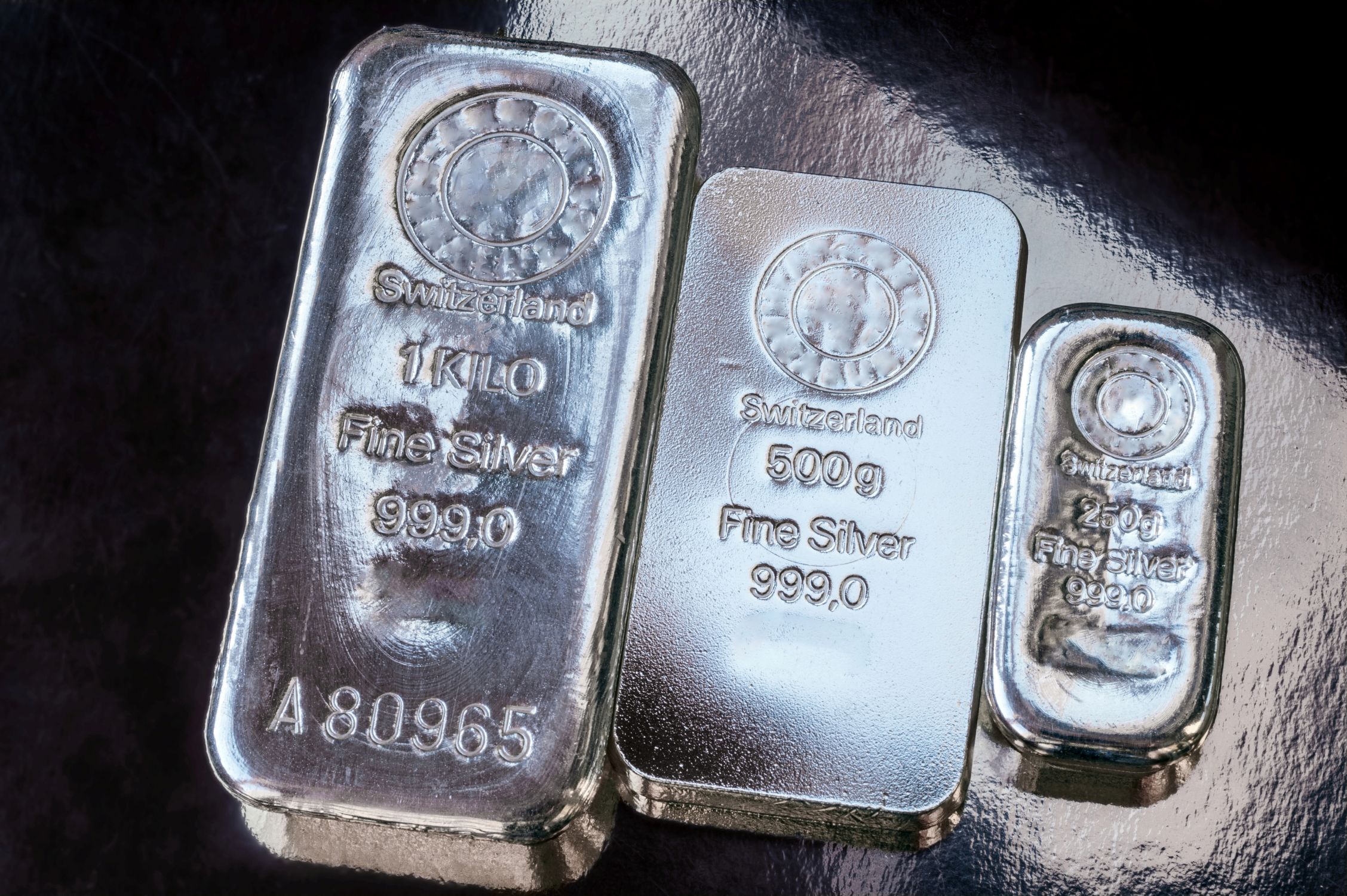
HSBC has raised its silver price forecasts across all time horizons, citing ongoing physical market tightness, resilient investment demand, and a favorable macroeconomic environment that is expected to continue supporting prices into 2026, even as some areas of demand begin to soften.
The bank now projects silver to average $68.25 per ounce in 2026, sharply higher than its previous forecast of $44.50, before easing to $57.00 per ounce in 2027.
Silver surged to a record $83.60 per ounce in December 2025 amid thin liquidity, before pulling back. While gold prices remain a supportive factor, HSBC analyst James Steel emphasized that silver is no longer primarily tracking gold’s movements.
Instead, he pointed to continued tightness in the London bullion market and pronounced backwardation in CME futures as clear signs of a shortage in readily deliverable silver. Steel noted that these supply constraints may persist until late 2026. Uncertainty surrounding U.S. trade policy, including silver’s classification as a critical mineral under Section 232, has also contributed to metal being held in New York vaults, prolonging regional supply imbalances.
Although Steel described current price levels as “fundamentally stretched,” he expects volatility to remain elevated. As long as near-term tightness persists, silver prices are likely to experience sharp upside moves. HSBC forecasts a wide trading range of roughly $58 to $88 per ounce in 2026, with downside risks increasing in the second half of the year as supply conditions gradually improve.
The bank’s end-of-year price targets stand at $62 per ounce for 2026 and $55 per ounce for 2027.
On the demand side, HSBC expects industrial consumption to weaken further as elevated prices drive substitution, efficiency improvements, and design changes. Jewelry demand is seen as particularly sensitive to high prices, despite some spillover buying from gold.
Investment demand, however, remains a major source of support. Exchange-traded fund holdings rose sharply in 2025, marking the strongest annual inflow since 2020. Steel expects ETF buying to continue into the first half of 2026, even if momentum slows later in the year.
Demand for large silver bars from institutional investors is also expected to increase, while coin and small bar demand may only see a modest recovery due to ongoing price resistance.
On the supply front, both mine production and recycling are projected to rise. HSBC estimates that the global silver deficit will narrow to around 140 million ounces in 2026, down from approximately 230 million ounces in 2025, with further improvement expected in 2027.
Even so, Steel noted that continued moderate supply deficits, a weaker U.S. dollar, and persistent geopolitical and policy uncertainty should help underpin silver prices during periods of market pullback.