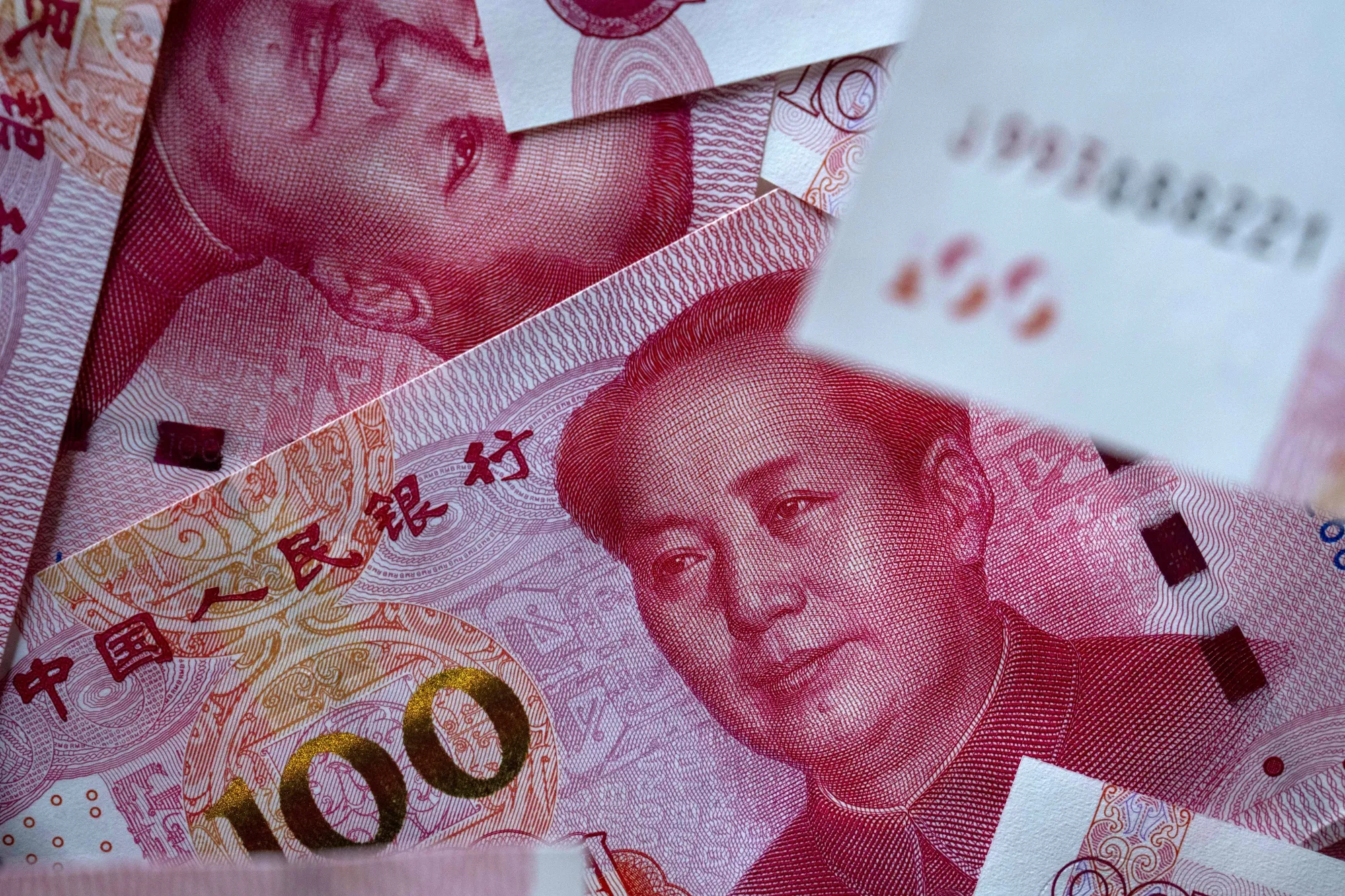
Goldman Sachs has identified the Chinese yuan as one of its top “high-conviction” foreign exchange calls for 2026. The bank argues that the currency is significantly more undervalued than market pricing suggests and is likely to outperform the appreciation already reflected in FX forwards.
In a research note released Tuesday, analyst Teresa Alves explained that structural factors are driving this valuation gap and are expected to continue into next year. According to Alves, the yuan appears deeply undervalued across both of Goldman’s valuation models: GSDEER and GSFEER.
On average, the yuan is roughly 25% undervalued. Alves notes that low inflation and higher productivity relative to the United States have steadily pushed Goldman’s GSDEER fair value estimate stronger over time, especially since the Covid period.
The GSDEER model now places the yuan’s fair value near 5.00, suggesting a roughly 30% undervaluation versus the U.S. dollar.
“This fair value has been trending lower over time, and our projections show it will continue to do so over the next decade,” Alves wrote. Even with an expected appreciation, the currency would still be undervalued by nearly 19% in 2035, according to Goldman’s long-term estimates.
Goldman’s second model, GSFEER, supports the same conclusion. The firm calculates that the real trade-weighted yuan is about 12% undervalued, driven largely by China’s current account surplus sitting well above historical norms.
Economists at the bank expect the surplus to widen further, helped by stronger export performance and relatively weak domestic demand. This would maintain upward pressure on the yuan. Even under alternative assumptions — such as a lower “normal” surplus or a larger one — the implied adjustment still points toward meaningful yuan strength.
Alves also rejects the idea that a stronger yuan would undermine China’s export competitiveness. She argues the currency remains so undervalued that even a notable appreciation would leave it firmly in “inexpensive territory.” She adds that strong current account balances naturally push currencies higher in relatively closed financial systems. Similar dynamics played out after China’s 2005 revaluation, often referred to as “China Shock 1.0.”
As China gains a larger share of global markets, yuan appreciation may increasingly act as a natural counterbalance, the note explains.
However, the outlook is not without risks. Alves points to two key uncertainties: weaker-than-expected domestic or export performance, and the fact that currency strength ultimately depends in part on policy choices.
Still, she highlights recent signs that point in a favorable direction, including a steady preference for stronger daily fixings and consistently positive total returns for long-CNY positions this year.