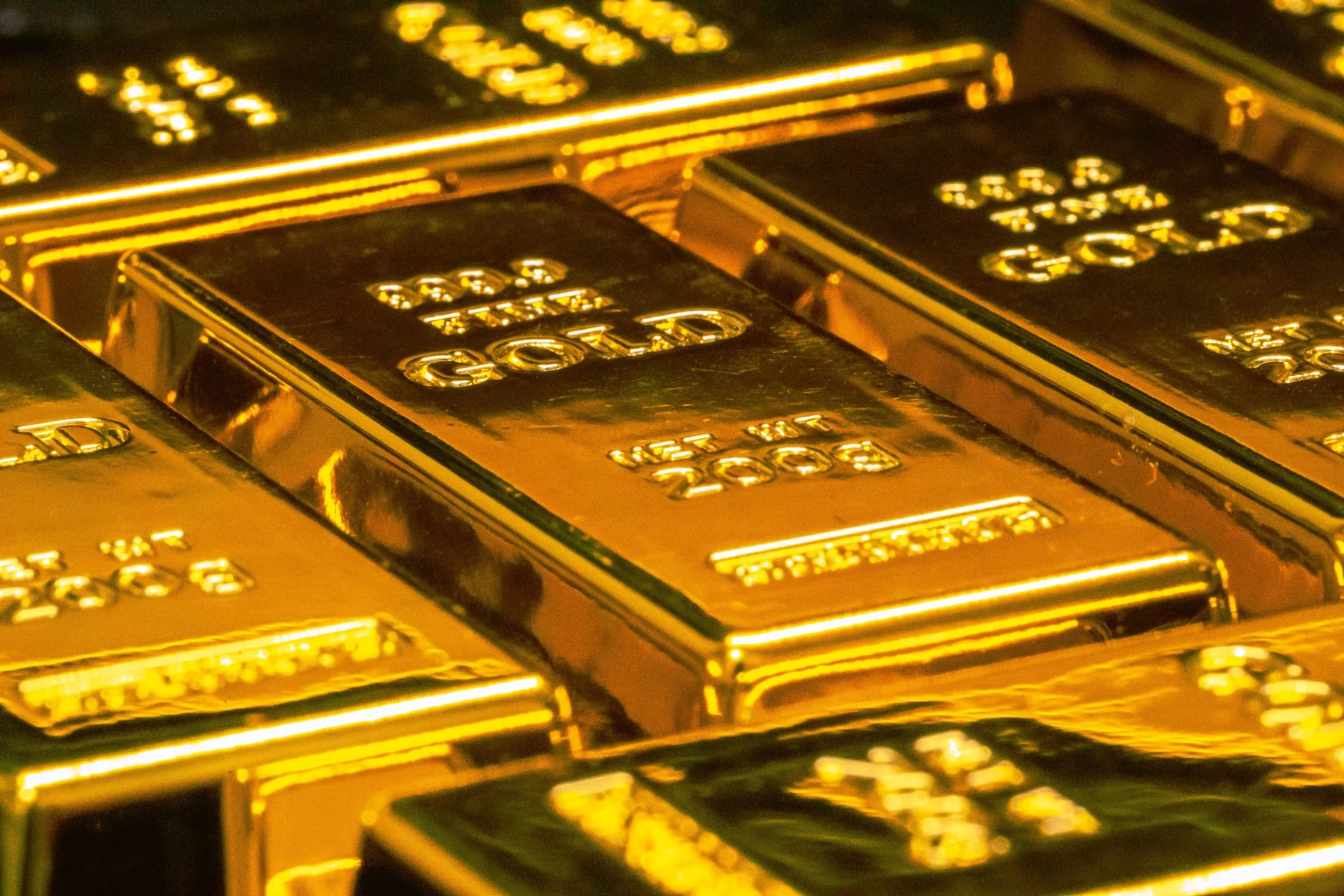
Gold prices rallied sharply on Monday as investors turned to safe-haven assets following major U.S. and Israeli strikes on Iran. The escalation raised concerns about a broader Middle East conflict and intensified uncertainty across global markets.
At 08:55 ET (13:55 GMT), spot gold climbed 2.2% to $5,394.26 per ounce after touching an intraday high of $5,419.32, its strongest level since late January. U.S. gold futures advanced 3.1% to $5,410.34 per ounce, reflecting strong demand for bullion.
Middle East tensions drive safe-haven demand
The renewed conflict in the Middle East significantly boosted gold demand. Continued strikes on Iran and reports of the killing of Supreme Leader Ayatollah Ali Khamenei heightened fears of regional spillover and potential disruptions to oil shipments through the Strait of Hormuz, a vital route for global energy supplies.
This geopolitical shock triggered a classic risk-off reaction. Global equities declined, while crude oil prices surged. As a result, investors sought protection in gold, which traditionally serves as a store of value during periods of instability.
Analysts at ING noted that any regional escalation or disruption to energy supplies could further support gold prices. Higher oil prices would likely lift inflation expectations while keeping real yields contained — a combination that tends to favor precious metals.
Michael Brown, Senior Research Strategist at Pepperstone, said markets are now facing a much wider range of possible outcomes. According to Brown, this uncertainty makes risk pricing extremely difficult, leading many investors to reduce exposure immediately and reassess later.
Meanwhile, the Pentagon attempted to calm fears of a prolonged conflict. U.S. Defense Secretary Pete Hegseth stated that operations against Iran were designed to be targeted and decisive, aimed at disabling missile systems and key security infrastructure rather than triggering an extended war.
ING added that if tensions remain contained and energy flows are not disrupted, the initial risk-off move could gradually fade as the oil risk premium declines. However, broader structural drivers continue to support gold.
Structural support keeps gold outlook bullish
Beyond geopolitical tensions, strong central bank buying and expectations of Federal Reserve rate cuts later this year continue to underpin the gold market. Even if the current crisis stabilizes, these factors are likely to limit downside risks, with any pullbacks expected to remain shallow.
Pepperstone’s Brown highlighted $5,400 per ounce as an important near-term level, followed by the late-January record high of $5,595. He added that the recent developments reinforce the longer-term bullish case for gold in an increasingly uncertain global environment.
According to Brown, gold could potentially approach the $6,000 per ounce level by year-end if safe-haven inflows and strong retail and reserve demand persist.
So far this year, gold has gained nearly 25%, supported by geopolitical risks, sustained central bank purchases, and growing expectations of monetary easing from the Federal Reserve.
Silver and copper ease after early moves
Among other precious metals, silver edged up 0.2% to $93.510 per ounce but gave back part of its earlier gains. Platinum declined 1.4% to $2,338.10 per ounce.
In industrial metals, benchmark copper futures on the London Metal Exchange fell 0.8% to $13,268 per ton, while U.S. copper futures slipped 0.9% to $6.0065 per pound.