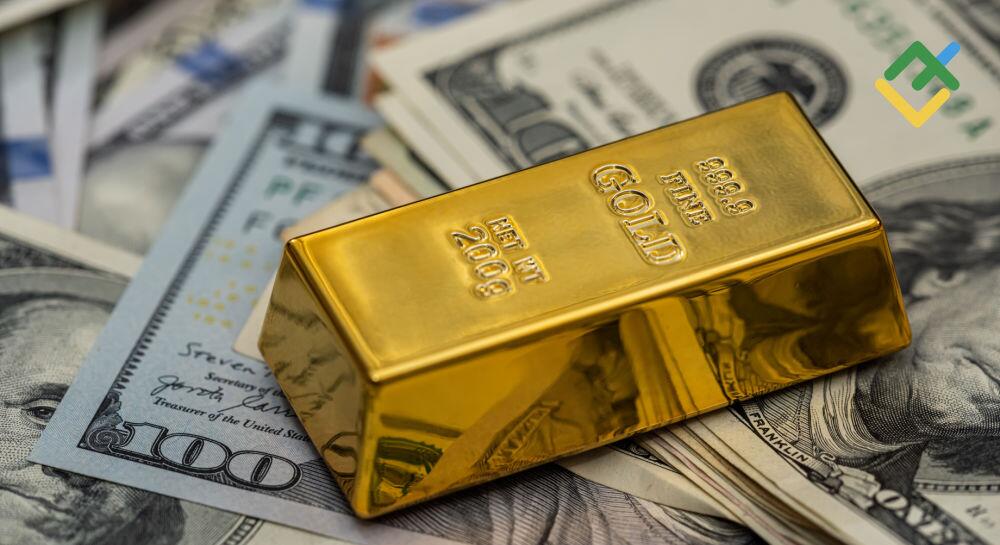
old prices declined in Asian trading on Wednesday, with demand for the safe-haven asset remaining subdued as investors favored the U.S. dollar amid ongoing uncertainty around trade tariffs and interest rate policy.
Meanwhile, U.S. copper prices stood out, surging to all-time highs after President Donald Trump threatened to impose a 50% tariff on copper imports.
In contrast, London copper futures declined across Tuesday and Wednesday, reflecting weaker global sentiment. Broader metals markets also came under pressure due to a stronger dollar, which continued its recovery from recent three-year lows.
Spot gold dipped 0.2% to $3,294.88 per ounce, while September gold futures slid 0.4% to $3,303.20 an ounce by 00:55 ET (04:55 GMT).
Gold’s drop brought it close to its lowest point in over a week, as investors remained focused on the dollar rather than turning to gold amid trade policy uncertainty—marking a shift from earlier trends when such uncertainty typically boosted gold.
Traders appeared to move into the relatively undervalued dollar, which remained strong following robust U.S. jobs data and diminishing expectations for near-term Federal Reserve rate cuts.
Ongoing ambiguity around Trump’s tariff strategy also strengthened the dollar, as the administration sent out formal notices detailing steep trade duties targeting several major economies.
The Federal Reserve has warned that if implemented at full scale, these tariffs could stoke inflation in the U.S., further reducing the likelihood of interest rate cuts in the coming months.
The dollar’s strength put pressure on the broader metals complex. After a strong rally in June, precious metals were vulnerable to profit-taking. Platinum and silver gave up some gains, with platinum futures dropping 1.1% to $1,376.35 an ounce, while silver futures edged up to $36.838.
U.S. copper futures surged 2.6% to $5.6457 per pound on Wednesday, after reaching a record $5.8955 on Tuesday. The rally was driven by expectations of tighter domestic supply following Trump’s proposal to levy a 50% tariff on imported copper—a move intended to boost local production and reduce dependency on foreign copper.
The policy would likely benefit major U.S. copper producers such as Freeport-McMoRan (NYSE: FCX). The metal’s importance has grown due to its role in power infrastructure and electric vehicles—key components of the global shift to green energy.
Outside the U.S., copper prices declined, weighed down by concerns about reduced American import demand. Benchmark futures on the London Metal Exchange dropped 1.6% to $9,644.45 per ton, nearing a three-week low.
Additional downward pressure came from mixed inflation data out of China, the world’s largest copper importer, sparking worries over slowing demand.