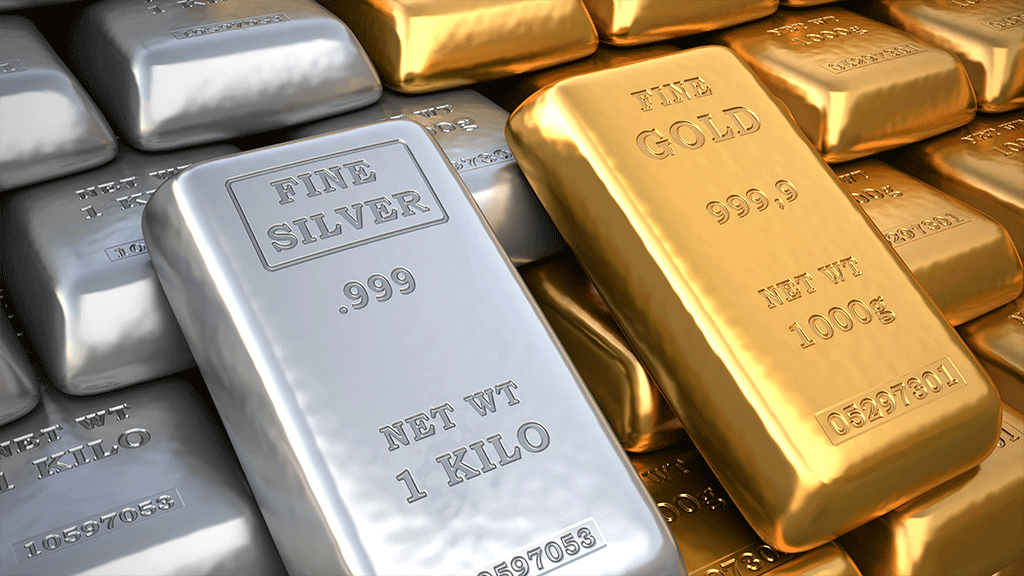
Gold prices fell on Tuesday, extending the recent back-and-forth trading pattern in precious metals as investors continue to reassess positions following last Friday’s historic market rout. Attention is now shifting to a heavy slate of US economic data scheduled for later this week.
Silver and platinum also moved lower. While an overnight dip in the US dollar offered limited support, the greenback later stabilized during Asian trading, capping any rebound in metals.
By 11:45 ET (16:45 GMT), spot gold was down 0.8% at $5,023.39 per ounce, while April gold futures slipped 0.7% to $5,046.35. Spot silver declined 3.3% to $80.20 an ounce, and spot platinum fell 1.2% to $2,090.
Precious metals struggle to find direction
Precious metals have seen sharp price swings over the past week as profit-taking and stretched positioning triggered a pullback from record highs. Uncertainty surrounding US monetary policy, including the prospect of a leadership change at the Federal Reserve, has added to market volatility.
Safe-haven demand has also fluctuated amid mixed signals in US-Iran relations. While both sides reported some progress in weekend talks over Iran’s nuclear program, Washington issued a warning on Monday advising US-flagged vessels traveling through the Strait of Hormuz to exercise caution.
Although gold and other precious metals recovered part of their recent losses, prices remain well below late-January highs, with traders showing reluctance to re-enter the market aggressively.
“Gold and silver declined after a two-day rebound as investors took profits in a volatile market still searching for direction after a historic selloff,” said Neil Welsh, head of metals at Britannia Global Markets. He added that traders are now looking to upcoming US data for clues on the future path of Federal Reserve policy.
Analysts at Heraeus said gold and silver are no longer behaving like traditional safe-haven assets and have instead entered a high-volatility phase.
They noted that the groundwork for the recent decline was laid during the preceding rally, which was unusually strong for assets typically viewed as low volatility. Gold prices have increased fivefold over the past decade, while the dollar index remains near its 2015 level, suggesting the selloff likely involved the unwinding of leveraged positions, stop-loss triggers, and rising margin requirements. Exchanges continue to raise margin requirements for futures contracts, adding further pressure.
US economic data in focus
Markets are now focused on a series of key US economic releases this week that could influence interest rate expectations. December retail sales unexpectedly came in flat, missing forecasts for a 0.4% increase.
“Consumer spending has finally aligned with consumer sentiment, and not in a positive way,” said Chris Zaccarelli, chief investment officer at Northlight Asset Management. He noted that while consumers had continued spending despite rising costs, the latest data suggest that trend may be slowing.
Investors are also awaiting January nonfarm payrolls data due on Wednesday, followed by inflation figures on Friday. Both reports are expected to play a central role in shaping Federal Reserve policy, as inflation and labor market strength remain its two primary concerns.
Markets are also assessing the outlook for monetary policy under Kevin Warsh, nominated by US President Donald Trump to succeed current Fed Chair Jerome Powell when his term ends in May.
Warsh is widely viewed as less dovish, and his nomination has already weighed heavily on precious metals. Gold has plunged from a near-record high of $5,600 per ounce, while silver has fallen sharply from levels above $120.