Gold Pulls Back After Four-Day Rally
Gold prices declined on Thursday, ending a four-session winning streak as markets reacted to renewed escalation signals from U.S. President Donald Trump regarding the Iran conflict.
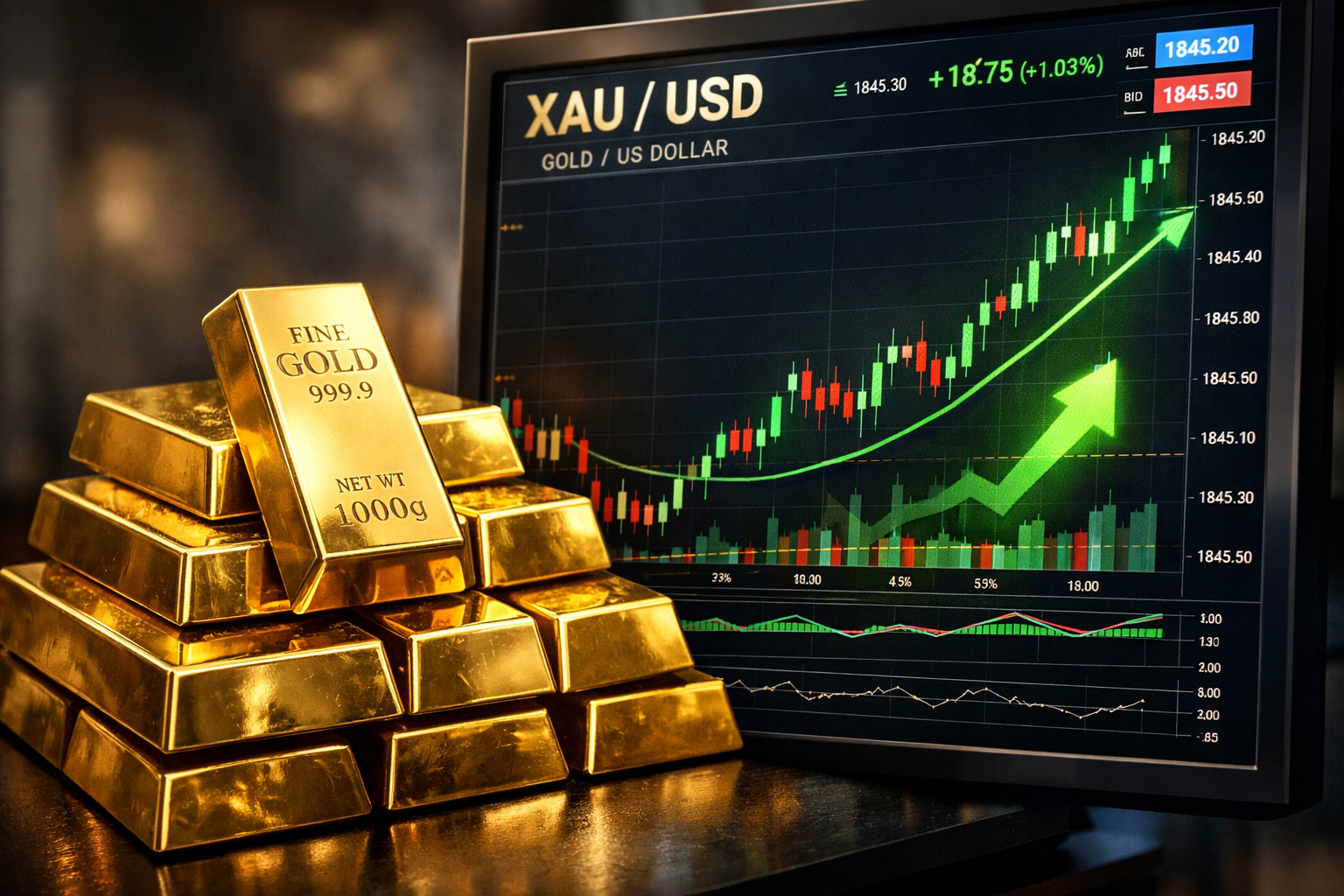
Spot gold dropped 2.8% to $4,623.25 per ounce, after earlier reaching an intraday high of $4,800.58. Meanwhile, U.S. gold futures fell 3.4% to $4,649.15 per ounce.
Recent Gains Driven by Easing Tensions
Gold had rallied over the previous four sessions, supported by signs of easing geopolitical tensions and lower oil prices. However, shifting sentiment quickly reversed those gains as uncertainty returned to global markets.
Volatility Likely to Persist
According to UBS strategist Joni Teves, gold could experience a period of consolidation and increased volatility in the coming weeks. Investors are expected to continuously adjust their positions in response to rapidly changing geopolitical developments.
Despite short-term fluctuations, ongoing concerns about inflation, economic growth, and geopolitical risks continue to support demand for gold as a portfolio hedge.
UBS Updates Gold Forecast
UBS has slightly revised its average gold price forecast for the year to $5,000 per ounce, down from $5,200, reflecting recent price adjustments. However, the bank maintained its year-end target of $5,600, signaling continued long-term bullish expectations.
Precious Metals Under Pressure
Other precious metals also moved lower alongside gold.
- Silver dropped sharply by around 6% to $70.64 per ounce
- Platinum declined 2.2% to $1,923.60 per ounce
Trump Signals Further Escalation
Market sentiment shifted after Trump announced that the United States would intensify military operations against Iran over the next two to three weeks. His remarks emphasized Washington’s stance on limiting Iran’s nuclear capabilities and marked a more aggressive tone compared to earlier statements suggesting a possible withdrawal.
Oil and Dollar Strength Weigh on Gold
Oil prices surged following Trump’s comments, raising concerns about inflation and the likelihood of prolonged higher interest rates. At the same time, the U.S. dollar strengthened, with the dollar index rising 0.5%, making gold more expensive for international buyers.
Focus Turns to U.S. Economic Data
Investors are now closely watching upcoming U.S. labor market data for further clues on Federal Reserve policy. Interest rate expectations remain a key driver for gold prices.
Meanwhile, broader commodity markets also weakened, with copper futures declining both in London and the United States.