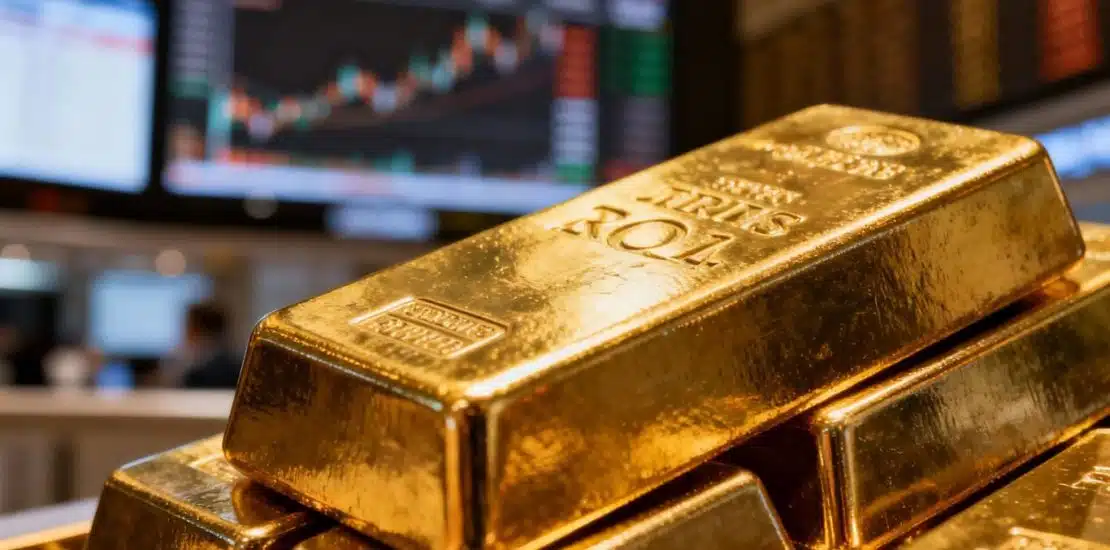
Gold prices fell sharply on Monday, extending heavy losses from the previous session as investors took profits and reassessed the implications of U.S. President Donald Trump’s nomination for the next chair of the Federal Reserve.
Spot gold dropped as much as 5% to $4,586.16 per ounce. April gold futures were also lower, falling 0.8% to $4,703.16 per ounce. The latest decline followed a brutal sell-off on Friday, when spot gold plunged nearly 10% after retreating from a record high close to $5,600 per ounce reached last week.
Losses across the broader precious metals complex showed little sign of easing. Spot silver sank 7.5% to $78.35 per ounce, while spot platinum slid 3.8% to $2,089.19 per ounce.
Gold selloff accelerates after Warsh Fed nomination
The sharp downturn in metals was largely triggered by Trump’s decision to nominate Kevin Warsh as the next Federal Reserve chair, replacing Jerome Powell when his term ends in May.
The nomination removed a major source of uncertainty for markets, reducing gold’s appeal as a safe-haven asset and prompting investors to lock in gains at historically elevated price levels.
At the same time, markets grew cautious over Warsh’s longer-term policy stance. While he has echoed Trump’s calls for lower interest rates, Warsh has also been openly critical of the Federal Reserve’s asset-buying programs, raising concerns that monetary policy could remain tighter than previously expected.
Analysts at ANZ said Warsh is viewed as one of the most inflation-focused candidates for the role, lowering the likelihood of aggressive easing. They noted that this perception sparked widespread selling, pushing gold toward its steepest decline in decades.
The U.S. dollar rebounded from a recent four-year low following Warsh’s nomination, adding further pressure on dollar-denominated precious metals.
Westpac analysts added that while Warsh has adopted a more dovish tone recently, his past comments often emphasized upside inflation risks, reinforcing market caution.
Despite the recent pullback, gold still ended January up nearly 15%, supported by elevated geopolitical tensions that had boosted safe-haven demand earlier in the month.
Prospects of U.S.–Iran talks weigh on safe-haven demand
Gold’s appeal was further dented by reports that the U.S. and Iran may be open to renewed diplomatic talks, easing some geopolitical risk in the Middle East.
According to a report from Axios, mediators are working to arrange a meeting between U.S. and Iranian officials in Turkey later this week.
The report followed comments from Trump over the weekend that Washington and Tehran were “seriously” negotiating over Iran’s nuclear program.
Geopolitical tensions had intensified in January after the U.S. deployed additional naval forces to the Middle East, helping drive gold prices sharply higher during the month.
Looking ahead, investor focus is shifting toward key U.S. economic data. Markets are closely watching labor market indicators, particularly January nonfarm payrolls data due on Friday, which could shape expectations for interest rates and monetary policy.