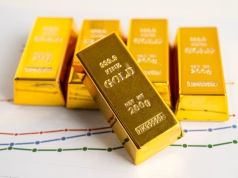
Gold prices moved higher during Asian trading on Friday, but the precious metal remained on track for a weekly decline as the strength of the U.S. dollar and rising U.S. Treasury yields offset demand for safe-haven assets amid escalating tensions in the Middle East.
Spot gold rose 0.8% to $5,119.56 per ounce as of 01:29 ET (06:29 GMT). Meanwhile, Gold Futures increased 0.3% to $5,128.81 per ounce.
Despite Friday’s gains, gold prices were still expected to fall more than 3% for the week. The recent rally in the U.S. dollar and declining expectations for near-term Federal Reserve interest rate cuts have put pressure on bullion.
Geopolitical tensions support gold
The ongoing Middle East conflict entered its seventh day on Friday with no clear signs of de-escalation, keeping investors cautious across global markets.
Hostilities between the United States, Israel, and Iran have intensified over the past week. Missile strikes and retaliatory attacks across the region have increased fears of potential disruptions to global energy supplies.
Adding to the uncertainty, U.S. President Donald Trump stated that he would like to play a role in selecting Iran’s next leader after the conflict ends, highlighting the unpredictable political outlook in the region.
Gold often benefits during periods of geopolitical uncertainty and when interest rates decline, as investors seek safer assets. However, the metal has struggled to gain significant momentum this week because a stronger dollar and rising bond yields have reduced its attractiveness.
Strong dollar and Fed outlook limit gains
Although the U.S. Dollar Index slipped about 0.3% on Friday, it was still on track to post a weekly gain of around 1.5%, which has weighed on gold prices.
At the same time, oil prices were set for a sharp weekly increase of more than 18%, as the conflict threatens critical energy infrastructure and shipping routes in the Gulf region. The spike in crude prices has renewed concerns about global inflation pressures.
Rising energy costs complicate the outlook for central banks worldwide, including the U.S. Federal Reserve. Higher oil prices can drive inflation higher, potentially making policymakers more cautious about cutting interest rates in the near term.
Investors are now focusing on the upcoming U.S. nonfarm payrolls report for February, scheduled for release later on Friday. The data could provide fresh insight into the strength of the U.S. labor market and influence expectations for future monetary policy decisions.
A stronger-than-expected jobs report may strengthen the view that the Federal Reserve has room to delay interest rate cuts, which could further support the U.S. dollar.
Other metals move higher
Among other precious metals, silver prices rose 0.5% to $83.97 per ounce, while platinum advanced 1.5% to $2,152.39 per ounce.
In base metals, benchmark copper futures on the London Metal Exchange increased 0.3% to $12,956.33 per ton, while U.S. copper futures climbed 0.4% to $5.84 per pound.