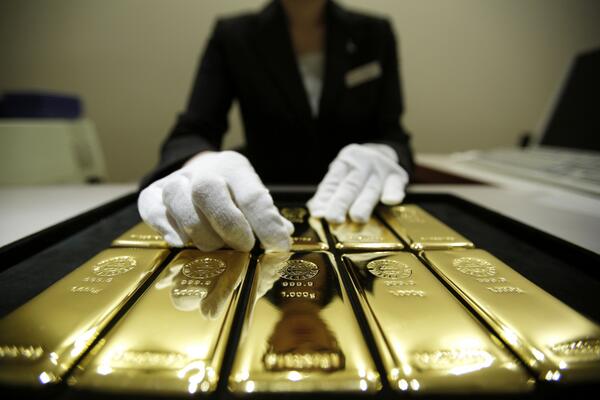
Gold prices were largely steady on Tuesday as investors absorbed a wave of U.S. economic data, looking for signals on the future direction of Federal Reserve interest rates.
Gold steadies as markets assess U.S. data
By mid-morning trading, spot gold edged 0.1% higher to $4,309.57 per ounce, while February gold futures also rose 0.1% to $4,340.50. The precious metal has posted strong gains over the past week following a recent interest rate cut and softer-than-expected messaging from the Federal Reserve.
Safe-haven demand has also been supported by concerns over slowing economic growth in China and signs of tightening liquidity in the United States.
Spot silver slipped slightly, down 0.1% to $63.51 per ounce, after reaching multiple record highs last week. Platinum outperformed other metals, climbing more than 2% to a fresh 14-year high of $1,860.10. Meanwhile, copper futures on the London Metal Exchange declined 0.4% to $11,634 per metric ton.
Mixed U.S. labor data keeps Fed outlook in focus
Markets were also digesting delayed U.S. labor market data released on Tuesday. The U.S. economy added 64,000 jobs in November, beating expectations of 50,000, according to the Bureau of Labor Statistics. However, the unemployment rate rose slightly to 4.6%, above forecasts of 4.5%.
The release comes ahead of closely watched U.S. consumer price index data due later this week, which could provide further clarity on inflation trends. Employment conditions and inflation remain the Federal Reserve’s two primary considerations when adjusting monetary policy.
Lower interest rates tend to support non-yielding assets such as gold and silver. Both metals have delivered strong gains so far in 2025 as U.S. borrowing costs declined and economic uncertainty increased.
ANZ sees gold above $5,000 in 2026
ANZ analysts said they expect gold prices to climb above $5,000 per ounce in 2026, driven by rising demand for safe-haven assets amid growing concerns over fiscal stability in developed economies.
The bank noted that easing monetary policy, geopolitical risks, and declining confidence in U.S. financial assets continue to underpin the bullish case for precious metals. Analysts also cited slowing global growth, renewed trade tensions, and uncertainty surrounding the Federal Reserve’s independence as supportive factors.
However, ANZ cautioned that after a strong rally in 2025, gold’s rate of gains may slow in 2026, with annual price increases expected in the range of 12% to 15%.