Gold prices surged past $4,400 per ounce on Monday, while silver climbed close to $70, as expectations of looser U.S. monetary policy and rising geopolitical risks pushed both metals to fresh record highs.
Spot gold touched an intraday peak of $4,435.28, while silver advanced to $69.44, extending what has already been a historic year for precious metals.
Analysts at Mitsubishi noted that the timing of the rally is striking, as investors typically reduce exposure toward year-end. Instead, market participants appear to be holding positions, showing little appetite for profit-taking even during the holiday period.
Geopolitical and macroeconomic drivers
Bullion has notched multiple record highs throughout the year, supported by U.S. interest-rate cuts and a weaker dollar. Analysts see additional upside into 2026, with Goldman Sachs projecting gold prices could reach $4,900 by December 2026.
The U.S. dollar has declined roughly 9% in 2025, putting it on course for its worst annual performance in eight years. Many investors expect further weakness next year as global growth improves and the Federal Reserve continues easing monetary policy.
Zain Vawda, an analyst at OANDA’s MarketPulse, said expectations for additional rate cuts have intensified following recent U.S. inflation and labor market data, boosting demand for precious metals.
Safe-haven buying has also remained strong amid ongoing tensions in the Middle East, uncertainty surrounding a potential Russia-Ukraine peace agreement, and more recently, U.S. enforcement actions against Venezuelan oil tankers.
ETF inflows and central bank demand
Central bank purchases of gold have remained elevated for a fourth consecutive year and are expected to stay strong into 2026, alongside solid investment demand.
According to Philip Newman, managing director at consultancy Metals Focus, central banks are on track to buy 850 tonnes of gold in 2025, down from 1,089 tonnes in 2024, but still a historically robust level.
Physically backed gold exchange-traded funds are heading for their largest annual inflow since 2020. Data from the World Gold Council shows ETFs have attracted $82 billion, equivalent to 749 tonnes, so far this year.
Jewellery demand has softened due to elevated prices, partially offset by strong retail investment in bars and coins. In India, jewellery consumption fell 26% year-on-year to 291 tonnes in the January-September period, with weakness expected to persist into 2026.
By contrast, retail investment in gold bars and coins in India rose 13% to 198 tonnes, driven by record prices and bullish sentiment, according to Metals Focus.
Silver outperforms gold
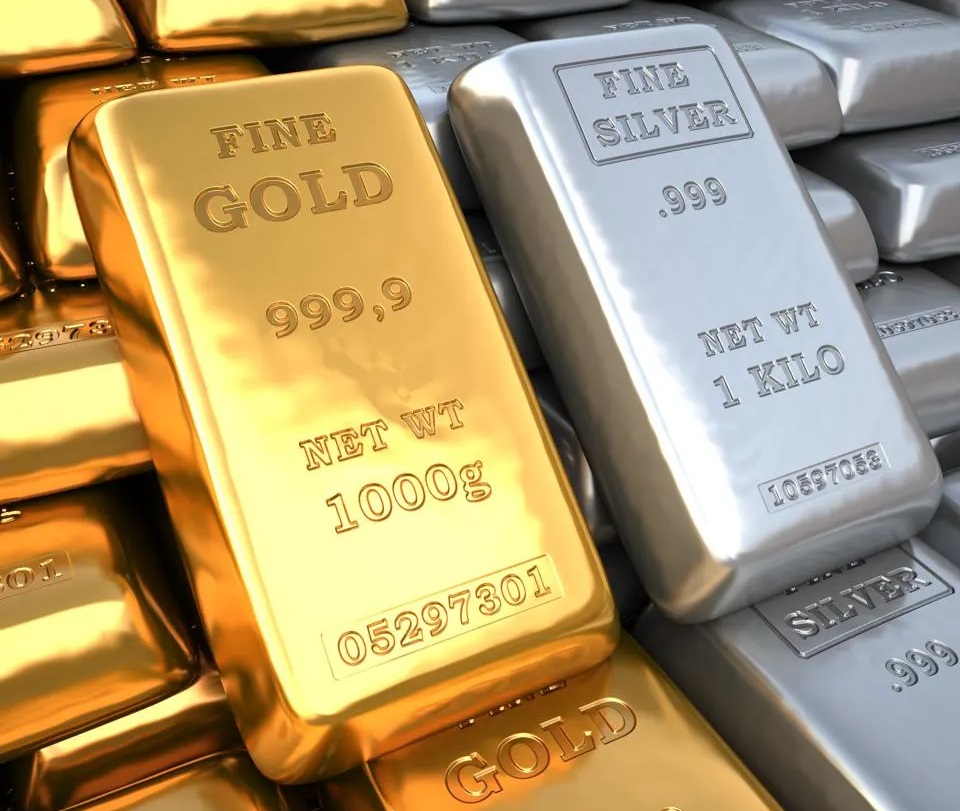
Silver has dramatically outpaced gold in 2025, surging about 139% compared with gold’s 68% gain. The rally has been fueled by strong investment demand, its inclusion on the U.S. critical minerals list, and sustained momentum buying.
Silver exchange-traded product inflows have exceeded 4,000 tonnes, according to Suki Cooper, an analyst at Standard Chartered.
Mitsubishi analysts said both momentum and fundamentals continue to support further gains, although stretched positioning and thin year-end liquidity could lead to short-term volatility. They added that traders are likely to buy dips as real yields remain low and physical supply stays tight.
Silver is now technically overbought, analysts warned. The gold-silver ratio has fallen sharply, with just 64 ounces of silver needed to buy one ounce of gold, compared with 105 ounces in April.
Rhona O’Connell, an analyst at StoneX, said some investors will trade the gold-silver ratio, but cautioned that once current market enthusiasm fades, silver could decouple and eventually underperform gold.