Spot gold prices fell sharply on Monday but recovered part of their earlier losses after U.S. President Donald Trump nominated Kevin Warsh as the next chair of the Federal Reserve, triggering a broad selloff across risk assets.
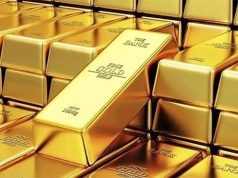
By 10:28 ET (15:28 GMT), spot gold was down 3.8% at $4,678.09 an ounce, after earlier sliding to a session low of $4,402.38. April gold futures were lower by 0.9% at $4,700.49 an ounce. The metal erased nearly 10% of its value on Friday, retreating sharply from last week’s record high near $5,600 an ounce.
Gold hit by selloff after Warsh nomination
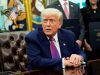
The steep decline in gold followed Trump’s decision to nominate Warsh to replace Jerome Powell when his term ends in May. The announcement removed a major source of uncertainty for markets, reducing gold’s safe-haven appeal and prompting profit-taking at historically elevated price levels.
At the same time, investors grew wary of Warsh’s longer-term policy stance. While he has echoed Trump’s calls for lower interest rates, the former Fed governor has also criticized the central bank’s asset purchase programs, raising concerns about a more restrained approach to liquidity.
“Warsh is considered the toughest on inflation among the candidates, reducing the likelihood of aggressive monetary easing,” analysts at ANZ wrote, noting that the shift sparked one of the sharpest gold selloffs in decades.
The U.S. dollar rebounded from a recent four-year low following the nomination, adding further pressure to precious metals. Analysts at Westpac highlighted that although Warsh has recently expressed more dovish views, he has historically emphasized upside inflation risks.
Despite the recent slump, gold still ended January up nearly 15%, supported by elevated geopolitical tensions that boosted demand for safe-haven assets earlier in the month.
Potential U.S.–Iran talks weigh on haven demand
Gold’s appeal as a safe haven was also dampened by reports suggesting renewed diplomatic engagement between the United States and Iran. According to Axios, mediators are working to arrange talks between U.S. and Iranian officials in Turkey this week.
The reports followed Trump’s weekend comments that Washington and Tehran were “seriously” negotiating over Iran’s nuclear ambitions. Earlier concerns over Middle East instability, including the deployment of additional U.S. naval forces, had helped drive gold prices higher in January.
Looking ahead, investor focus has shifted to U.S. labor market data, with January nonfarm payrolls due on Friday and expected to influence the outlook for interest rates.
JPMorgan raises long-term gold outlook
Despite near-term volatility, JPMorgan raised its end-2026 gold price forecast to $6,300 an ounce, citing strong and persistent demand from both central banks and investors. Analysts said the longer-term bullish trend remains intact, driven by structural diversification away from traditional reserve assets.
JPMorgan pointed to robust official-sector buying as a key factor, noting that central banks purchased around 230 tonnes of gold in the fourth quarter, bringing total purchases for 2025 to approximately 863 tonnes. The bank now expects central bank demand to remain near 800 tonnes in 2026, even at elevated price levels.
Silver extends steep losses
Elsewhere, spot silver fell 8.4% to $77.42 an ounce, after plunging as much as 12% earlier in the session. The move followed Friday’s 27% collapse, the largest daily drop on record.
“While a correction was overdue after an intense rally, the scale of the decline far exceeded expectations,” analysts at ING said.
Spot platinum also traded lower, slipping 1% to $2,103.75 an ounce, after briefly touching $1,882.00 earlier in the day.