G7 Leaders Face Early Divisions as Trump Defends Russia’s Past Inclusion
Group of Seven leaders gathered on Monday to seek a united stance on the conflicts in Ukraine and the Middle East, but divisions quickly surfaced after U.S. President Donald Trump declared that expelling Russia from the former G8 over a decade ago was a misstep.
Once a close-knit alliance, the G7 has struggled with internal cohesion as the U.S. shifts away from multilateralism and Trump openly voices support for Russian President Vladimir Putin.
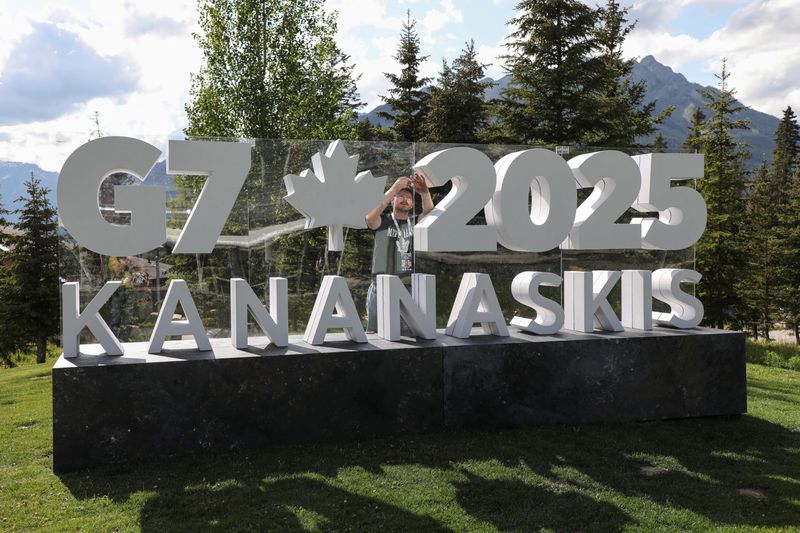
Leaders from Britain, Canada, France, Germany, Italy, Japan, the U.S., and the European Union are meeting in Kananaskis, nestled in the Canadian Rockies, for a two-day summit ending Tuesday.
During a joint appearance with Canadian Prime Minister Mark Carney, Trump criticized the decision to oust Russia from the G8 in 2014 following its annexation of Crimea.
“That was a major mistake,” Trump said, adding that Putin might have avoided invading Ukraine in 2022 had Russia remained in the group.
“Putin talks to me—he doesn’t talk to anyone else,” Trump remarked, claiming that the Russian leader had severed communication with the countries that expelled him and expressing sympathy for his stance.
Although Trump stopped short of advocating for Russia’s readmission, his remarks cast doubt on what Ukrainian President Volodymyr Zelenskiy might accomplish when he addresses the leaders on Tuesday. European officials are hoping to sway Trump toward endorsing tougher sanctions on Russia.
Zelenskiy stated he intends to speak with Trump about acquiring more military equipment for Ukraine.
Trump also revealed that he had spoken to Putin on Saturday and proposed that the Russian president could help mediate between Israel and Iran. French President Emmanuel Macron swiftly rejected the idea, insisting that Russia, as an aggressor in Ukraine, could not be seen as a neutral party.
A European diplomat noted that Trump’s proposal underscored how prominently Russia remains in the minds of U.S. policymakers.
European leaders are aiming to use both Tuesday’s meeting with Zelenskiy and NATO Secretary-General Mark Rutte, as well as next week’s NATO summit, to urge Trump to adopt a firmer stance toward Moscow.
“The goal of the G7 should be to realign our approach, secure a ceasefire in Ukraine, and work toward a durable peace,” Macron said. “The key question is whether President Trump is prepared to enforce significantly tougher sanctions on Russia.”
Tensions Rise Over Israel-Iran Conflict and Joint Statements
In another sign of discord among the democracies, a U.S. official confirmed that Trump would not endorse a draft statement urging de-escalation in the Israel-Iran crisis.
Nevertheless, a Canadian official noted that the issue would be addressed in bilateral talks throughout the day, and it was too soon to predict the outcome. A senior European diplomat echoed this, saying Trump had not yet finalized his position.
No Unified Statement Expected
Canada has opted against issuing a comprehensive final communique to avoid a repeat of the 2018 G7 summit, when Trump withdrew U.S. support for the joint statement after departing the meeting.
According to sources familiar with the matter, leaders have drafted several documents on issues such as migration, artificial intelligence, and strategic resources—but none have received formal backing from the U.S.
One European diplomat noted that without Trump’s participation, it’s uncertain whether any joint declarations will be released at all.
The early months of Trump’s second term have unsettled U.S. foreign policy, caused concern over his increasingly close relationship with Russia, and reignited trade tensions with key allies through renewed tariffs.
Monday’s discussions will focus on the global economy, trade agreements, and China.
Several leaders arrived in Canada—mockingly dubbed the “51st U.S. state” by Trump in past remarks—with hopes of advancing trade talks with Washington.
German Chancellor Friedrich Merz said he hoped for progress toward resolving the ongoing tariff dispute with the U.S., even if a final agreement remained out of reach.
British Prime Minister Keir Starmer announced that a trade deal finalized with the U.S. last month is expected to be implemented “very soon,” following delays over final terms. The U.K. was the first nation to secure tariff reductions under the Trump administration, though execution has been pending.